
Stockholm – Swedist: Sweden Migration Agency Decision: What Happens After You Receive It?

A Sweden Migration Agency Decision can mark the end of a long application process, but receiving the letter is not necessarily the end of the immigration procedure. Depending on whether the application is approved or rejected, the next steps can include obtaining a residence permit card, preparing to travel, appealing the decision or complying with a deadline to leave Sweden. Recent migration cases have also put renewed attention on how decisions are communicated and what applicants must do once a ruling becomes legally effective. So, what exactly happens after the Swedish Migration Agency sends its decision?
Sweden Migration Agency Decision: The first thing applicants should check
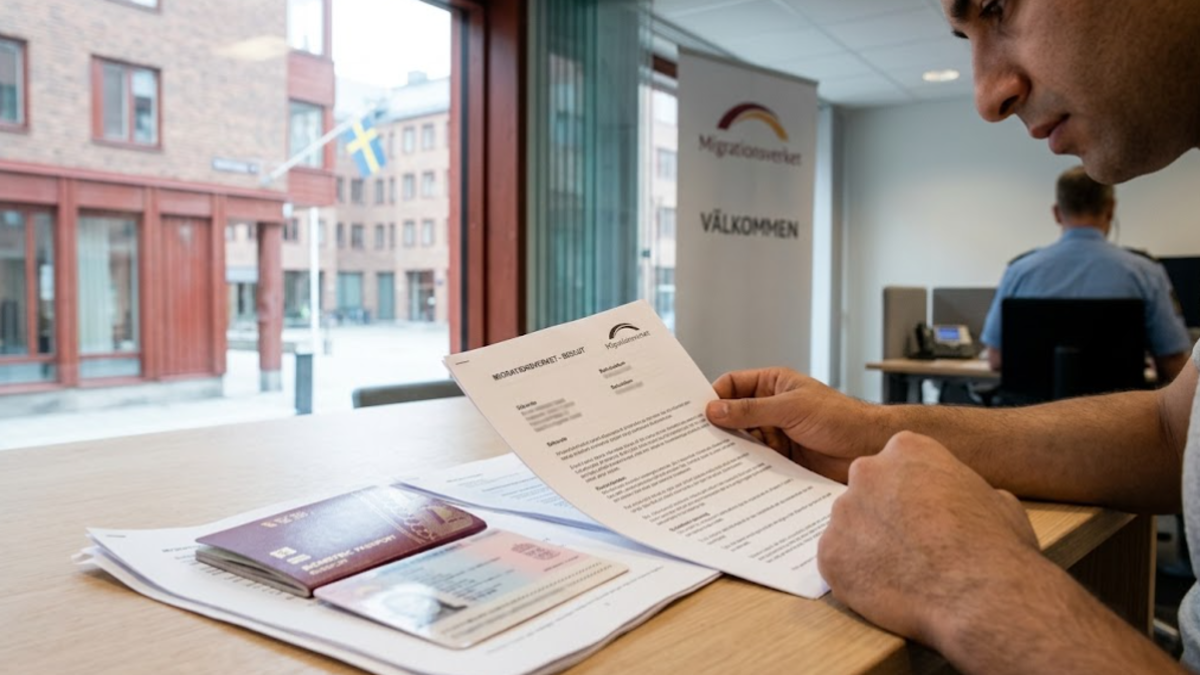
The first step after receiving a decision is to read the document carefully rather than relying only on an email notification or information from another person.

The Swedish Migration Agency, known as Migrationsverket, handles applications from people seeking to live in Sweden, work, study, seek international protection or become Swedish citizens. Its official guidance says the decision explains the outcome, the reasons behind it and, where applicable, the possibility of appealing.
For some applicants, the first notification may come electronically. In certain application processes, an email tells the applicant that a decision has been made, while the formal decision is subsequently delivered by post or through an embassy or representative.
Applicants who submitted applications through an embassy may therefore have to collect the decision in person. The procedure varies according to the type of application and where the person applied.
The important point is that the formal decision contains information that determines what happens next.
An approval normally means that the applicant has been granted the right to stay under the conditions and period specified in the permit. A refusal, by contrast, can trigger an appeal period and, in some circumstances, an obligation to leave Sweden.
The agency also stresses that applicants must understand the individual instructions in their own decision. The rules are not identical for every category, including work permits, family permits, study permits, asylum cases, citizenship applications and residence cards.
For official information, applicants should consult the Swedish Migration Agency’s guidance on received decisions.
When the application is approved
An approved decision is generally the result applicants have been waiting for, but there can still be practical steps before the process is complete.
For people granted a residence permit, the permit itself establishes the right to live in Sweden for the period and purpose specified in the decision. Depending on the applicant’s circumstances, the next stage can involve producing a residence permit card.
The Migration Agency explains that a residence permit card requires the applicant’s photograph and fingerprints. Where these are taken depends partly on whether the applicant is outside Sweden or already in the country.
Applicants abroad may have to visit a Swedish embassy or consulate, while people in Sweden may deal directly with the Migration Agency.
The exact procedure also depends on the type of permit. Someone approved for family reunification may follow a different practical process from a person receiving a work or study permit.
Applicants should therefore avoid assuming that another person’s experience will automatically apply to their own case.
The decision should also be checked for its validity period. A permit is not necessarily permanent. If the decision grants a temporary residence permit, the applicant needs to understand when it expires and what requirements apply to a future extension.
This is particularly important because Swedish migration rules have continued to develop, with new requirements affecting different groups of foreign residents.
Recent reporting has highlighted a broader tightening of Sweden’s migration framework. The Local has reported changes affecting family immigration, permanent residence and work-related migration, while the government and Sweden Democrats recently secured parliamentary support for stricter family immigration requirements.
That changing environment makes it particularly important to read the individual decision rather than depend on older advice circulating online.
Residence permit cards are a separate practical step
Receiving an approval does not necessarily mean that a physical residence permit card is already in the applicant’s possession.
The card serves as evidence of the residence permit and contains biometric information. Applicants may therefore need to complete the photograph and fingerprint process before receiving it.
The Migration Agency has also announced changes intended to make renewal of permanent residence permit cards easier, including advance information and appointment requests through its digital services.
For anyone preparing to travel, work or relocate, checking the status of the card can therefore be just as important as checking the decision itself.
What happens after a rejection?
A rejected application creates a very different situation.
The first question is whether the decision can be appealed. In most cases where an appeal is possible, the decision itself explains how to submit it and specifies the deadline.
The appeal is normally sent to the Swedish Migration Agency, even though a court examines the appeal. The agency explains that an applicant who wants the decision changed must submit the appeal according to the instructions provided with the ruling.
This distinction matters because an applicant should not simply send an appeal directly to a court without following the procedure stated in the decision.
The deadline also matters. Missing it can have serious consequences because a decision may become legally effective and lose its appealability.
Applicants should therefore establish three things immediately: the date on which they were formally notified, the deadline for appealing and whether they have the right to remain in Sweden while the appeal is being considered.
Those details can vary according to the type of case.
A person whose residence permit application has been rejected while in Sweden may receive a specific deadline for leaving. The Migration Agency says the decision itself sets out when the person must leave and warns that remaining after the applicable deadline can mean staying in Sweden unlawfully.
That makes the period immediately after receiving a rejection especially important.
Sweden Migration Agency Decision and the appeal process
An appeal is not simply another application.
The purpose is to challenge the decision that the Migration Agency has already made. The case is reviewed by a migration court when an appeal is lodged, and the applicant should explain why the decision should be changed.
The agency’s appeal guidance says that the first page of the decision should indicate whether an appeal is possible and explain how it should be made.
Applicants should therefore study the reasoning in the decision before preparing an appeal.
If the agency rejected an application because documents were missing, for example, the applicant needs to understand precisely what the authority found insufficient. If the refusal concerns eligibility, financial requirements, employment conditions, family circumstances or another legal requirement, the appeal needs to address the relevant issue.
Simply expressing disagreement is unlikely to explain why the decision should be changed.
Legal assistance can be particularly important in complicated cases. The right to assistance and the arrangements for legal representation can differ depending on the category of case.
For asylum applicants, the consequences can be especially serious. The Migration Agency says that people whose applications for international protection have been rejected can appeal, but their right to remain in Sweden while the court considers the appeal depends on what the decision says.
The same principle illustrates why applicants should never assume that an appeal automatically gives them the right to remain in Sweden.
Deadlines can determine what happens next
One of the most important details in any migration decision is the date from which a deadline begins.
The Migration Agency uses different methods to notify applicants of decisions. One of these is simplified service.
Under simplified service, the agency sends the decision by post and then sends a control message on the following business day. The agency says the applicant is normally considered served two weeks after the decision was sent.
Once served, the applicant generally has three weeks to appeal. When simplified service applies, the decision therefore normally becomes legally effective five weeks after it was sent if no appeal is lodged.
This is why simply saying that someone “received the letter” does not always tell the full legal story.
The relevant date may be the date on which the person is considered legally notified.
Applicants should keep the original decision, envelopes and other correspondence. They should also record important dates and make sure their contact details remain accurate.
A missed letter can create problems if the authority has used a notification procedure under which the decision becomes effective after a defined period.
Leaving Sweden after a refusal
If a rejected residence application becomes legally effective and the person has no right to remain, the next step may be departure from Sweden.
The Migration Agency says that a person whose residence permit application has been rejected while in Sweden will normally receive a deadline for leaving the country and, where applicable, the territories of the Schengen area.
The applicant is responsible for arranging the journey.
This can involve checking passport validity, travel documents, transportation and any other practical requirements necessary for departure.
The situation becomes more serious if a person ignores the departure deadline.
A failure to comply can lead to enforcement measures and potentially affect future immigration matters. The exact consequences depend on the wording and legal basis of the individual decision.
For this reason, applicants should not treat a refusal as a document that can simply be put aside while they consider their options.
If an appeal is available, the deadline should be checked immediately. If there is no appeal or the appeal has failed, the applicant should establish exactly what the departure decision requires.
Recent cases show why every decision matters
Recent Swedish migration cases have demonstrated how a decision can have profound consequences even for people who have lived in the country for many years.
One widely reported case involves British citizen Joyce Thomas, a 78-year-old widow who had lived in Sweden for 21 years. She lost an appeal concerning her right to remain after Swedish authorities concluded that she had not met the requirements connected with the post-Brexit residence process. The case attracted criticism from campaigners and British officials.
Another case concerns Horace Mason, a 74-year-old British man who has lived in Sweden for decades and requires full-time care because of serious health problems. His family challenged the decision to remove him, but a migration court upheld the removal order.
These cases are highly specific and should not be treated as examples of what will happen in every Swedish immigration case.
They do, however, demonstrate a central point: once a migration authority has issued a decision, the wording, legal grounds and deadlines can become crucial.
They also show why applicants should not assume that length of residence, family connections or personal circumstances will automatically override the legal requirements governing their particular immigration status.
Sweden’s migration system is changing
The broader political context also matters.
Sweden has been tightening several areas of migration policy, with changes affecting work permits, family migration, residence rights and conduct requirements.
The Local recently reported that the government and Sweden Democrats won parliamentary votes on stricter family immigration requirements. Other recent reporting has highlighted reforms affecting permanent residence and work migration.
At the same time, the Migration Agency has faced substantial workloads. Reporting has highlighted long-running backlogs in some areas, including citizenship cases, with some applicants waiting for extended periods before receiving decisions.
For applicants, this means that receiving a decision can bring relief, uncertainty or both.
An approval may open the next stage of life in Sweden. A refusal can require immediate legal and practical action.
The important lesson is that the decision document itself should always be the starting point.
What applicants should do immediately
After receiving a Sweden Migration Agency decision, applicants should avoid rushing into action based on social media posts or informal advice.
First, establish whether the application was approved or rejected.
Second, read the reasons given by the Migration Agency.
Third, identify the exact date of notification and any deadline.
Fourth, determine whether an appeal is available.
Fifth, check whether the decision allows the applicant to remain in Sweden while an appeal is pending.
Sixth, if the decision grants a permit, check its duration and any requirements for obtaining a residence permit card.
If the application was rejected, the applicant should establish whether leaving Sweden is required and by what date.
The Migration Agency’s own instructions should take priority because the correct procedure depends on the individual case.
The news cases appearing in Sweden also underline the importance of acting within the legal framework. A decision can move from an administrative ruling to a legally binding outcome when the relevant appeal period expires.
For people facing a difficult or complicated case, professional legal advice may be appropriate, particularly where removal, family rights, international protection or other serious consequences are involved.
The key message for applicants
A Sweden Migration Agency Decision is not simply a letter announcing whether an application succeeded.
It can contain the starting point for several different processes: obtaining a residence permit card, beginning a new period of residence, appealing a refusal or preparing to leave Sweden.
The exact next step depends on the type of application and the wording of the decision.
That is why applicants should read every page, note every deadline and follow the instructions attached to their individual case.
The latest news from Sweden shows that migration policy remains an active and politically sensitive area. Parliamentary reforms, changing residence requirements and high-profile court cases are all shaping the environment in which applications are assessed.
For individuals, however, the immediate question remains much simpler: what does the decision say, and what must be done before the deadline?
FAQ
What should I do when I receive a Sweden Migration Agency Decision?
Read the entire decision, confirm the outcome, check the reasons and identify all deadlines or instructions.
Can I appeal a rejected decision?
Many Migration Agency decisions can be appealed. The decision itself explains whether an appeal is possible, how to submit it and the applicable deadline.
Can I stay in Sweden while an appeal is considered?
It depends on the case. The decision should state whether you have the right to remain while the appeal is being examined.
What happens if I do not leave after a refusal becomes effective?
If you are required to leave and remain after the applicable deadline, you may no longer have a legal right to stay in Sweden and the authorities can take steps to enforce the departure.