
Why Sweden Gets Dark So Early — And How People Adapt
Sweden’s long winter nights are a natural consequence of its northern location, but the amount of daylight varies dramatically from one part of the country to another. While Stockholm experiences short winter days, communities in Swedish Lapland can go weeks without seeing the sun rise above the horizon. The change affects daily routines, outdoor activities and the way people experience the colder months.

Rather than simply waiting for spring, people across Sweden find ways to make the most of the available daylight, bring more light into their homes and maintain social connections throughout winter. From traditional Lucia celebrations to everyday coffee breaks and outdoor walks, adapting to the darkness involves both practical habits and cultural traditions.
Why Does Sweden Get Dark So Early in Winter?
The main reason is Earth’s axial tilt. Our planet is tilted by approximately 23.5 degrees relative to its orbit around the Sun. During the Northern Hemisphere’s winter, the northern half of Earth tilts away from the Sun, reducing the hours of daylight and keeping the Sun lower in the sky.

Because Sweden stretches a considerable distance from south to north, the effect becomes more pronounced the farther north you travel.
In summer, the situation reverses. Days become exceptionally long, and areas north of the Arctic Circle experience the midnight sun, when the Sun remains above the horizon around the clock for a period of the year.
Winter brings the opposite phenomenon in the far north: the polar night, when the Sun does not rise above the horizon.
According to the Swedish Meteorological and Hydrological Institute (SMHI), the duration of these phenomena depends on latitude. The farther north you go, the longer the periods of continuous daylight or darkness become.
How Much Daylight Does Sweden Get in Winter?
There is no single answer for the whole country. The difference between southern Sweden and the Arctic north is one of the most striking features of the Swedish winter.


| Location | What winter daylight is like |
|---|---|
| Malmö and southern Sweden | Short days, but daylight remains available every day |
| Stockholm and central Sweden | Limited daylight, with the Sun rising late and setting early |
| Northern Sweden | Much shorter days, with prolonged twilight in some locations |
| Kiruna and the far north | A period of polar night when the Sun stays below the horizon |
The exact sunrise and sunset times change daily and depend on the location and date. The table describes the general pattern rather than fixed daylight hours.
In Stockholm, the darkest part of winter can leave residents with only a few hours of daylight. Farther north, the experience becomes more extreme. In Kiruna, the polar night lasts for several weeks, although the landscape may still receive indirect light from the Sun below the horizon.
Polar night does not mean complete darkness for 24 hours a day. Depending on the location, the weather and the time of day, twilight can illuminate the sky in shades of blue, pink and purple. Snow can also reflect available light, making the surroundings appear brighter than expected.
How Swedes Adapt to the Darker Months
Sweden’s response to winter darkness is not one single tradition or habit. It is a combination of practical adjustments, seasonal celebrations and everyday routines that help people continue working, socialising and enjoying the outdoors when daylight is limited.
1. Making the most of daylight
One of the simplest ways to adapt is to spend time outside during the brightest part of the day.
For people working indoors, this can mean taking a walk during lunch, running errands before sunset or planning outdoor activities for weekends. Even a short walk provides an opportunity to get daylight and move the body.
Sweden’s Public Health Agency recognises outdoor recreation as an important contributor to physical and mental well-being. Its guidance also highlights the value of accessible parks, green spaces and opportunities to spend time in nature.
The lesson is straightforward: rather than treating winter as a reason to stay indoors all the time, people can build outdoor time into ordinary routines.
2. Using warm lighting at home


11
As the afternoons grow darker, lighting becomes a noticeable part of the Swedish home environment.
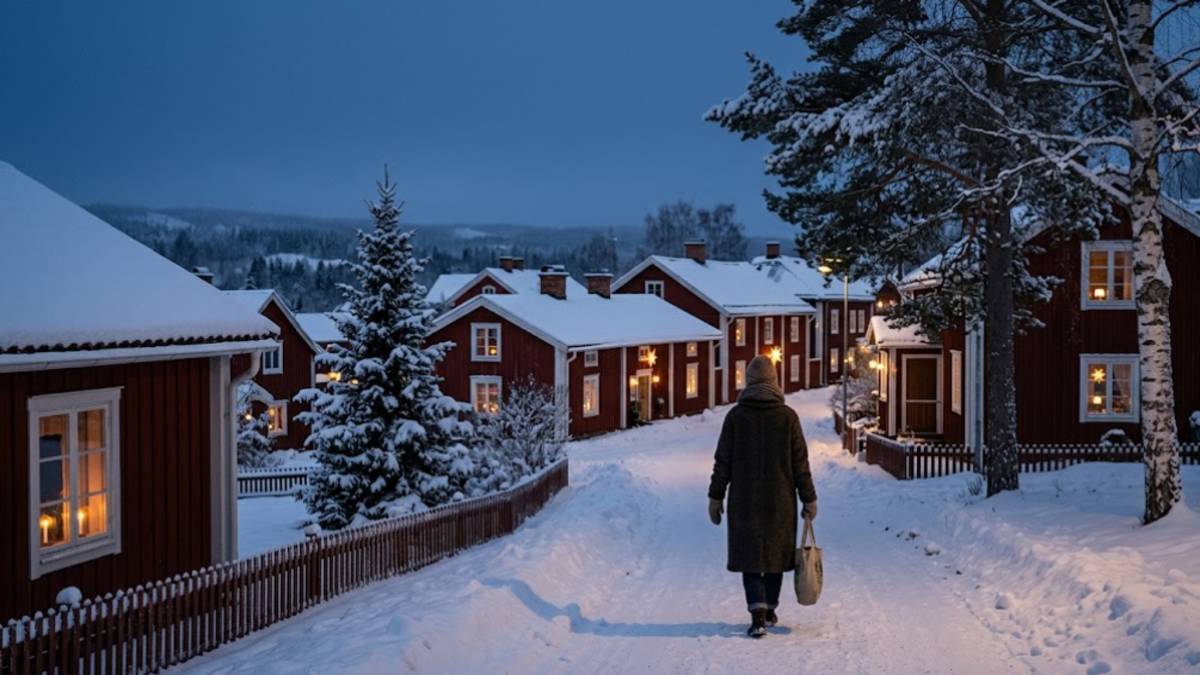
Candles, lamps, illuminated windows and decorative paper stars create a softer atmosphere during long evenings. Electric candleholders and star-shaped lamps are particularly associated with the Christmas season, when they appear in many Swedish windows.
These details are more than seasonal decoration. They help make homes feel welcoming at a time when people may spend more hours indoors.
However, a cosy atmosphere should not be confused with a medical treatment for the effects of reduced daylight. Good indoor lighting can improve the environment, but it does not replace natural daylight or professional care when someone experiences persistent mental health difficulties.
3. Celebrating Lucia and the return of light

Añadir a Favoritos
Few Swedish traditions connect darkness and light as clearly as Lucia, celebrated on 13 December.
During Lucia processions, participants wear white robes and carry candles or electric lights. A central figure traditionally wears a crown of candles, while the group sings familiar seasonal songs.
The celebrations take place in settings such as schools, workplaces, churches and public venues. They offer an opportunity for people to gather during one of the darkest periods of the year.
Lucia is not a solution to the physical effects of winter darkness, but its cultural significance is easy to understand. It turns a difficult part of the calendar into a shared occasion marked by music, light and community.
Christmas markets, illuminated streets and seasonal meals also help give structure to the winter months.
4. Keeping social connections alive through fika

Añadir a Favoritos
Another familiar part of Swedish life is fika, a coffee break that often includes something sweet and an opportunity to talk.
Fika can happen at home, in a café or at work. During winter, it provides a simple reason to pause, meet a friend or spend time with colleagues instead of allowing the shorter days to become a succession of work and evenings alone.
The related idea of mys describes a feeling of cosiness, comfort and relaxed togetherness. It can mean an evening with friends, a quiet night at home or enjoying a warm drink while snow falls outside.
Neither concept is exclusive to winter, and not everyone follows the same routines. Still, both offer useful examples of how small, repeatable social rituals can make the season feel more manageable.
5. Staying active despite the cold


7
Añadir a Favoritos
Cold weather and limited daylight do not bring outdoor life to a complete stop.
Depending on conditions and location, winter activities include cross-country skiing, downhill skiing, walking, snowshoeing and ice skating. In cities, an ordinary walk through a park can be enough to break up a day spent indoors.
Sweden’s Public Health Agency identifies outdoor recreation as beneficial for both physical and mental health. Regular physical activity can also support psychological well-being.
For anyone living through a Swedish winter, the practical approach is to choose activities that fit their fitness level, equipment and local conditions. Appropriate clothing, visibility after dark and awareness of ice are essential.
There is no need to turn every winter day into an adventure. A short walk in daylight may be more realistic and sustainable than an ambitious outdoor plan.
How Winter Darkness Can Affect Well-Being
The seasonal change is not purely a matter of atmosphere. Daylight plays a role in the body’s circadian rhythm, which helps regulate sleep and wakefulness.
Sweden’s Public Health Agency has published a review of the relationship between light and health, describing the importance of natural daylight for circadian rhythms, sleep and mood. Reduced daylight exposure during winter can therefore be relevant to people’s well-being.
Some people experience tiredness, lower motivation or changes in mood as autumn turns into winter. Others adapt without significant difficulty. The experience varies, and it would be inaccurate to suggest that everyone in Sweden suffers from winter depression.
Seasonal affective disorder (SAD), sometimes called seasonal depression, is more than an ordinary dislike of dark afternoons. Persistent low mood, loss of interest in usual activities or significant changes in sleep and everyday functioning deserve attention.
Practical steps that may help include:
- Get outside during daylight: Choose a walk or another outdoor activity during the brightest hours available.
- Keep a regular sleep schedule: Consistent waking and sleeping times can help maintain daily rhythms.
- Stay physically active: Choose manageable activities that can be maintained throughout winter.
- Maintain social contact: Arrange regular meetings, calls or shared activities rather than relying entirely on spontaneous plans.
- Seek professional advice when needed: If symptoms persist or interfere with daily life, contact a healthcare professional.
These habits are not guaranteed to prevent seasonal depression, and they are not a substitute for treatment when it is needed. Anyone concerned about their mental health can consult Sweden’s healthcare information service, 1177, or contact a healthcare provider.
What Visitors Should Know About Sweden’s Winter Darkness
For travellers, the short days can be one of the most memorable parts of visiting Sweden. They can also catch people unprepared, particularly those travelling from countries with milder winter daylight patterns.
A little planning makes a difference.
Plan around daylight, not just the clock. Outdoor sightseeing is often more rewarding when scheduled for the brightest part of the day. Check local sunrise and sunset times before setting off.
Dress for the conditions. Warm layers, suitable footwear and weather-resistant outerwear are important, especially when visiting northern Sweden.
Expect regional differences. Stockholm, Gothenburg and Malmö have winter daylight, even when the days are short. Destinations such as Kiruna can experience polar night, so the experience is fundamentally different.
Leave room for indoor activities. Museums, cafés, restaurants and cultural events can make an itinerary enjoyable even when daylight is limited.
Do not expect the northern lights every night. The aurora is a natural phenomenon, not a scheduled attraction. Visibility depends on factors including solar activity, darkness, cloud cover and local viewing conditions.
For many visitors, the contrast between outdoor darkness and warm, illuminated interiors is part of what makes a Swedish winter distinctive.
Our Assessment: Adapting to Darkness Is About More Than Lighting
Sweden’s winter offers a useful reminder that people cannot control the length of the day, but they can make thoughtful choices about how they spend it.
Warm lighting and seasonal decorations help create a comfortable home. Lucia and Christmas traditions give the darkest weeks a cultural rhythm. Fika makes room for social connection, while outdoor recreation provides opportunities for movement and exposure to natural daylight.
None of these habits eliminates the challenges of a northern winter. Nor should they be presented as a universal Swedish experience: access to outdoor spaces, working hours, health, personal preferences and local weather all influence how people manage the season.
The most useful lesson is the combination of small adjustments rather than any single tradition. Making time for daylight, maintaining routines, staying connected and seeking help when necessary are practical responses that can benefit people far beyond Sweden.
Frequently Asked Questions
Why does Sweden get dark so early in winter?
Sweden is located at a high northern latitude. Because Earth’s axis is tilted, the Northern Hemisphere receives less direct sunlight and shorter days during winter. The effect becomes more pronounced farther north.
Which part of Sweden has the darkest winters?
Northern Sweden experiences the most extreme winter darkness. In places such as Kiruna, the polar night lasts for several weeks, meaning the Sun does not rise above the horizon. Southern Sweden still has daylight throughout winter, although the days are short.
Does Sweden experience complete darkness during polar night?
Not necessarily. Although the Sun remains below the horizon, twilight can provide natural light during parts of the day. The amount varies with location, weather and the Sun’s position below the horizon.
How do Swedes cope with the lack of daylight?
Common approaches include spending time outdoors during daylight, keeping homes well lit, maintaining social routines and celebrating winter traditions such as Lucia. Experiences vary, and some people need additional support for seasonal mood changes.
Can winter darkness affect mental health?
Reduced daylight can influence circadian rhythms, sleep and mood. Some people experience seasonal depression, while others do not develop significant symptoms. Persistent low mood or difficulties with daily life are reasons to seek professional advice.
Official Sources
1. Swedish Meteorological and Hydrological Institute (SMHI) — Midnight Sun and Polar Night — https://www.smhi.se/kunskapsbanken/meteorologi/solens-upp–och-nedgang/midnattssol-och-polarnatt
2. The Public Health Agency of Sweden — Outdoor Recreation — https://www.folkhalsomyndigheten.se/the-public-health-agency-of-sweden/living-conditions-and-lifestyle/outdoor-recreation/
3. The Public Health Agency of Sweden — Light and Health (Ljus och hälsa) — https://www.folkhalsomyndigheten.se/contentassets/6787e3675a6046ba9d6fc38234c016b2/ljus-halsa-03573-2017-webb.pdf
Contact: info@alswedalyom.com