

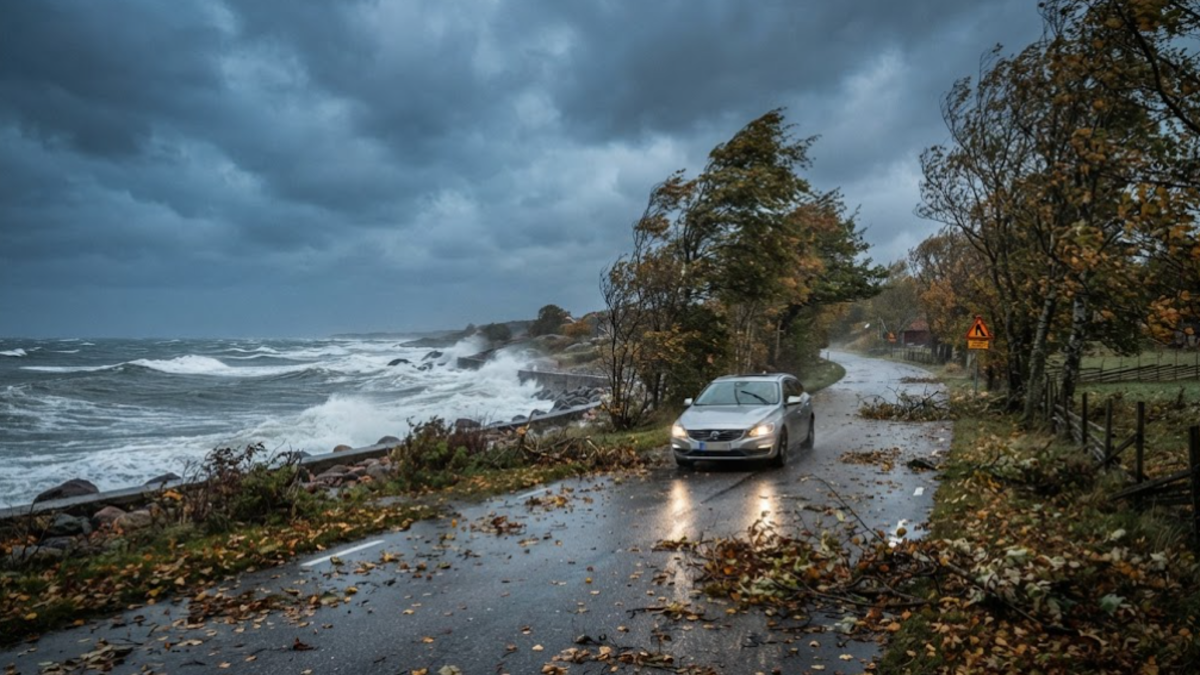
Sweden Issues Wind Warning as Severe Weather Disrupts Travel
Sweden has issued a wind warning for parts of the country as strengthening winds threaten road safety and public transport, prompting travellers to monitor weather forecasts and traffic updates before setting off. The Swedish Meteorological and Hydrological Institute (SMHI) uses a tiered warning system to alert the public when strong winds could cause damage, travel disruption or risks to personal safety.

The warning highlights the importance of checking local conditions rather than assuming that travel will be affected equally across Sweden. Strong gusts can bring down trees and branches, obstruct roads and disrupt public transport, while exposed areas may face more challenging conditions.
Wind warning targets north-western Gotland and Fårö
According to Sweden’s official crisis information service, Krisinformation.se, a yellow wind warning was in effect on Friday, 9 October, for north-western Gotland and the area extending towards Fårö.

A low-pressure system was expected to bring strengthening westerly or north-westerly winds, with gusts of 21–25 metres per second in the affected area and up to 27 metres per second near the coast. The warning was scheduled to run from 11:00 to 20:00 local time, with winds expected to ease from the west during the late afternoon and evening.
Authorities warned that the gusts could make roads difficult to use and disrupt electricity and telecommunications networks. Fallen trees and branches were identified as potential obstacles, while public transport services could face delays or cancellations.
These details relate to the specific warning area and period; they should not be interpreted as evidence that every part of Sweden is experiencing the same conditions.
How the wind warning could affect travel
Strong gusts can affect several forms of transport, particularly in exposed coastal areas and places where trees stand close to roads and railway lines.
- Road travel: Fallen branches and trees can block routes. Drivers may also find it harder to maintain control in exposed stretches during strong gusts.
- Public transport: Bus and other services may experience delays or cancellations, depending on local conditions and operational decisions.
- Ferry journeys: Travellers heading to or from Gotland should check directly with their ferry operator for any changes to departures.
- Rail services: Passengers should check current departure information and local traffic alerts before travelling, as weather-related disruption can affect services.
The official warning confirms a risk of transport disruption, but it does not establish that all these services have been cancelled or that nationwide travel has been suspended.
What Sweden’s warning levels mean
SMHI issues wind warnings at three levels, based on the expected gusts and the potential consequences.
| Warning level | What it means for travellers |
|---|---|
| Yellow | Disruption is possible, including blocked roads and delayed or cancelled public transport. |
| Orange | Significant disruption is more likely. Authorities advise avoiding unnecessary travel and preparing for possible delays. |
| Red | Conditions may be very dangerous. Travel should be avoided unless absolutely necessary, and official instructions should be followed. |
The warning colour is important because it reflects the anticipated impact, not simply the strength of the wind. Travellers should follow the level and advice issued for their specific location.
What travellers should do before setting off
Anyone planning to travel in or around an affected area should take a few practical precautions.
- Check the latest weather warning. Consult the official SMHI weather warnings page before departure. Warnings can change as forecasts develop.
- Check traffic conditions. Use the Swedish Transport Administration’s official website for road information and traffic updates.
- Confirm public transport departures. Check directly with the relevant train, bus or ferry operator rather than relying on the original timetable.
- Allow extra time. If travel is necessary, prepare for delays and possible diversions. Keep your phone charged and carry essential supplies on longer journeys.
- Avoid unnecessary risks. Do not drive through blocked roads or approach fallen power lines. Avoid forests and exposed areas during severe winds, particularly where falling trees or branches pose a danger.
Official Swedish preparedness guidance also recommends monitoring conditions along the entire route, since weather can vary considerably between locations.
Why local updates matter
Sweden’s weather-warning system is designed to help people assess risks in the areas where they live or travel. A yellow warning in one region does not automatically mean that the same level of danger applies elsewhere.
The situation can also change during the day. Wind speeds may ease in one location while other areas remain exposed, and transport operators may adjust services in response to conditions on the ground.
For travellers, this means that checking an alert once is not always enough. Those with connecting journeys or ferry bookings should review updates close to departure and allow time for alternative arrangements if services are disrupted.
Editorial assessment
The warning for north-western Gotland and Fårö illustrates why severe-weather alerts should be treated as practical travel information rather than general forecasts. Gusts reaching the levels described by the authorities can create hazards even when average wind speeds appear less severe.
The most useful response is to combine official weather information with live transport updates. Travellers should avoid unnecessary journeys in the affected area while conditions remain hazardous, and anyone who must travel should be prepared for delays and follow local safety instructions.
The available official information confirms the warning and the potential for disruption. It does not, by itself, confirm widespread cancellations across Sweden, so claims of a nationwide transport shutdown would be premature.
Official Sources
1. Krisinformation.se — Current weather warnings https://www.krisinformation.se/
2. Swedish Meteorological and Hydrological Institute (SMHI) — Wind warnings https://www.smhi.se/kunskapsbanken/meteorologi/varningar-och-meddelanden/varning-for-vind
3. Krisinformation.se — Checklist Before Your Road Trip https://www.krisinformation.se/en/get-prepared/make-a-plan/transport-disruptions/
4. Swedish Transport Administration (Trafikverket) — Official website and traffic information https://www.trafikverket.se/