
STOCKHOLM – Swedist: Sweden Job Seeker Residence Permit gives international graduates a route to remain in Sweden after completing higher education while they search for employment or explore starting a business. Recent Swedish migration changes have also tightened several rules around study and work permits, making timing, documentation and financial planning increasingly important. So, what exactly can graduates do after finishing their studies, and how can they avoid losing the opportunity to stay?

Sweden Job Seeker Residence Permit: What Graduates Need to Know
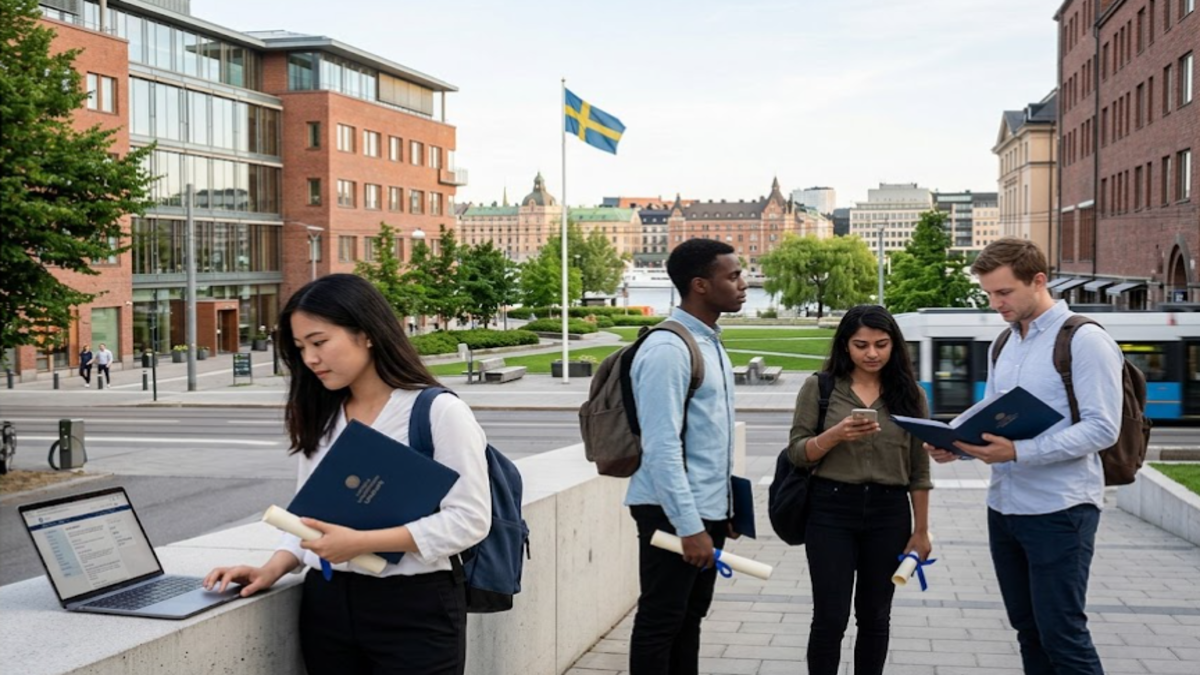
International students who complete higher education in Sweden can apply for a residence permit that allows them to stay and look for employment or examine the possibility of starting their own business. The Swedish Migration Agency says the route applies to people who held a residence permit for higher education at first-cycle, second-cycle or third-cycle level and have completed their studies in Sweden.
The permit is not an automatic extension of a student residence permit. Graduates must make a separate application and meet specific conditions before their existing permit expires. The application deadline is therefore one of the most important points for anyone approaching graduation.

The Swedish system also covers certain students whose main study permit came from another European Union country. A person who held a study permit from another EU country may qualify when they completed at least two semesters of their studies in Sweden under the relevant mobility arrangements.
For most graduates, the central purpose is straightforward: create a legal period in Sweden during which they can move from education into the labour market. The permit also allows graduates to consider entrepreneurship rather than limiting them to a conventional employee role.
Sweden Job Seeker Residence Permit: Who Can Apply?
Eligibility depends first on the type and completion of the applicant’s education. The applicant must have a valid passport and must submit the application before the current residence permit for higher education expires.
The studies must normally have lasted at least two semesters, and the applicant must have completed the entire higher education programme to which they were originally admitted. The Migration Agency makes clear that passing all courses matters. Completing compulsory elements alone does not satisfy the definition of completed studies when outstanding courses remain.
That distinction can become particularly important around graduation. A student may have finished most of a programme but still be waiting for a final grade. The Migration Agency says applicants should still submit the application before the existing permit expires and can later supplement the application with proof that the studies were completed.
The education must also be genuine higher education at a university or university college. Higher vocational education does not qualify for this particular post-study residence route.
Applicants must show that they genuinely intend to search for work or investigate the possibility of starting a business in Sweden. The permit is designed as a transition period, not as an indefinite residence category.
Applicants also need enough money to support themselves throughout the period for which they request the permit. The financial requirement is assessed for the whole validity period, which means graduates need to plan their savings rather than rely on the expectation that they will quickly find a job.
Financial Requirement Becomes a Key Test
The maintenance requirement currently stands at SEK 10,656 per month for applications made this year. For someone seeking the maximum 12-month permit after bachelor’s or master’s studies, that represents a substantial amount of available funds.
The amount can be reduced in specific circumstances where an education institution or an organisation working with international exchanges provides free food or housing. The Migration Agency lists separate monthly reductions for those forms of support.
Family members increase the financial requirement. A spouse or cohabiting partner adds SEK 4,440 per month, while each child adds SEK 2,664 per month under the current calculation. The authorities assess whether the family as a whole has sufficient resources for the planned stay.
This means graduates should not treat the job-seeker permit as a period that begins without preparation. A person who reaches graduation with limited savings may discover that the immigration requirement itself becomes an obstacle, even if the academic conditions have been met.
The financial evidence can include bank statements and, where relevant, employment documents and payslips. The Migration Agency expects applicants to provide documentation showing how their maintenance will be financed during the requested period.
Health insurance is another condition in certain cases. Applicants whose total continuous period of residence permits in Sweden is less than one year need comprehensive health insurance covering necessary medical care, hospital treatment and emergency dental care, together with medical repatriation.
How Long Can Graduates Stay?
The length of the post-study permit depends on the level of education completed. Graduates from bachelor’s and master’s programmes can receive a permit for up to one year. Doctoral graduates can receive a permit for between one year and 18 months. In every case, the residence permit cannot be valid beyond the passport’s validity period.
That period is effectively a bridge between education and the next immigration status.
For a graduate, the objective is normally to secure employment that supports an application for a work permit or, alternatively, develop a viable business route. The clock therefore matters. One year may sound generous, but recruitment processes can take months, especially for positions that require specialist experience, Swedish-language skills, professional licensing or several interview stages.
Doctoral graduates receive a longer possible window, reflecting the different nature and length of doctoral education. The newer rules also make the transition more flexible for researchers and doctoral graduates, with the possibility of a longer period to look for employment or investigate entrepreneurship after completing research or doctoral studies.
A crucial practical point is that the permit should not be confused with permanent residence. It is a temporary mechanism for finding the next legal basis for staying in Sweden.
From Graduate to Employee: The Next Step
Finding a job changes the immigration picture. A graduate from outside the European Union or European Economic Area will generally need a work permit in order to continue working legally in Sweden.
The post-study period is therefore most valuable when graduates use it to move quickly into the Swedish labour market. Once a suitable position is secured, the applicant must meet the conditions for a work permit, including having an employment contract and terms and conditions that match Swedish collective agreements or normal practice in the relevant profession or industry.
The employer also has obligations. Required insurance must be arranged, including health insurance, life insurance, insurance for occupational injuries and occupational pension insurance under the applicable rules.
One of the most significant recent developments concerns salary requirements. Sweden has introduced a general work-permit salary threshold linked to the national median wage. Under the current framework, the standard threshold is 90 percent of the median salary, although certain occupations and groups receive exemptions.
Former students who are allowed to apply for a work permit from inside Sweden are among those exempt from the higher 90-percent threshold. However, the exemption does not mean that there is no salary floor. The applicable requirement for exempt groups is 75 percent of the median salary.
The current median salary is SEK 38,300, making the standard 90-percent level SEK 34,470 per month and the 75-percent level SEK 28,725 per month. The relevant figure is linked to the median salary in force when the application is assessed under the applicable rules.
For graduates, this distinction could make a meaningful difference. A student who has successfully completed a Swedish university programme may have a route into employment that operates under a lower salary threshold than the general work-permit standard.
Recent Changes Make Compliance More Important
Sweden has been tightening several parts of its migration system while also creating targeted pathways for highly educated workers and researchers. The latest changes to higher-education permits limit paid work alongside bachelor’s and master’s studies to a starting point of 15 hours a week during semesters, while allowing unrestricted work during June, July and August and certain exceptions connected with education or university activities.
The newer study rules also raise the academic progress required for extensions. For permits granted under the new system, students studying full-time must complete at least 37.5 credits during the first year and 45 credits in each later year to demonstrate acceptable progress.
That matters to future job seekers because problems during the study period can affect the ability to reach the post-study stage at all. Students who plan to stay after graduation must therefore treat attendance, academic progress and compliance with work restrictions as immigration issues as well as university matters.
Sweden has also introduced stricter requirements connected with conduct and compliance for residence permits. Recent reporting has highlighted rules allowing permits to be refused or revoked in circumstances involving serious failures to follow laws, decisions or financial obligations, with illegal work also cited as a concern.
For international graduates, the practical lesson is clear: a post-study strategy should start before graduation and should not depend on last-minute paperwork.
Documents Graduates Should Prepare
The application requires clear documentary evidence. Applicants should prepare a valid passport copy and proof from the university or university college confirming completion of the relevant higher education programme.
A degree certificate, certificate of study results or an extract from the Ladok register can be used to document completed studies. Where a Ladok extract is submitted, the Migration Agency says it must contain confirmation from the higher education provider that the education has been completed.
Students whose education involved study outside Sweden may also need a certificate showing that they completed at least two semesters in Sweden.
Financial evidence must be equally clear. Bank statements or other documents should show that sufficient funds are available for the entire requested residence period. Applicants who rely on continuing employment income can provide an employment contract and payslips as part of the evidence.
Documents should generally be submitted in Swedish or English. If a document has been translated, the translation should be certified, and a copy of the original-language document should also be provided.
Completeness matters because missing documents can complicate the assessment and increase delays. The Migration Agency specifically advises applicants to make sure all required information is supplied and that attached copies are clear.
Family Members Can Stay Too
The post-study route is not limited to the graduate alone. Family members can apply at the same time as the main applicant. The relevant family category includes spouses, registered partners, cohabiting partners and children under the age of 18.
The family must also satisfy the financial maintenance requirement for the full planned period in Sweden. Each person needs valid passport documentation, and applicants may have to provide marriage, cohabitation or birth records, depending on the family relationship.
There are also practical benefits for families that succeed in obtaining permits. Adult family members and children who will reach the relevant age threshold during the current year may be permitted to work under the applicable rules.
For families, preparation is therefore more complicated than a single-graduate application. Proof of relationships and additional financial resources should be assembled well before the current student permit reaches its expiry date.
What Graduates Should Do Before Their Student Permit Expires
The most important step is to avoid waiting until the final days of the student permit. The Migration Agency requires the application for the post-study residence permit to be submitted before the existing higher-education permit expires.
Graduates should also keep their academic records available. Even when a student has completed the main elements of a course, a missing passing grade can create complications, so confirmation of final results should be obtained as soon as possible.
At the same time, graduates should begin the employment search before graduation whenever possible. Employers may take weeks or months to complete recruitment, and some positions involve background checks, professional certification or additional language requirements.
Once an employment contract is secured, the graduate should examine the work-permit conditions immediately rather than assuming that the job automatically provides a new legal status. Salary rules, insurance, employment terms and the timing of the application all matter.
Entrepreneurship is another option available under the post-study permit. The migration route allows graduates to investigate the possibilities of starting a business, giving those with a credible commercial idea an alternative to the standard employment pathway.
The wider message from Sweden’s latest migration changes is that the transition from student to worker has become more structured. International graduates still have a route to remain after higher education, but the process requires careful planning, sufficient funds, completed studies and strict attention to deadlines.
Sweden’s Graduate Pathway Still Offers an Important Bridge
For international students, the Sweden Job Seeker Residence Permit can provide valuable time to turn an academic qualification into a longer-term future in the country. Bachelor’s and master’s graduates may receive up to one year, while doctoral graduates can receive a longer period.
The route is especially significant because Sweden’s labour migration rules are changing at the same time. Graduates who secure qualifying jobs can move toward a work permit, while former students applying from inside Sweden benefit from an exemption from the highest salary threshold, subject to the applicable lower salary requirement and other conditions.
But the opportunity comes with strict responsibilities. Applicants must finish their qualifying programme, apply before their student permit expires, prove their financial support and satisfy insurance requirements where applicable.
With Sweden placing greater emphasis on immigration compliance, graduates who keep their documentation in order and act before deadlines have a far clearer path from classroom to career.
FAQ
Can I stay in Sweden after graduating?
Yes. Eligible graduates can apply for a residence permit to look for work or explore starting a business after completing qualifying higher education.
How long can the permit last?
Bachelor’s and master’s graduates can receive up to one year, while doctoral graduates can receive between one year and 18 months.
How much money must I show?
The current maintenance requirement is SEK 10,656 per month for the applicant, with additional amounts required when qualifying family members apply.
Can I change to a work permit after finding a job?
Yes. Graduates who secure qualifying employment can apply for a work permit from inside Sweden when they meet the applicable conditions and apply before their current permit expires.
Contact: info@alswedalyom.com