
STOCKHOLM – SWEDIST: How to immigrate or apply for asylum in Sweden without a lawye: Navigating the legal frameworks of a new country can feel like an overwhelming challenge, especially when faced with complex administrative procedures. For many individuals looking toward Northern Europe, hiring a private attorney seems like an unavoidable first step. However, the Swedish legal and administrative frameworks are built on principles of transparency, accessibility, and direct communication. The Swedish government ensures that all official application routes, guidelines, and documentation portals are fully available to the public. Why incur heavy financial debts for private legal representation when the official channels are designed for self-service?

Establishing the Legal Boundaries: Immigration vs. Asylum in Sweden
Before looking into the specific procedures, it is crucial to establish a clear distinction between the two primary pathways for entry into Sweden. Under Swedish law, immigration and asylum are handled through completely separate legal frameworks, entry requirements, and administrative tracks.
                  [Entry Pathways into Sweden]
                               |
        +----------------------+----------------------+
        |                                             |
[Economic & Family Immigration]              [Humanitarian Asylum]
  ├── Employment Contracts                     ├── Fear of Persecution
  ├── Higher Education Enrollment              ├── Armed Conflict Protection
  └── Family Reunification                     └── Severe Human Rights Risks
1. The Immigration Pathway
This route is strictly programmatic and covers individuals relocating for economic, academic, or familial reasons. It includes moving to Sweden to fulfill a valid employment contract, enrolling in a recognized higher education institution, or joining an immediate family member who already holds legal residency. These applications are entirely proactive, paper-based or digital, and require processing prior to traveling or settling in the country.

2. The Asylum Pathway
This route is strictly humanitarian. It is reserved exclusively for individuals who require immediate international protection due to a well-founded fear of persecution, systemic violence, or serious harm in their country of origin. This track operates under distinct international treaties and domestic protection laws, independent of labor market requirements or academic qualifications.
Can You Submit an Asylum Application in Sweden Without a Lawyer?
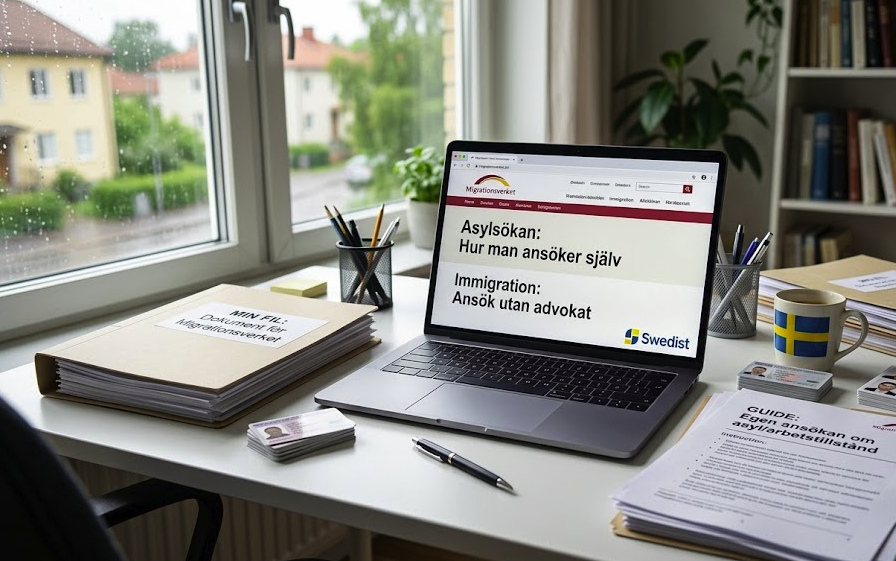
The short answer is yes. Swedish law does not require applicants to retain private legal counsel to lodge a formal application for international protection. The Swedish Migration Agency (Migrationsverket) is legally mandated to accept, register, and process all claims filed directly by individuals.


A critical legal condition to understand is the geographic requirement for filing. It is legally impossible to submit an asylum application through a Swedish embassy or consulate abroad. Migrationsverket does not maintain any online or digital application portals for asylum from outside the country.
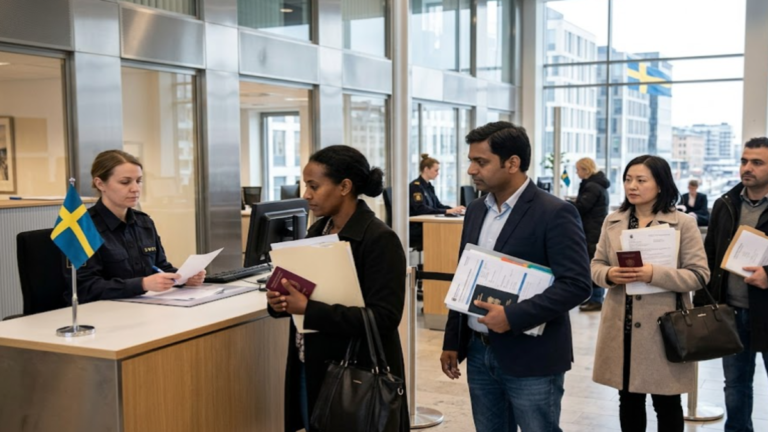
To initiate a claim, an individual must be physically present on Swedish soil or at an official Swedish border control point. Upon arrival at a Swedish airport, sea port, or land border crossing, a person must explicitly state their intent to seek protection to the Swedish Border Police (Gränspolisen), who will then immediately refer the individual to the Migration Agency for formal registration.
The Step-by-Step Blueprint: The Direct Asylum Process
For those navigating the protection process independently, understanding the formal sequence of events is vital for ensuring accurate file management.
[1. Registration & Biometrics] ➔ [2. Initial Screening Interview] ➔ [3. Main substantive Interview] ➔ [4. File Review & Decision]
Step 1: Formal Registration and Biometrics Collection
The process begins at one of Migrationsverket’s dedicated application units. During this initial visit, authorities will:
Record your full legal identity, personal data, and background details.
Take official biometric photographs and capture digital fingerprints.
Cross-reference your biometric data against the European Eurodac database to determine if you have previously registered a claim, held a visa, or entered another European Union member state, in accordance with the regional Eurodac regulations.
Step 2: The Initial Screening Interview
Shortly after registration, you will undergo a preliminary screening. This short interview focuses on establishing your identity, tracing your exact travel route from your country of origin to the Swedish border, and understanding the baseline reasons for your arrival. It is essential to present any physical identification documents, such as passports, birth certificates, or national ID cards, during this stage.
Step 3: The Main Substantive Interview
This is the most critical phase of the entire independent application. During this detailed session, you must articulate the precise reasons why you cannot return to your home country. Independent applicants must be prepared to present a coherent narrative backed by any verifiable evidence they have managed to secure.
To build a robust independent file, applicants should organize their supporting evidence systematically. This material can include, but is not limited to:
Official Documentation: Birth certificates, marriage licenses, professional credentials, or political/social association memberships.
Corroborating Reports: Verifiable medical reports, legal notices, or documented court rulings from your home country.
Direct Evidence: Verified threat correspondence, printed communications, or relevant multimedia files (photos or videos) that directly corroborate your personal narrative.
Step 4: File Evaluation and the Waiting Period
Following the main interview, case officers at Migrationsverket will review the entire file on an individual, case-by-case basis. While waiting for a final decision, applicants are granted temporary rights within the country, including access to state-provided housing accommodations, limited financial allowances for basic necessities, essential emergency healthcare, and mandatory schooling for minor children.
Legal Criteria for Protection and State-Appointed Support
Under Swedish and international humanitarian laws, Migrationsverket evaluates whether an applicant qualifies for protection under one of two primary legal definitions:
While you do not need a lawyer to initiate or present your case, the Swedish government recognizes that complex cases require legal balance. If Migrationsverket’s initial assessment indicates that your case involves intricate legal questions, the state will automatically appoint a public counsel (offentligt biträde) to assist you free of charge. This state-appointed lawyer will review your file, attend major interviews with you, and ensure your rights are fully respected under Swedish administrative law.
Navigating Refusals, Appeals, and the Evolving Policy Landscape
If Migrationsverket issues a negative decision on an independent application, the legal process does not immediately terminate. Applicants maintain the right to appeal the decision before a specialized Migration Court (Migrationsdomstolen). The appeal must be lodged within a strict statutory timeframe—typically three weeks from the date the applicant was formally notified of the refusal. During the appeals phase, your state-appointed public counsel or specialized non-governmental human rights organizations can provide direct assistance in drafting the necessary legal briefs.
The Realities of the Current Swedish System
It is essential for any perspective applicant to approach this process with an accurate understanding of the current political and administrative climate in Northern Europe. Over recent years, Sweden has implemented a significant structural shift toward increasingly restrictive immigration and asylum policies.
Official government statistics show that the volume of approved protection claims has reached historically low levels. Consequently, the reliance on vague or undocumented assertions is no longer viable. Success within the independent track requires an exceptionally high standard of organization, total transparency, and a well-supported body of verifiable evidence. For deeper insights into current global protection frameworks, you can review the Official UNHCR Northern Europe Resource Center, which provides continuous monitoring of regional legal standards.
Frequently Asked Questions
Can I submit an asylum application online before traveling to Sweden? No. There are no online or remote application mechanisms for asylum. An applicant must be physically present on Swedish territory or at an official Swedish border entry point to legally lodge a claim with the authorities.
What happens if another European country is found to be responsible for my claim? If your fingerprints are registered in the Eurodac system by another EU member state, Sweden may request that country to take charge of your file under regional border agreements. Migrationsverket will evaluate these administrative links before reviewing the substance of your protection claim.
Is it possible to switch from an asylum track to a work permit inside Sweden? Under specific and strict legal conditions, if an independent asylum seeker receives a final rejection but has been employed in Sweden during the waiting period under a valid contract that meets all domestic labor standards, they may apply for a change of status to a work permit without leaving the country.
Where can I find the official guides and tracking portals for my independent application? You should rely exclusively on the certified online tools provided by the state. You can access the Official Migrationsverket Application Portal to review real-time processing updates, fee structures for economic tracks, and localized office directories.
Managing your own path through the Swedish immigration or protection systems requires careful attention to detail, strict compliance with statutory deadlines, and absolute honesty with case officers. By utilizing direct public resources, you can ensure your profile is assessed fairly on its merits while avoiding the risks of third-party exploitation.…More
Contact: info@alswedalyom.com