
Swedish citizenship may be revoked in certain cases: What the new rules mean
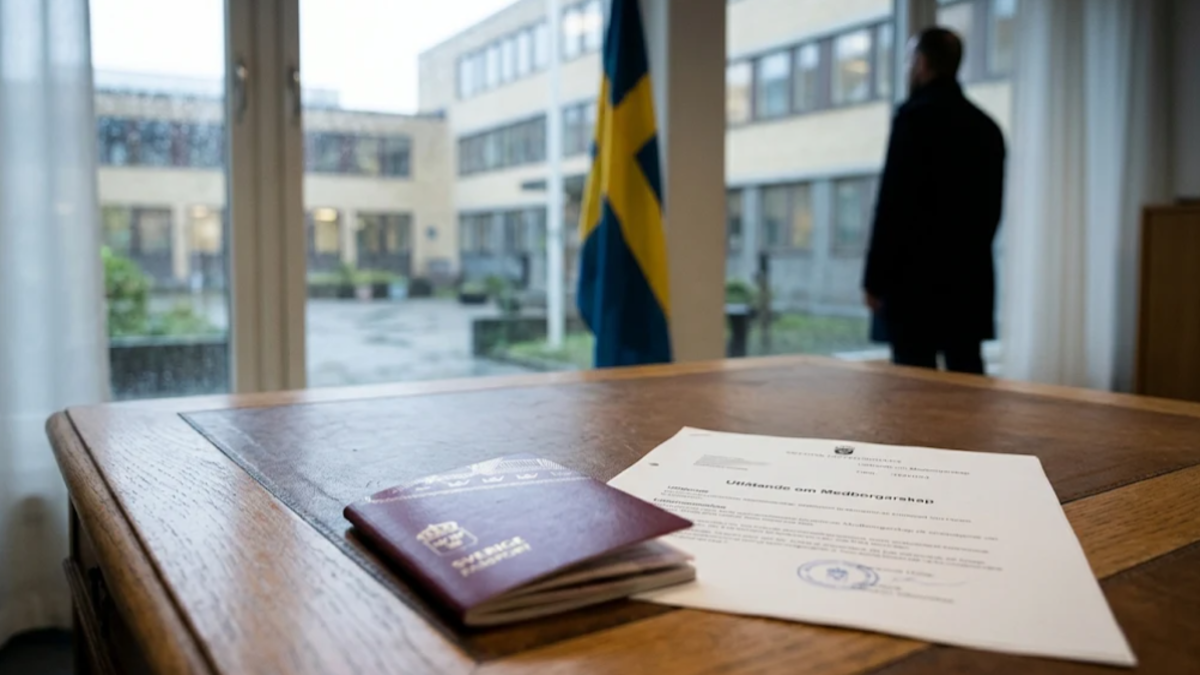
Swedish citizenship could be withdrawn from certain people with dual nationality if they obtained it through false information or were convicted of particularly serious crimes. Sweden’s Parliament has approved a constitutional amendment allowing such measures, marking a significant change to the country’s citizenship framework.

However, the constitutional amendment does not mean that Swedish citizenship can immediately be revoked. Additional legislation must first be adopted to establish the conditions, procedures and safeguards governing individual cases.
The change is expected to affect people who hold both Swedish citizenship and the citizenship of another country. People who hold only Swedish citizenship will not be covered by the new constitutional provision.

Sweden approves constitutional change allowing citizenship revocation
On 11 November 2026, the Swedish Riksdag approved a constitutional amendment making it possible to introduce legislation allowing Swedish citizenship to be withdrawn in specific circumstances.
The decision followed an earlier parliamentary vote on 20 May 2026. Because the measure changes Sweden’s Constitution, two parliamentary decisions with a general election between them were required.
The amendment concerns Chapter 2, Section 7 of the Instrument of Government, one of Sweden’s fundamental constitutional laws.
According to the Riksdag, the amendment will enter into force on 1 January 2027.
It establishes the constitutional basis for revoking citizenship from people who are also citizens of another country and who meet certain conditions. The detailed rules, however, still need to be established through ordinary legislation.
Sveriges riksdag+2
Which people could lose Swedish citizenship?
The government inquiry presented two main circumstances in which Swedish citizenship could potentially be withdrawn.
1. Citizenship obtained through false information
The first category concerns people who acquired Swedish citizenship through incorrect or misleading information or other improper conduct.
This could include deliberately providing false details during the citizenship application process or withholding relevant information to obtain approval.
The proposed rules are intended to address cases in which citizenship was granted on grounds that were not legitimate.
2. Convictions for particularly serious crimes
The second category concerns people convicted of offences that seriously damage Sweden’s vital interests.
The government inquiry identifies particularly serious criminal activity, including offences threatening national security and certain forms of serious organised crime.
The proposal also addresses certain terrorist offences and serious criminal activity carried out within criminal networks when it causes substantial damage to the state’s vital interests.
This does not mean that every criminal conviction could result in the loss of citizenship. The proposed legislation is directed at particularly serious cases, rather than ordinary criminal offences.
Regeringskansliet+2
Can Swedish citizenship be revoked if a person becomes a criminal?
No. Under the proposed framework, an ordinary criminal conviction would not automatically lead to the loss of Swedish citizenship.
The government inquiry sets out specific requirements for serious offences. Its proposals include crimes threatening Sweden’s security, certain terrorist offences and serious offences committed within criminal networks that substantially damage the country’s vital interests.
A conviction must also be final. This means the criminal proceedings must have reached a final judgment before citizenship revocation can be considered on criminal grounds.
The inquiry proposes that the Swedish Migration Agency assess whether the conduct meets the legal criteria, based on the criminal court’s judgment.
The distinction is significant: being investigated, arrested or charged with an offence would not, by itself, satisfy the proposed conditions.
People who cannot be left stateless
One of the central safeguards is that Sweden would not be allowed to revoke citizenship if doing so would leave an individual without any nationality.
Consequently, the proposed system is limited to people who hold Swedish citizenship alongside citizenship of another country.
The individual’s other nationality must still exist when the revocation decision is made. Having previously held another citizenship would not necessarily be sufficient if that nationality had subsequently been lost.
This restriction reflects Sweden’s international obligations concerning statelessness.
Swedish Migration Agency+2
What protections would individuals have?
The government inquiry proposes several safeguards to prevent citizenship revocation from becoming an automatic or arbitrary measure.
These include:
An individual assessment: Each case would need to be examined on its own circumstances.
Proportionality: Authorities would have to consider the seriousness of the conduct and the consequences of removing citizenship.
Family circumstances: The impact on spouses, partners and children would be relevant.
Time elapsed: The period between acquiring citizenship and the circumstances leading to possible revocation would need to be considered.
The right to appeal: Decisions by the Swedish Migration Agency would be appealable to the Migration Court.
The burden of proof: The Migration Agency would have to demonstrate that the conditions for revocation were met.
The inquiry also proposes access to legal assistance in cases where it cannot be assumed that the individual has no need for a public counsel.
Where children are affected, their best interests would have to be considered. Under the proposed rules, a child’s citizenship could be affected in certain circumstances when a parent’s citizenship is revoked because it was obtained through improper conduct. However, safeguards would apply, including protection against making the child stateless.
These are proposals in the government inquiry, not procedural rules that are already in force.
Regeringskansliet+2
When could the new citizenship rules take effect?
There are two separate legislative stages that readers should understand.
11 November 2026 – Constitutional amendment approved
Parliament approved the amendment for a second time, completing the constitutional approval process.
1 January 2027 – Constitutional amendment enters into force
The Constitution will allow ordinary legislation to establish circumstances in which citizenship can be revoked.
1 January 2028 – Proposed date for the detailed legislation
The government inquiry recommends that amendments to the Swedish Citizenship Act and related legislation enter into force on this date. The proposal has not yet been adopted.
The Swedish Migration Agency has explicitly clarified that the constitutional amendment alone is not sufficient to start revoking citizenship. Changes to other legislation are necessary.
Therefore, 1 January 2027 should not be interpreted as the date on which people will start automatically losing Swedish citizenship.
Sveriges riksdag+2
Will the rules apply to people who already have Swedish citizenship?
This is one of the most important questions for people who have naturalised in Sweden.
The government inquiry proposes different transitional rules for the two main grounds for revocation.
| Reason for possible revocation | Proposed application |
|---|---|
| False or misleading information when obtaining citizenship | Only citizenship acquired after the new legislation enters into force |
| Certain very serious crimes | Only offences committed after the new legislation enters into force |
This distinction matters because the inquiry does not propose that every person who previously obtained Swedish citizenship could have it withdrawn retrospectively under the new rules.
For example, under the proposed transitional provisions, a person who acquired Swedish citizenship before the legislation takes effect would not lose it under the new fraud-related provision simply because incorrect information had been provided during the earlier application process.
Similarly, an offence committed before the proposed legislation takes effect would not fall under the new criminal revocation provision.
These transitional arrangements are part of the inquiry’s recommendations and could be subject to change during the legislative process.
Regeringskansliet+1
What should Swedish citizens with dual nationality do now?
At this stage, there is no need for dual citizens to take immediate action simply because Parliament has approved the constitutional amendment.
However, people concerned about how the proposed rules might affect them should follow developments through official government announcements and the Swedish Migration Agency.
In particular, anyone who has questions about information supplied during a citizenship application or the consequences of a criminal conviction should seek advice from a qualified immigration lawyer.
The final legislation will be particularly important because it will determine the precise offences covered, the conditions for revocation and how individual cases will be assessed.
Our editorial assessment
The possibility of revoking Swedish citizenship represents a major change to a principle that has traditionally received strong constitutional protection in Sweden.
The government argues that citizenship obtained through deception or held by individuals responsible for particularly serious crimes should not necessarily remain protected. Supporters also see the measure as a tool for addressing threats to national security and serious organised crime.
However, citizenship is not simply an administrative status. Losing it can have profound consequences for an individual’s legal position, family life and future.
Our assessment is that the effectiveness and legitimacy of this reform will depend heavily on how carefully the implementing legislation is drafted and applied. Clear definitions, proportionality assessments, independent judicial review and protection against statelessness will be essential.
For now, the distinction between an approved constitutional amendment and legislation that actually permits revocation remains crucial. Swedish citizenship cannot be withdrawn under the new framework solely because Parliament has approved the constitutional change.
Frequently asked questions
Can Sweden revoke citizenship from someone who has dual nationality?
The constitutional amendment allows legislation to provide for revocation in two situations: citizenship obtained through incorrect or misleading information or other improper conduct, and convictions for crimes that seriously damage Sweden’s vital interests.
Can Sweden revoke citizenship from someone who has only Swedish nationality?
No. The new constitutional provision concerns people who also hold citizenship in another country. Revocation cannot be used if it would make someone stateless.
Will people who have already become Swedish citizens lose their citizenship?
Not automatically. The government inquiry proposes transitional rules limiting the application of the new provisions. Fraud-related revocation would apply to citizenship acquired after the new legislation takes effect, while the criminal provisions would apply to offences committed after that date.
When will Sweden start revoking citizenship?
The constitutional amendment enters into force on 1 January 2027. However, the additional legislation is still required. The government inquiry proposes 1 January 2028 as the starting date for those legislative changes, but this has not yet been approved.
Can a decision to revoke Swedish citizenship be appealed?
The government inquiry proposes that decisions made by the Swedish Migration Agency should be appealable to the Migration Court. This would allow affected individuals to challenge a revocation decision.
Official Sources
1. Swedish Migration Agency — Swedish citizenship may be revoked in certain cases
Read the official announcement
2. Swedish Parliament (Riksdag) — Yes to constitutional amendments on abortion, citizenship and freedom of association
Read the parliamentary announcement
3. Government Offices of Sweden — SOU 2026:21, Revocation of Swedish Citizenship
Read the official government inquiry (PDF)
4. Government Offices of Sweden — Government commissions inquiry on revocation of citizenship
Contact: info@alswedalyom.com