

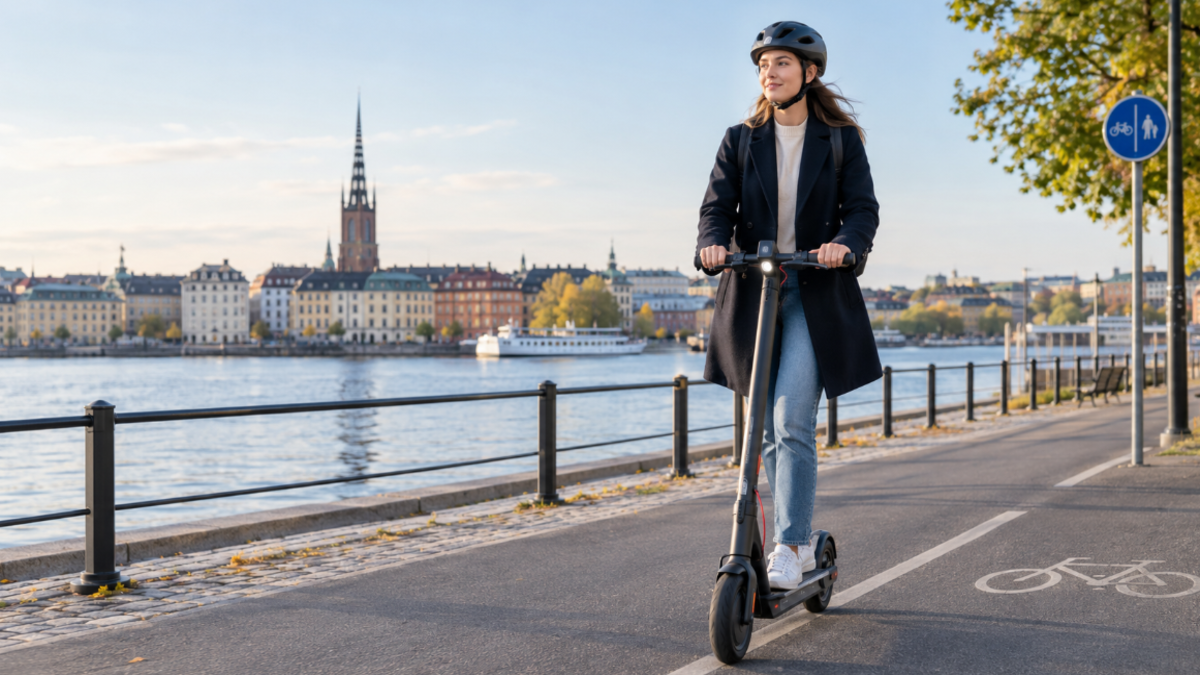
Electric Scooter Rules in Sweden: What Riders Need to Know in 2026
Electric scooters are a convenient way to get around Swedish cities, but riders must follow specific rules on speed, motor power, helmets, road use and parking. The most important requirement is that an electric scooter must be designed for a maximum speed of 20 km/h and have a continuous rated motor power of no more than 250 watts to qualify as a bicycle under Swedish traffic rules.

For commuters, tourists, parents and anyone using a privately owned or rented scooter, understanding these requirements can help prevent fines, unsafe journeys and problems with insurance. Sweden is also reviewing its electric scooter rules, but proposed changes should not be confused with legislation already in force.
Transportstyrelsen+1

Electric scooter rules in Sweden: the key requirements
The Swedish Transport Agency (Transportstyrelsen) sets out the main technical requirements for electric scooters used in public traffic. When a scooter qualifies as a bicycle, its rider must follow the applicable bicycle traffic rules.
| Requirement | Rule in Sweden |
|---|---|
| Maximum designed speed | 20 km/h |
| Continuous rated motor power | Maximum 250 watts |
| Minimum age for riding without a helmet | Helmet is legally required for riders under 15 |
| Passengers | No passengers on a standard electric scooter |
| Brakes and bell | Both required |
| Lights and reflectors | Required when riding in darkness |
| Riding on pavements | Not permitted |
| Parking on pedestrian or cycle paths | Only at designated bicycle parking facilities or arrangements |
These requirements apply to scooters that qualify as bicycles. Other electric scooters may fall into a different vehicle category, with additional legal requirements.
Transportstyrelsen+2
Where can you ride an electric scooter in Sweden?
Use cycle lanes whenever available
Electric scooters that qualify as bicycles should normally use a cycle lane when one is available. Riders must follow the relevant traffic signs, signals and road rules, including giving way when required.
Riding on pavements and pedestrian paths is prohibited. This rule helps protect pedestrians, particularly children, older people and people with visual or mobility impairments.
If there is no suitable cycle lane, the applicable rules for bicycle traffic determine where you may ride. Do not assume that every road is suitable or permitted for every type of scooter.
Polismyndigheten+1
Can you ride an electric scooter on the road?
Yes, in certain circumstances. Scooters classified as bicycles may use the carriageway where the bicycle traffic rules allow it. However, riders should check road signs, local restrictions and the conditions of the route before setting off.
On pedestrian streets and in designated walking-speed zones, special restrictions apply. In a walking-speed area, vehicles must travel at walking pace, and drivers must give way to pedestrians. Parking is also restricted in these areas.
Sveriges riksdag+1
Do you need a helmet to ride an electric scooter?
In Sweden, riders under 15 must wear a helmet when using an electric scooter that qualifies as a bicycle. For adults riding this type of scooter, a helmet is recommended but is not generally compulsory under the bicycle helmet rule.
Different requirements may apply if a scooter is legally classified as a moped or another motor vehicle. Riders should therefore check the vehicle’s classification rather than assume that the rules for ordinary electric scooters apply to every model.
Transportstyrelsen+1
Even where the law does not require a helmet, wearing one is a sensible precaution. Small wheels can make scooters less stable on uneven surfaces, and a sudden stop or collision can cause serious head injuries.
Electric scooter insurance in Sweden
Not every electric scooter is subject to the same insurance requirements. Swedish law requires compulsory motor third-party liability insurance for certain electric vehicles, depending on their designed speed and weight.
According to the Swedish Traffic Insurance Association (Trafikförsäkringsföreningen), insurance is required for electric vehicles without pedals or cranks when either of the following applies:
The vehicle is designed to travel faster than 20 km/h.
The vehicle is designed to travel faster than 14 km/h and weighs more than 25 kg.
The owner is responsible for arranging the required insurance, and riders must carry proof of insurance when using a vehicle covered by the requirement.
vad gäller?+1
These insurance thresholds are separate from the rules determining whether an electric scooter qualifies as a bicycle. A scooter that exceeds the bicycle classification limits cannot automatically be used on public roads simply because it has insurance.
Before buying or riding a high-powered model, check its legal vehicle category and whether registration, a driving licence, a helmet or other requirements apply.
Can you carry a passenger on an electric scooter?
No. A standard electric scooter is designed for one person, so carrying a passenger is not permitted under the applicable rules.
This applies to adults carrying children as well as to two friends sharing one scooter. Extra weight can also affect balance and braking, increasing the risk of an accident.
Rental scooters are subject to the same basic traffic requirements as privately owned scooters when they are being used on public roads.
Electric scooter parking rules
Sweden introduced restrictions on electric scooter parking to prevent vehicles from blocking pedestrian routes.
Since September 2022, electric scooters must not be parked on pedestrian or cycle paths unless they are placed at a designated bicycle parking facility or another approved parking arrangement. Local exceptions may apply.
data.riksdagen.se+1
When ending a journey, riders should:
Use a designated parking area whenever one is available.
Keep pavements, crossings and cycle paths clear.
Avoid blocking entrances, bus stops and access routes.
Follow the instructions in the rental app, where applicable.
Poorly parked scooters can create particular difficulties for wheelchair users, visually impaired pedestrians and people pushing prams.
What happens if an electric scooter exceeds the legal limits?
The technical specifications of a scooter matter as much as the way it is ridden.
To qualify as a bicycle for use in public traffic, an electric scooter must not be designed to exceed 20 km/h and must have a continuous rated motor power of no more than 250 watts.
If either limit is exceeded, the scooter does not qualify as a bicycle under these rules. It may fall into another vehicle category, potentially with requirements for registration, insurance, a driving licence and protective equipment. A scooter that does not meet the requirements for an authorised vehicle category cannot simply be ridden on public roads.
Transportstyrelsen+1
Police have specifically warned that riding an improperly classified scooter in public traffic can lead to suspected offences. Parents or guardians may also face legal consequences in certain circumstances if they allow a minor to use an unsuitable vehicle.
Polisen+1
Practical advice: Check the manufacturer’s specifications and documentation before purchasing a scooter. Do not rely solely on a seller’s description or an adjustable speed setting to establish that a model is road-legal.
Are Sweden’s electric scooter rules changing in 2026?
The Swedish Transport Agency confirmed in July 2026 that it had begun reviewing the rules governing electric scooters. The review follows a substantial increase in scooter use and related injuries.
According to the agency, seven people died and 6,624 were injured in electric scooter-related accidents during 2025. These figures explain why authorities are examining whether additional measures are needed.
Transportstyrelsen
The review is expected to conclude in early 2027. The agency has not yet confirmed what changes it will recommend.
For riders, the distinction is important: the review is underway, but it is not itself a new law. The existing requirements for vehicle classification, road use, helmets, equipment, insurance and parking remain the basis for riding legally.
Before you ride: a practical checklist
Use this checklist before setting off on a privately owned or rented electric scooter:
The Swedish Transport Agency also advises riders to adjust their speed to visibility, road surfaces, bends and other road users.
Transportstyrelsen
Our assessment: compliance matters more than speed
Electric scooters can make short journeys easier, but their convenience depends on riders sharing public space responsibly. The current Swedish framework already establishes clear technical limits and restrictions on pavements, passengers and parking.
The increase in accidents reported by the Transport Agency reinforces the need for better awareness of the rules, especially among young riders and parents choosing scooters for their children.
Our view is that checking a scooter’s technical specifications before purchase is just as important as wearing protective equipment. Riders should also follow official announcements as the regulatory review progresses, rather than assume that every proposed safety measure has already become law.
Frequently asked questions
Is a 25 km/h electric scooter legal in Sweden?
Not as a bicycle under the standard electric scooter rules. A scooter designed to exceed 20 km/h does not qualify as a bicycle under these requirements and cannot simply be used in public traffic without meeting the rules for another authorised vehicle category.
Can adults ride electric scooters without helmets in Sweden?
Adults riding scooters classified as bicycles are not generally subject to the bicycle helmet requirement, which applies to riders under 15. Wearing a helmet is nevertheless recommended. Different rules may apply to other vehicle categories.
Do electric scooters need insurance in Sweden?
Some do. Compulsory traffic insurance applies to electric vehicles without pedals or cranks that are designed to exceed 20 km/h, or that exceed 14 km/h and weigh more than 25 kg. Check the specifications of your particular scooter.
Can I ride an electric scooter on the pavement?
No. Riding an electric scooter on a pavement or pedestrian path is prohibited under the standard rules. Use an appropriate cycle route or another permitted route instead.
Have new electric scooter laws taken effect in Sweden in 2026?
The Swedish Transport Agency began reviewing the regulations in 2026, with the review scheduled to conclude in early 2027. Any future changes should be checked against official announcements and published legislation.
Official Sources
1. Swedish Transport Agency (Transportstyrelsen) — Electric scooters (Elsparkcykel)
https://www.transportstyrelsen.se/sv/vagtrafik/fordon/fordonsregler/regler-for-olika-fordonsslag/elsparkcykel
2. Swedish Transport Agency (Transportstyrelsen) — Review of electric scooter regulations, published 27 July 2026
https://www.transportstyrelsen.se/sv/om-oss/pressrum/nyhetsarkiv/2026/transportstyrelsen-ser-over-elsparkcykelregler/
3. Swedish Traffic Insurance Association (Trafikförsäkringsföreningen) — Electric scooter insurance: what applies?
https://www.tff.se/sv/krav/forsakring-for-elsparkcyklar—vad-galler/
4. Swedish Police Authority (Polismyndigheten) — Vehicles and traffic rules
https://polisen.se/Lagar-och-regler/Trafik-och-fordon/Fordon/
5. Swedish Parliament (Sveriges riksdag) — Traffic Ordinance (1998:1276)
https://www.riksdagen.se/sv/dokument-och-lagar/dokument/svensk-forfattningssamling/trafikforordning-19981276_sfs-1998-1276/
Contact: info@alswedalyom.com