
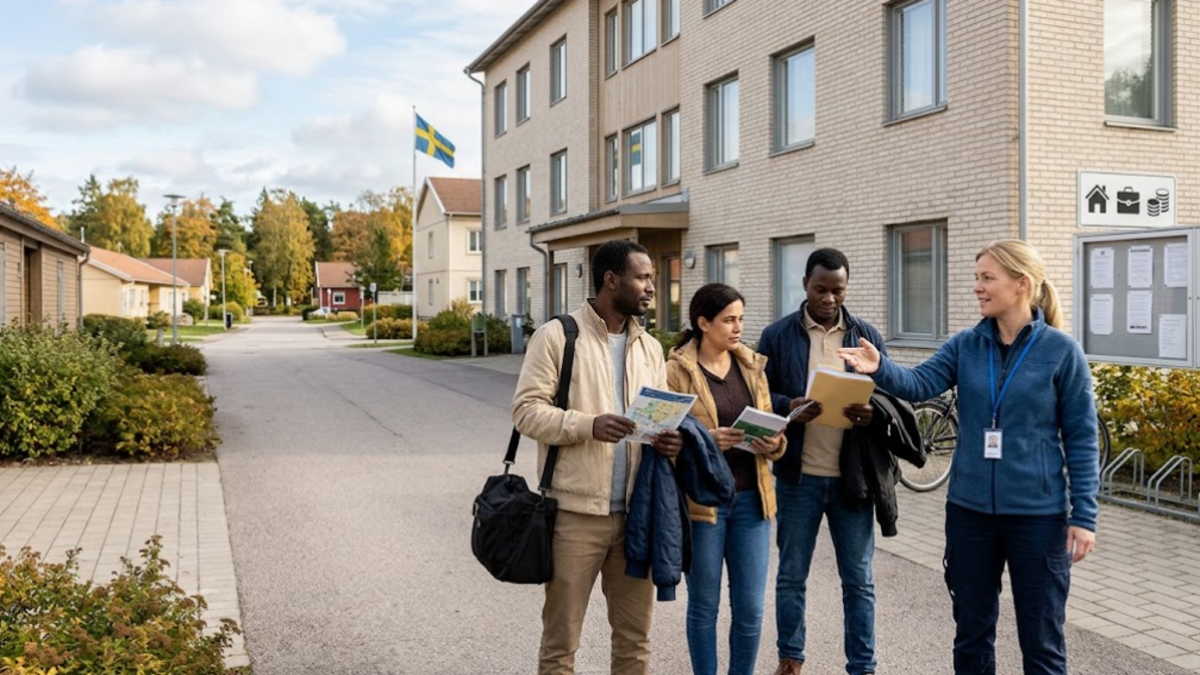
Sweden’s New Asylum Reception Rules: Accommodation, Work Rights and Daily Allowances Explained
Sweden’s new asylum reception rules took effect on 1 October 2026, changing how asylum seekers access accommodation, daily financial support and permission to work. The new Reception Act also introduces geographical restrictions, attendance checks and stricter conditions that can lead to reduced or withdrawn allowances.

The changes affect people applying for international protection and certain people who have received enforceable return decisions. For applicants who depend on support from the Swedish Migration Agency, following the new procedures is particularly important: failing to meet the requirements may affect their financial assistance, while some applicants must submit a fresh application for daily allowance.
What changed under Sweden’s new Reception Act?
The new law replaces the previous Act on Reception of Asylum Seekers (LMA). It expands the circumstances in which people remain covered by the reception system while introducing additional obligations for those receiving support.

The main changes are:
Accommodation: Applicants generally need to live in the accommodation assigned by the Swedish Migration Agency to receive daily allowance and special grants.
Geographical restrictions: As a general rule, people covered by the new restrictions must remain within the county where their assigned accommodation is located.
Attendance checks: Applicants aged 16 or older living at reception and return centres must attend scheduled checks.
Work rights: The conditions for receiving an exemption from the work-permit requirement, known as AT-UND, have become more restrictive.
Financial support: More breaches of the rules can result in a reduction or loss of daily allowance, and incorrectly paid support may have to be repaid.
These are measures that have entered into force, rather than proposals awaiting approval, according to the Swedish Migration Agency.
Accommodation: applicants are generally expected to live where they are assigned
Under the reception system, the Swedish Migration Agency assigns asylum seekers a place at one of its accommodation facilities. The rules introduced in 2025 already made living in assigned accommodation a key condition for receiving daily allowance and special grants. The new Reception Act adds geographical restrictions and further compliance requirements.
Applicants who choose to live elsewhere generally cannot receive daily allowance or special grants from the Agency. Exceptions may be possible, including in certain cases involving close family members or other exceptional circumstances, but applicants should not assume that permission will be granted automatically.
People who have income or assets may also be required to pay for their accommodation and any food provided. Those without sufficient financial resources may not have to pay these costs.
Can asylum seekers leave their assigned area?
From 1 October, the general rule is that people covered by the geographical restriction must stay within the county where their assigned accommodation is located. If the Agency has authorised them to live elsewhere, the restriction generally applies to the county where they actually live.
Anyone who needs to travel outside the permitted area should contact the Swedish Migration Agency and request permission before leaving, where possible. The Agency’s instructions and any individual decision should be followed.
Applicants aged 16 or older who live at reception or return centres must also take part in attendance checks. The Agency says these checks generally take place on Mondays, Wednesdays and Fridays.
Failure to follow a geographical restriction or comply with attendance requirements may affect financial support. Applicants with a legitimate reason for missing a check or needing to leave the area should contact the Agency about the applicable permission procedure.
Daily allowances: how much can asylum seekers receive?
The Swedish Migration Agency provides financial assistance to applicants who lack sufficient money or other assets and meet the applicable conditions. Support can include a daily allowance and special grants for specific essential needs.
The daily allowance depends on household circumstances and whether meals are provided at the accommodation. The Agency’s published rates are shown below.
| Applicant category | Accommodation with food provided | Accommodation without food provided |
|---|---|---|
| Single adult | SEK 24 per day | SEK 71 per day |
| Adults living with a spouse or partner | SEK 19 per person per day | SEK 61 per person per day |
| Young people aged 18–20 living with parents | SEK 19 per day | SEK 61 per day |
| Children aged up to 3 | SEK 12 per day | SEK 37 per day |
| Children aged 4–10 | SEK 12 per day | SEK 43 per day |
| Children aged 11–17 | SEK 12 per day | SEK 50 per day |
Source: Swedish Migration Agency. Eligibility and the applicable rate depend on the applicant’s circumstances and accommodation arrangements. These figures are the Agency’s published daily rates; check its official financial-aid page for current guidance.
The allowance is intended to help cover everyday costs beyond any meals provided, including clothing, shoes, hygiene products, medicine, healthcare-related expenses and other basic needs. It is not a salary or a general income-replacement benefit.
Families with more than two children receive the full child allowance for the two oldest children and half the applicable allowance for each additional child, under the Agency’s published rules.
What if you need extra financial help?
Applicants may apply for a special grant when they have an essential need that is not covered by the daily allowance and cannot afford it themselves. Depending on individual circumstances, eligible expenses may include:
Winter clothing and school supplies.
Items for infants, including a pram.
Glasses.
Certain healthcare, medication and medical travel costs.
The Agency assesses each request individually. Applicants should submit the relevant form and supporting information through their registered reception unit.
Do existing recipients need to apply again?
Yes. The Agency instructed people who needed daily allowance after the new law took effect to submit a new application. To receive the allowance from 1 October, the Agency needed to receive that application by 30 September.
That deadline has passed. Anyone who has not reapplied should contact their reception unit and submit the required application as soon as possible. The Agency states that it cannot grant daily allowance for a period before it received the application, so a late application may leave some days unpaid.
Applicants should also report changes in income, assets, address or household finances. Incorrect payments may have to be repaid.
Work rights: stricter conditions for AT-UND
Asylum seekers do not automatically have permission to work simply because they have submitted an asylum application. Some may work under an exemption from the requirement to hold a work permit, known as AT-UND.
From 1 October, the general rule is that an applicant can be granted AT-UND only if the Swedish Migration Agency has not made a decision on the asylum application within six months of registration. The delay must not have been caused by the applicant, and the other applicable conditions must also be met.
This is a change to the conditions for obtaining the exemption, not a blanket guarantee of work rights after six months. Applicants should confirm their individual eligibility with the Agency before starting employment.
What happens to people who already have AT-UND?
As a general rule, people who already held AT-UND when the new law entered into force can keep it and continue working. The Agency may notify individuals if their existing exemption no longer applies.
People who are allowed to work must tell the Swedish Migration Agency if their financial circumstances change. Employment income can affect eligibility for daily allowance and whether accommodation or meals must be paid for.
Are people from Ukraine affected?
The Agency states that people from Ukraine who have temporary protection under the EU Temporary Protection Directive are not subject to the new geographical restrictions and attendance checks. The new AT-UND rules also do not affect this group.
Temporary protection is a separate legal status from applying for asylum. People should check the rules attached to their own status rather than assume that the arrangements for asylum applicants apply to them.
What happens if an applicant receives a return decision?
The new Reception Act also changes the rules for people who have received a return decision that can be enforced.
Some people may remain covered by the reception system even after the return decision has taken effect or the deadline for voluntary departure has expired. This can mean that accommodation and financial assistance remain available until the person leaves Sweden, provided the relevant conditions are met.
However, additional obligations apply. People aged 16 or older who are subject to the relevant reporting requirements must generally report to the Swedish Migration Agency three times a week. Eligibility for daily allowance also depends on cooperating with measures needed to carry out the return decision.
Failure to comply can affect financial support. The consequences depend on the person’s circumstances and the applicable decision.
What asylum seekers should do now
Applicants should take the following practical steps:
Check their accommodation decision. Confirm where they are required to live and whether any exception has been approved.
Confirm their geographical restrictions. Ask the Swedish Migration Agency for permission before travelling outside the permitted area when required.
Check attendance and reporting obligations. Follow the instructions issued by the Agency, including any individual reporting requirements.
Apply for daily allowance if necessary. Anyone who missed the 30 September deadline should contact their reception unit immediately.
Verify work eligibility. Do not assume that six months of waiting automatically grants permission to work.
Report changes in finances or address. Income, assets and contact details can affect support and the handling of an asylum case.
Ask about individual needs. Applicants who need adapted accommodation or special financial assistance should raise this with their reception unit.
Official guidance is available through the Swedish Migration Agency’s asylum information pages.
Frequently asked questions
When did Sweden’s new asylum reception rules take effect?
The new Reception Act entered into force on 1 October 2026.
Can asylum seekers choose where they live?
Generally, no. Applicants are assigned accommodation by the Swedish Migration Agency. Exceptions may be granted in certain circumstances, but living elsewhere can affect entitlement to daily allowance and special grants.
How much is the daily allowance in Sweden?
The published rates range from SEK 12 per day for children in accommodation where food is provided to SEK 71 per day for a single adult in accommodation where food is not provided. The applicable amount depends on household circumstances and the accommodation arrangement.
Can asylum seekers work after six months?
Not automatically. The general rule allows AT-UND to be granted when the Agency has not decided the asylum application within six months of registration, provided the delay was not caused by the applicant and all other conditions are met.
What if someone misses an attendance check?
They should contact the Swedish Migration Agency promptly and explain the circumstances. Permission may be available for a valid reason. Failure to comply with applicable attendance or reporting requirements can affect daily allowance and may have other consequences depending on the case.
Editorial assessment
Sweden’s new Reception Act links access to financial support more closely to compliance with accommodation, geographical and reporting requirements. The changes also narrow the general route to obtaining permission to work while an asylum application is pending.
For applicants, the immediate priority is to understand the conditions attached to their individual case and maintain contact with the Swedish Migration Agency. In particular, anyone who has not reapplied for daily allowance should act promptly rather than assume that payments will resume automatically.
The distinction between the rules for asylum applicants and those for people with temporary protection from Ukraine is also essential. Because the consequences can affect basic living support and work opportunities, applicants should rely on current official guidance and seek case-specific clarification when necessary.
Official Source
1. Swedish Migration Agency — New Reception Act Comes into Force on 1 October https://www.migrationsverket.se/en/news-archive/news/2026-10-01-new-reception-act-comes-into-force-on-1-october.html
2. Swedish Migration Agency — Financial Aid for People Applying for International Protection (Asylum) https://www.migrationsverket.se/en/you-are-waiting-for-a-decision/international-protection-asylum/you-have-applied-for-international-protection-asylum/financial-aid.html
3. Swedish Migration Agency — Accommodation for People Applying for International Protection (Asylum) https://www.migrationsverket.se/en/you-are-waiting-for-a-decision/international-protection-asylum/you-have-applied-for-international-protection-asylum/accommodation.html
4. Swedish Parliament — New Act on Reception of Asylum Seekers https://www.riksdagen.se/en/news/articles/2026/jun/3/new-act-on-reception-of-asylum-seekers_cms920c41d3-1537-4fbf-a445-7dec24ec3f86en/
Contact: info@alswedalyom.com