
STOCKHOLM – Swedist: Västerås man found dead after police were called to a home early Tuesday morning, where officers discovered a deceased man and arrested another man on suspicion of murder or manslaughter. The property was sealed off while investigators and forensic technicians examined the scene, but what happened inside the home and what led to the man’s death?

Västerås man found dead after early-morning police call
Police were called to a residential address in Västerås shortly before 5 a.m. on Tuesday after receiving information that a man was injured inside a home.
When officers arrived, they found a man dead at the address. Police later confirmed that the man’s relatives had been informed of his death.

Another man who was inside the home was arrested in connection with the incident. Police initially said he was suspected of murder or manslaughter, while the investigation continued to establish what had happened.
The incident was registered by Swedish police under the category of murder or manslaughter. Police stressed that the information released at the early stage represented preliminary details and could change as the investigation developed.
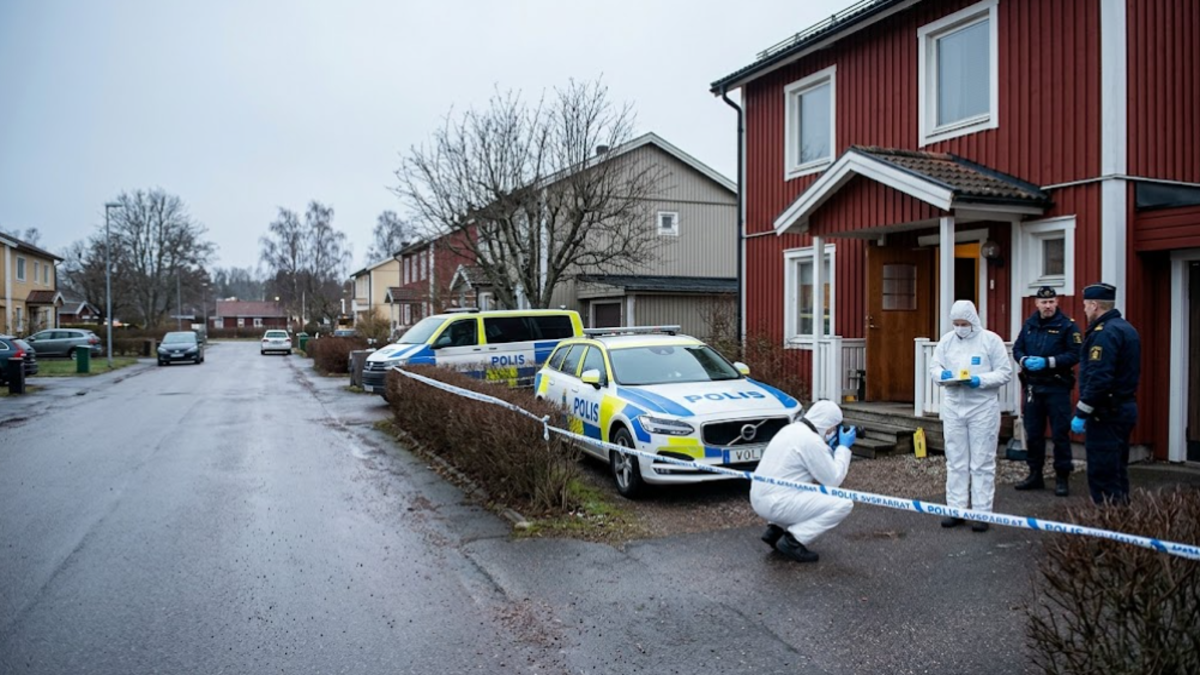
The home was immediately cordoned off. Investigators were expected to carry out a technical examination of the property, while police also began gathering information from people in the surrounding area.
According to local reporting, officers carried out door-to-door inquiries as part of the initial investigation. The aim was to establish a clearer timeline and determine whether anyone had seen or heard anything relevant around the time of the incident.
The police operation therefore moved quickly from an emergency response to a criminal investigation.
At this stage, authorities have not publicly released details about the circumstances surrounding the death, including the precise cause of death or what may have happened between the two men before police arrived.
Police investigation focuses on the home
The decision to seal the property reflects the importance of the address to the investigation.
A forensic examination can help investigators establish what happened at the scene and identify evidence that may support or challenge the initial suspicion. Police can also use information gathered from witnesses and people living nearby to reconstruct the events leading up to the emergency call.
Police confirmed that technicians were to examine the property after the man was found dead. The scene remained cordoned off while this work was carried out.
The authorities have not publicly described the nature of any injuries suffered by the deceased man. They have also not released information about any suspected weapon or other possible cause of death.
That lack of detail is significant because the investigation remains at an early stage. An initial classification of suspected murder or manslaughter does not establish how the death occurred or whether a crime will ultimately be proven.
The investigation also involves determining the relationship between the two men. Later reporting indicated that the men knew each other, although police have described the incident as an isolated event and said that there was no indication at that point of another suspect.
Police have not suggested that the public is facing a wider threat connected to the case.
The focus remains on the residential property, the circumstances of the death and the evidence collected by investigators.
Västerås man found dead: suspect later detained
The case developed further after the initial arrest.
SVT reported that the man who had been arrested was subsequently detained on suspicion of murder at the higher level of suspicion known in Swedish criminal procedure as probable cause. Prosecutor Eva Henriksson told SVT that police had already carried out a crime-scene examination and that an autopsy would be conducted.
An autopsy will be important in establishing the medical cause of death. It can provide investigators with information that may help clarify how the man died and whether the injuries are consistent with the suspected circumstances.
The prosecutor has not confirmed every detail circulating about the case.
According to information reported by P4 Västmanland and subsequently carried by SVT, the detained man, described in reports as being in his 20s, allegedly admitted to killing the deceased man, who was described as being in his 60s.
However, prosecutor Eva Henriksson did not confirm that information to SVT.
She explained that the suspect had not yet been questioned about the incident with a defence lawyer present and therefore said the reported admission could not be commented on at that stage.
That distinction is important.
An alleged admission reported by a media outlet is not the same as a statement confirmed by prosecutors or established in court. The suspect remains legally presumed innocent, and investigators must continue to examine the available evidence before the case can move forward.
The prosecutor is expected to decide on the next legal steps after the investigation progresses.
What police have confirmed so far
The official account provides a relatively clear outline of the first stage of the case.
Police received a call concerning an injured man at a home in Västerås early Tuesday morning. Officers went to the address and found a man dead.
A second man at the property was arrested on suspicion of murder or manslaughter.
Police informed the deceased man’s relatives and cordoned off the home for forensic examination. Investigators also began speaking to people in the surrounding area as they attempted to establish what had happened.
The official police notice does not provide details about the cause of death, the suspected circumstances or a possible motive.
Those details may emerge as the technical examination, witness interviews and forensic work continue.
The Swedish Police Authority itself warns that its initial incident reports contain preliminary information and may change as investigations develop.
Questions remain over what happened inside the home
Despite the rapid police response, many details remain unknown.
Authorities have not publicly explained why the police were called beyond the report that a man was injured. They have not released the exact location of the injuries, the suspected cause of death or what happened immediately before officers arrived.
There is also no publicly confirmed explanation of the sequence of events inside the home.
The fact that another man was present and was arrested naturally became a central part of the investigation. However, an arrest is an investigative measure and does not by itself establish criminal responsibility.
Investigators now need to compare several forms of evidence.
The technical examination of the home may provide physical evidence. Witness interviews may establish movements and sounds around the property. The autopsy may help determine the cause and circumstances of death. Investigators can then compare those findings with statements from the people involved.
That process can take time, particularly when the circumstances surrounding a death remain unclear.
Local media reported that the two men knew one another. SVT also reported that police currently viewed the incident as isolated and that no other suspect was being sought at that point.
There has been no indication from police that the incident represents a broader threat to residents in Västerås.
Forensic examination could provide crucial evidence
The cordon around the home is expected to remain an important part of the investigation while forensic specialists examine the property.
Such examinations can document the scene, identify potential traces and help investigators determine whether the physical evidence matches accounts given during questioning.
In a suspected homicide investigation, the condition of the scene can also help establish whether a struggle took place, how people may have moved through the property and whether objects or other evidence could be relevant.
Authorities have not publicly disclosed what forensic evidence has been found in this case.
Police have instead concentrated their public statements on the confirmed facts: the emergency call, the discovery of the deceased man, the arrest and the securing of the property.
That cautious approach is typical in the early stages of a serious criminal investigation, particularly when investigators do not yet want to compromise evidence gathering or future questioning.
The autopsy will form another important part of the evidence.
According to prosecutor Eva Henriksson, an autopsy is expected to be carried out as the investigation continues.
The result could help clarify questions that police cannot answer solely from the scene examination.
Investigation continues in Västerås
The case remains under active investigation, with the suspect detained while prosecutors and police work to establish what happened.
The legal process will now depend on the evidence gathered during the investigation.
Swedish prosecutors must assess whether the evidence supports continued detention and whether the requirements for a formal prosecution are met. The suspect’s legal status can also change as the investigation develops.
At the time of the latest reports reviewed for this article, authorities had not announced a final explanation for the man’s death.
They had also not publicly confirmed the alleged admission reported by P4 Västmanland. The prosecutor’s comments make clear that this aspect should be treated as unconfirmed information rather than an established fact.
For that reason, the central facts remain those confirmed by police: an injured man was reported at a Västerås residence, officers arrived and found him dead, another man at the property was arrested, and the home was secured for forensic examination.
The investigation will determine whether the evidence supports the suspicion of murder and what ultimately happened inside the home.
Residents in the area have so far received no indication from police that another suspect is at large or that the incident poses a wider public-safety threat.
The case is therefore being treated as a serious but localized investigation, with investigators concentrating on the people involved, the property and the evidence collected there.
What happens next?
The next significant developments are likely to come from the forensic investigation, the autopsy and further police questioning.
The technical examination may provide investigators with evidence about the circumstances of the death, while the autopsy should help establish the medical cause of death.
At the same time, prosecutors will assess the evidence against the detained man.
Any future decision to prosecute would require authorities to present a case supported by evidence rather than preliminary suspicion or unconfirmed reports.
Until then, the investigation remains ongoing.
The death has attracted attention in Västerås because of the seriousness of the suspected crime and the police presence at the residential property. But many of the most important questions remain unanswered.
Police have not disclosed a confirmed motive, the exact cause of death or a complete account of what happened before officers arrived.
Those answers are expected to emerge only as investigators complete their work.
FAQ
What happened in Västerås?
Police were called to a home after reports that a man was injured. Officers arrived and found a man dead. Another man at the property was arrested on suspicion of murder or manslaughter.
Has anyone been charged with murder?
The arrested man was later detained on suspicion of murder at the higher level of suspicion, according to SVT. A final prosecution decision had not yet been announced in the reports reviewed.
Has the suspect confessed?
P4 Västmanland reported that the suspect had allegedly admitted the killing. However, prosecutor Eva Henriksson did not confirm the information to SVT and said the suspect had not yet been questioned about the incident with a defence lawyer present.
What happens to the crime scene?
The home has been cordoned off for forensic examination. Police are also gathering information from people in the area, while an autopsy is expected to help establish the cause of death.
Contact: info@alswedalyom.com