

Gävle – Swedist: Minervauggla spotted in Gävle after more than 70 years of rarity in Sweden — how did an inexperienced birdwatcher make the discovery of a lifetime?

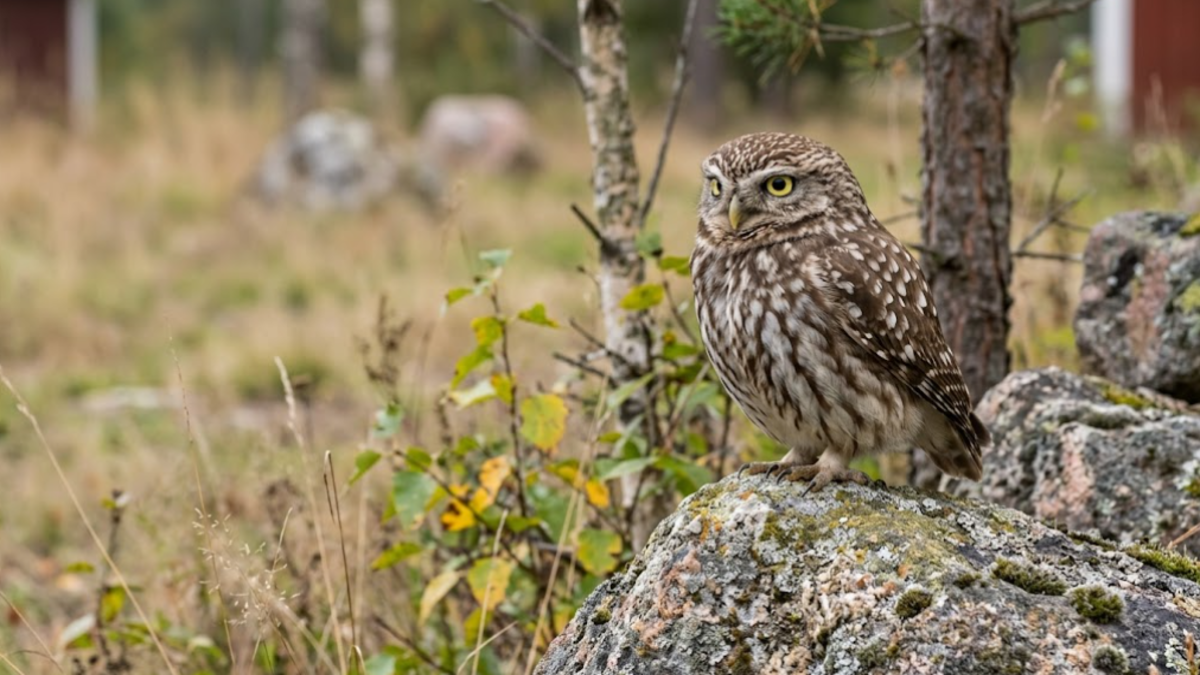
A remarkably rare owl has turned up in Gävle after an unexpected encounter during an ordinary lunch walk. The bird, a Minervauggla, known in English as the Little Owl (Athene noctua), was photographed by Marika Ahlin, a relatively new birdwatcher who had no idea how unusual her sighting was.
The discovery has attracted attention because the species has been almost absent from Swedish bird records for more than seven decades, apart from a small number of exceptions. The latest sighting therefore represents an unusually significant observation for Swedish birdwatchers.

What makes the Gävle owl particularly remarkable is not only the species itself, but also the circumstances of its discovery: Ahlin was not conducting a specialist bird survey when she found it. She was simply out for a walk.
Minervauggla appears in Gävle during an ordinary walk
The encounter happened on a Wednesday, when Ahlin was taking a lunchtime walk. At some point, she noticed an owl sitting on a stone.
She happened to have a camera with her and decided to photograph the bird. At the time, however, she did not realise that she had captured an exceptionally rare visitor to Sweden.
Ahlin later told Gefle Dagblad that she knew very little about birds and even less about owls. Her own description of her experience underlines just how accidental the discovery was.
The photograph became the crucial piece of evidence that allowed more experienced bird enthusiasts to identify what she had seen.
Someone in a Facebook birdwatching group recognised the significance of the image and contacted Ahlin. The person explained that the owl was not an ordinary local species but a Minervauggla, a bird that has only appeared exceptionally rarely in Sweden.
That transformed an ordinary lunchtime walk into an important bird observation.
The story has since spread through Swedish news coverage, with the Gävle sighting drawing particular attention because of the species’ extremely unusual status in the country.
The episode also illustrates an important feature of modern birdwatching. Rare sightings do not always begin with professional ornithologists or highly experienced observers. Sometimes an unusual bird is noticed by somebody who simply happens to be in the right place at the right moment.
In this case, the camera made the difference.
Why the Minervauggla is so unusual in Sweden
The Minervauggla is not a common Swedish owl. Its normal distribution lies much farther south, with populations primarily associated with continental Europe and England. The species also occurs in parts of Asia, the Middle East and northern Africa.
That geographical pattern helps explain why an individual turning up in Gävle is so noteworthy.
Historical records show that the species has nevertheless appeared in Sweden before. The first recorded Swedish observation took place in Lomma in 1817, according to historical ornithological records.
The bird has also had a more substantial historical presence in southern Sweden than the latest Gävle observation might suggest. Historical material records breeding in parts of Skåne during the period from 1939 to 1948.
But those historical records do not make the current sighting routine.
Quite the opposite.
The species has been considered an exceptional visitor in Sweden, and modern reporting on the Gävle observation notes that, with only a few exceptions, it had not been seen in the country for more than 70 years.
The distance from the species’ normal European range is another reason the location matters. Gävle lies considerably farther north than the areas where the species normally occurs.
For Swedish birdwatchers, therefore, the observation is not simply a chance sighting of another owl. It is the appearance of a species that has a remarkably limited history in the country.
A discovery made by a newcomer to birdwatching
Perhaps the most striking part of the story is the observer herself.
Ahlin was not an experienced ornithologist searching specifically for rare species. She was a new birdwatcher who encountered an owl unexpectedly while walking.
Her lack of specialist knowledge initially meant that she did not recognise the significance of the bird.
That changed when the photograph reached people with greater knowledge of Swedish birds. The Facebook birdwatching group effectively provided the second stage of the discovery: identification.
This sequence is familiar to modern naturalists. A person notices something unusual, photographs it and shares the image. More experienced observers then assess the details and determine whether the sighting represents something unusual.
In this case, that process revealed a species with an extraordinary record in Sweden.
The incident also demonstrates why photographs have become so important to birdwatching. A fleeting observation can be difficult to verify from memory alone. A clear image gives specialists an opportunity to examine the bird after the encounter has ended.
For Ahlin, the photograph also provided a permanent record of an encounter whose importance she initially did not understand.
The story has an appealing element of chance. She did not set out looking for the Minervauggla. She did not expect to find a bird of particular rarity. She simply noticed an owl sitting on a stone and had a camera available.
The unusual discovery came from paying attention.
From Lomma in 1817 to an unexpected appearance in Gävle
The history of the species in Sweden stretches back more than two centuries.
The first documented observation came from Lomma, in Skåne, in the early nineteenth century. A historical review of Swedish first records lists the Minervauggla among species first recorded at Lomma in the early 1800s.
Other historical research gives a more detailed picture of the species’ presence in southern Sweden. The bird was recorded breeding in the Landskrona area, including Härslöv and Örja, during the 1930s and 1940s.
Those records are important because they show that the Minervauggla has not always been merely a one-off visitor to Sweden.
At certain points, the species established itself in the southern part of the country.
Its modern Swedish status, however, is very different. The species is now regarded as a rarity, making individual observations particularly valuable to birdwatchers and ornithologists.
The contrast between the historical records from southern Sweden and the latest observation in Gävle makes the new sighting especially interesting.
It also gives the story a long historical perspective. The first Swedish record dates back to the early nineteenth century, while the newest discovery has emerged after decades in which the species was barely seen in the country.
The Gävle observation therefore joins a very small group of Swedish records.
The owl’s normal European range lies farther south
The Minervauggla is associated with landscapes that differ considerably from the northern Swedish environment.
According to information cited in reporting on the Gävle discovery, the species mainly occurs in continental Europe and England. Its wider range extends into Asia, the Middle East and northern Africa.
Historical Swedish research has also noted populations much closer to Sweden, including Denmark and areas east of the Baltic Sea.
That geographic context makes an appearance in Gävle easier to understand without making assumptions about why this particular bird arrived there.
The available reporting does not establish the individual bird’s origin, how long it had been in the area or why it appeared in Gävle.
Those questions remain separate from what has actually been documented.
What is known is much simpler: a Minervauggla was observed and photographed in Gävle, and experienced birdwatchers recognised the sighting as exceptionally unusual.
That distinction matters.
A rare bird can attract speculation about migration, weather, food availability or changing distribution, but none of those explanations should be presented as fact without supporting evidence.
The significance of this observation rests on the confirmed details already available.
Why the photograph matters to Swedish birdwatchers
Rare-bird observations often depend on documentation.
A photograph can help establish the identity of a species and provide a record that can be assessed by experienced observers. In the Gävle case, the photograph taken by Ahlin allowed other birdwatchers to recognise the bird and alert her to its significance.
That makes her chance encounter more than a personal memory.
It became a documented observation that could be shared with the wider birdwatching community.
The episode also demonstrates how public participation can contribute to wildlife observation. Birdwatching is no longer limited to people carrying specialist field equipment or spending entire days in nature reserves.
A person with a camera and enough curiosity to stop and look can sometimes encounter something extraordinary.
Ahlin’s experience is an unusually clear example.
She saw the bird because she was there. She photographed it because she had a camera. And the wider birdwatching community recognised its importance because the image reached people who could identify it.
Each part of that chain mattered.
A rare visitor brings attention to Gävle
Gävle is now at the centre of attention among people interested in unusual birds.
The sighting is particularly striking because the city is far from the southern Swedish areas historically associated with the species.
The discovery could therefore encourage birdwatchers to pay closer attention to the area and to watch for further observations.
However, the available reports do not establish how long the owl remained at the location or whether it was still present after the initial sighting.
That uncertainty is important.
A rare bird can move on quickly, and a single observation does not automatically mean that it has established itself in the area.
For now, the strongest story is the discovery itself.
A newcomer to birdwatching has photographed a species that has been almost absent from Swedish observations for decades. Her photograph then alerted experienced birdwatchers to what she had found.
The circumstances are unusual enough to make the sighting memorable even before considering the bird’s historical significance.
What the Gävle sighting tells us about rare birds
The story is also a reminder that rarity does not always announce itself.
Ahlin did not recognise the bird as something extraordinary. There was no planned expedition, specialist survey or elaborate search.
The observation began with a simple encounter.
That is one of the attractions of birdwatching. The next unusual sighting can happen almost anywhere, and sometimes the observer who makes it will be the person who least expects it.
At the same time, the Gävle case shows why expert identification remains important. Recognising a rare species requires knowledge, comparison and careful examination. A photograph can open the door to identification, but specialists still play a crucial role in determining what has actually been seen.
The cooperation between an inexperienced observer and experienced birdwatchers therefore sits at the centre of this story.
One person saw the bird.
Another recognised it.
Together, those two parts turned an ordinary walk into a notable Swedish bird record.
The significance of the Minervauggla sighting
The Gävle observation stands out because several unusual circumstances came together.
First, the species itself is exceptionally rare in Sweden. Second, the bird appeared well outside the areas traditionally associated with its Swedish history. Third, the observer was a newcomer rather than an experienced specialist. Finally, the encounter was photographed, allowing other birdwatchers to recognise what had happened.
Historical sources reinforce the rarity of the event. Swedish ornithological material records the species’ first appearance at Lomma in the early nineteenth century, while later research documents breeding in Skåne during the twentieth century.
Modern reporting now places the Gävle sighting among the country’s exceptionally unusual observations.
The official Swedish bird list also recognises the taxonomic group and notes the Swedish classification of the western European form as Athene noctua vidalii.
For readers interested in Sweden’s bird records, the Swedish bird list maintained through the country’s ornithological organisations provides the formal reference point for species and taxa recorded in Sweden.
The immediate news story, however, remains wonderfully simple.
A woman went for a walk in Gävle.
She saw an owl.
She took a photograph.
Only later did she discover that the bird belonged to one of the rarest owl species to appear in Sweden.
And that is precisely what makes the story so compelling: sometimes extraordinary wildlife discoveries begin with nothing more than looking carefully at what is in front of you.
FAQ
What is a Minervauggla?
The Minervauggla is the Swedish name for the Little Owl, Athene noctua. It is mainly associated with continental Europe and other warmer regions and is an exceptionally rare bird in Sweden.
Who discovered the owl in Gävle?
Marika Ahlin, a relatively inexperienced birdwatcher, photographed the owl during a lunchtime walk after noticing it sitting on a stone.
Why is the Gävle sighting unusual?
The species has been seen only exceptionally rarely in Sweden, with modern reports noting that it had not been recorded in the country for more than 70 years apart from a few exceptions.
When was the Minervauggla first recorded in Sweden?
Historical ornithological records place the first Swedish observation at Lomma in the early nineteenth century, with sources dating the record to 1817.
Contact: info@alswedalyom.com