

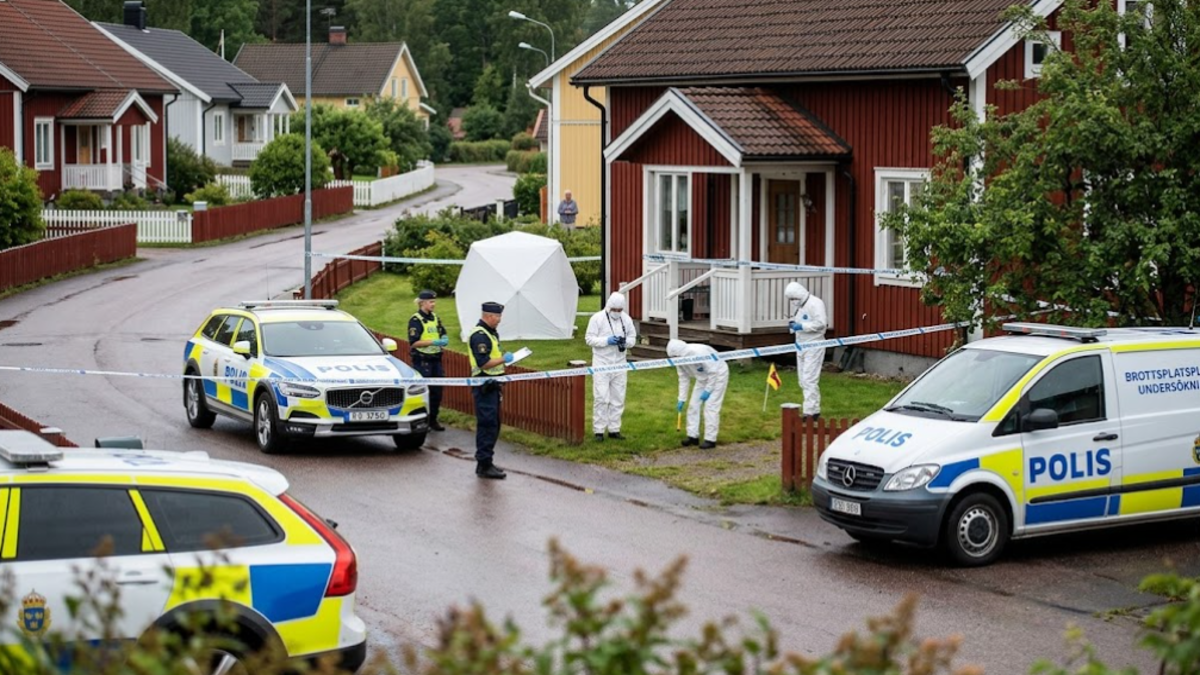
STOCKHOLM – Swedist: Hällefors murder investigation has begun after police found a deceased person inside a home in the Hällefors area, with investigators saying circumstances have left open the possibility that a crime took place. No suspect had been arrested in the latest SVT report, while police continued technical work and door-to-door inquiries around the address—but what exactly is known about the case so far?

Hällefors murder investigation begins after person found dead
Police in Örebro County opened a preliminary investigation into suspected murder or manslaughter after a deceased person was found at a residential address in Hällefors on Monday morning.
The alarm reached police during the morning after the person was discovered inside a home. Police officers then secured the address and began treating the scene as a potential crime scene.

Swedish public broadcaster SVT reported that relatives of the deceased had been informed. Authorities have not publicly released the identity of the person, their age, or other personal details.
Police have also avoided describing the exact circumstances that raised concerns about a possible crime. Anders Dahlman, a spokesperson for the Bergslagen police region, said there were circumstances that meant investigators could not currently rule out that an offence had occurred.
That distinction remains important. Opening a murder investigation does not, by itself, establish that a homicide has occurred. At this stage, investigators are working to establish what happened and why the circumstances around the death require a criminal investigation.
The Swedish Police Authority recorded the incident under the classification of murder or manslaughter and said officers had begun a preliminary investigation after finding the deceased person. Police also said the address had been cordoned off so investigators could conduct a crime-scene examination.
The initial police notice stressed that the information represented preliminary details and could change as the investigation progressed.
That means several key questions remain unanswered, including the precise cause of death, when the person died and whether anyone else was present when the death occurred.
SVT’s local reporting also stated that no person had been arrested at the time of its report.
For the moment, investigators are therefore focused less on naming a suspect and more on establishing the basic facts surrounding the death.
What police are doing at the Hällefors scene
The police response has involved several standard investigative measures designed to preserve evidence and reconstruct what happened inside and around the property.
The address has been cordoned off, preventing unauthorized access while forensic personnel examine the scene. Police said technicians would carry out a technical examination of the property.
Such an examination can provide investigators with evidence about the circumstances surrounding a death. At this early stage, however, police have not explained what evidence they have recovered or whether they have found signs that directly point to a homicide.
Investigators have also planned door-to-door inquiries in the surrounding area. Officers may use those conversations to establish whether neighbours heard or saw anything unusual, noticed visitors or vehicles, or can provide information about movements around the property.
Police have also said that interviews will form part of the investigation. Those conversations can involve people who may have information about the deceased, the property or events before the person was found.
The combination of technical examination, witness inquiries and interviews shows that investigators are still working through the first stage of the case.
At present, police have not publicly identified a motive. They have also not disclosed the circumstances that prompted them to investigate the death as possible murder or manslaughter.
Those omissions leave considerable uncertainty, but they also reflect the limited amount of information authorities have chosen to release during an active investigation.
The official police notice confirms that the case remains at an early stage.
For readers following the case, that point matters because early information can change after forensic evidence, witness statements and medical findings become available.
The police have not indicated publicly that they have identified a confirmed suspect. SVT’s report specifically noted that no one had been arrested when it was published.
Why the cause of death matters
One of the central questions will be determining how the person died.
Police have not disclosed the cause of death, and they have not said whether the death showed obvious signs of violence. That information may depend on the findings from the technical investigation and any subsequent medical or forensic examination.
Until those findings become clearer, it would be premature to describe the death as a confirmed murder.
Authorities themselves have used the more cautious framework of a preliminary investigation into murder or manslaughter. That approach allows investigators to use the resources and investigative measures available in a serious suspected crime while they establish what actually happened.
Hällefors murder investigation remains without a named suspect
The absence of an arrest is one of the clearest elements in the latest reporting.
SVT reported that no suspect had been arrested when its report was published. Police have not publicly announced an arrest, and authorities have not released the name of any person being investigated in connection with the death.
That does not necessarily mean investigators have no leads. In an early investigation, police can work with several lines of inquiry without publicly identifying potential suspects.
Investigators may first need to establish the timeline of events before they can determine whether another person played a role in the death.
The police have also kept details about the circumstances confidential. Their spokesperson said authorities did not want to go into further detail about why they currently suspect that a crime may have occurred.
That decision limits public information but can also protect the integrity of the investigation. Releasing specific evidence or investigative theories too early could affect witness statements or alert people who may have information about the case.
For now, the known facts remain relatively narrow: a person was found dead inside a home in Hällefors, police became involved during the morning, the address was secured, a technical investigation was planned, officers carried out door-to-door inquiries and interviews, and authorities opened a preliminary investigation into suspected murder or manslaughter.
The deceased person’s relatives have been informed, according to SVT.
Police have not publicly provided a motive, the identity of the deceased, the suspected cause of death or the identity of any potential offender.
Those unanswered questions are likely to remain central as the investigation develops.
What happens next?
The next phase will focus on evidence.
Forensic findings can help determine what happened at the address, while interviews may help investigators construct a timeline leading up to the discovery of the body.
Police may also compare information from neighbours and other witnesses with evidence collected inside the property.
The investigation could move in several directions depending on what those findings reveal. Authorities could ultimately establish that a criminal offence occurred, identify a suspect and proceed with further legal measures. Investigators could also find evidence pointing away from homicide.
At this point, neither outcome can be assumed.
The police have deliberately left the circumstances open while they gather information. Their official notice describes the matter as an initial investigation and warns that early information can change.
That caution is especially relevant in a death investigation, where the apparent circumstances at the beginning may differ from the conclusions reached after forensic examination.
For the latest official information, readers can consult the Swedish Police Authority’s incident notice concerning the Hällefors case.
What is known and what remains unclear
The available information provides a clear outline of the police response, but much of the case remains unknown.
It is confirmed that a deceased person was found inside a home in Hällefors. Police secured the address and opened a preliminary investigation into suspected murder or manslaughter.
Police also confirmed plans for a technical crime-scene examination, door-to-door inquiries and interviews. SVT reported that relatives had been informed and that no one had been arrested at the time of its report.
However, investigators have not publicly disclosed the identity of the deceased, the age of the person, the cause of death, the suspected motive or the reason for the death being treated as potentially criminal beyond referring to unspecified circumstances.
There is also no confirmed public information indicating that police have identified a perpetrator.
That leaves a straightforward but important journalistic principle at the centre of the story: investigators are examining a possible crime, not announcing a completed murder case.
The wording matters because an investigation can change significantly once technical evidence and witness accounts have been assessed.
Residents in the surrounding area may also provide useful information as police continue their inquiries. Door-to-door work often forms part of efforts to build a picture of activity around a crime scene, particularly when investigators need to establish who may have been present or what neighbours observed.
At the same time, authorities have given no indication that the public faces a specific continuing threat connected to the case.
The investigation therefore remains focused on determining what happened to the person found dead and whether another person was responsible.
As more evidence emerges, police may be able to answer some of the questions that remain open. Until then, the confirmed facts are limited to what authorities and established media have publicly reported.
Police investigation continues in Hällefors
The death in Hällefors has prompted a serious police investigation, but officials have so far maintained a cautious approach to the public release of information.
The case began after a person was found dead inside a residential property. Police considered the circumstances serious enough to open a preliminary investigation into murder or manslaughter and secure the address for forensic work.
SVT’s report later confirmed that officers were conducting door-to-door inquiries and that no suspect had been arrested at that point.
There is still no public explanation of how the person died or what investigators believe may have happened inside the home.
That makes the forensic examination particularly significant. Evidence from the property, combined with statements from witnesses and people connected to the deceased, could determine the direction of the case.
For now, the most responsible conclusion is also the simplest: police are investigating a death under circumstances they believe may involve a criminal offence, but they have not established publicly that a murder occurred and they have not announced an arrested suspect.
Residents and readers can expect the picture to develop as investigators complete their work and decide which information can be released without compromising the case.
FAQ
What happened in Hällefors?
A deceased person was found inside a home, prompting police to open a preliminary investigation into suspected murder or manslaughter.
Has anyone been arrested?
No suspect had been arrested when SVT published its latest report on the case.
What are police doing?
Police have secured the address, planned a technical examination and carried out door-to-door inquiries and interviews.
Is the death confirmed as murder?
No. Police are investigating suspected murder or manslaughter, but the circumstances and cause of death have not been publicly established.
Contact: info@alswedalyom.com