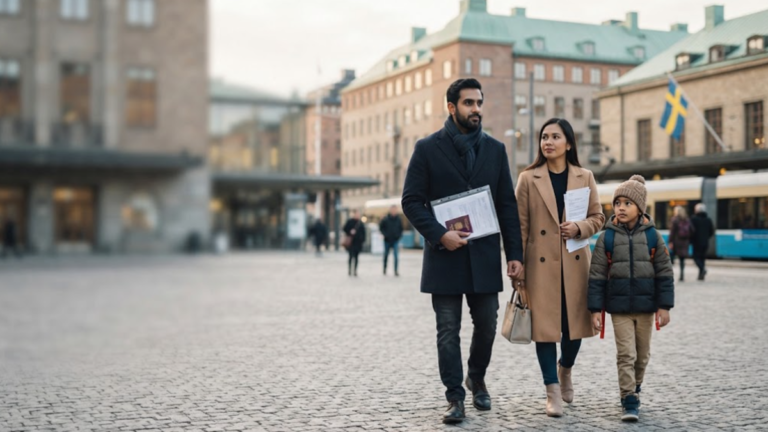

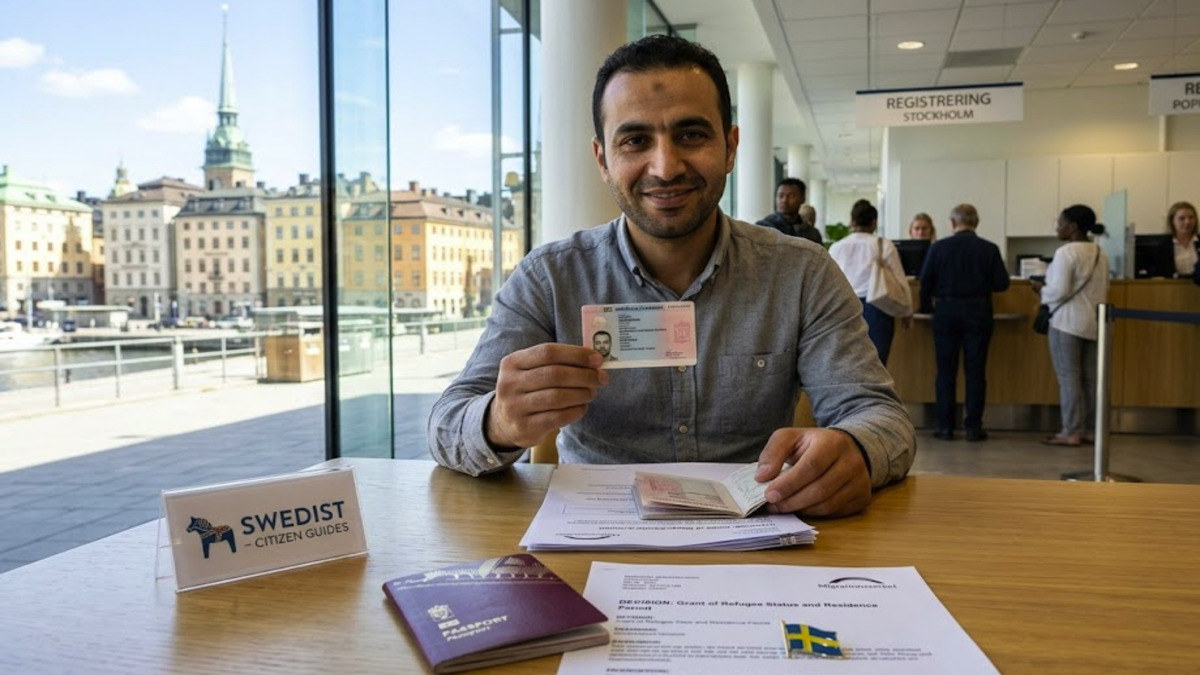
Stockholm – Swedist : What happens after asylum is granted in Sweden? This is the moment thousands of newcomers dream of, yet the reality of “The Decision” often brings a mix of relief and a sudden, sharp realization that the real work has just begun. Sweden is a land of systems and structures, where a positive notification from the Migration Agency (Migrationsverket) is your ticket to a complex but rewarding journey toward stability. From learning a new language to reuniting with family members, the steps you take now will define your future in the Nordics.

Securing Your Residence Permit and the Swedish ID Card
The first and most vital step is getting your physical proof of stay. But what happens after asylum is granted in Sweden regarding your legal identity? You will receive a residence permit card (uppehållstillståndskort), which usually grants a three-year stay for refugees or thirteen months for those with subsidiary protection. However, the card itself is not enough to function in society; you must immediately visit the Tax Agency (Skatteverket) to be registered in the population register.
Furthermore, obtaining a Swedish personal identity number (personnummer) is the real “magic key.” According to the team at Swedist, without this ten-digit number, you cannot open a bank account, sign a gym contract, or even get a mobile phone subscription easily. It is the foundation of your digital life in Sweden, marking the transition from a “case number” to a recognized resident.

Entering the Labor Market and the Role of Arbetsförmedlingen
Sweden values self-sufficiency above all else. What happens after asylum is granted in Sweden for those eager to enter the workforce? You will be enrolled in the “Introduction Program” (etableringsprogrammet) managed by the Public Employment Service (Arbetsförmedlingen). This program is designed to fast-track your integration through Swedish for Immigrants (SFI) classes and vocational training.
Moreover, the Swedish job market is highly specialized and relies heavily on formal certifications. The editor of Swedist highlights that “validation” is a word you will hear often; it’s the process of proving your foreign degrees are equivalent to Swedish ones. While the process can feel slow, the ultimate goal is to move you from government subsidies to a stable paycheck, which is also a primary requirement if you eventually wish to apply for permanent residency.
The Path to Family Reunification: Bringing Loved Ones to Sweden
The silence of a Swedish winter is much louder when you are alone. What happens after asylum is granted in Sweden concerning your right to bring your family? If you have been granted refugee status, you generally have a three-month window from the date of your decision to apply for family reunification without meeting strict “maintenance requirements” (income and housing size rules).
However, if you miss this three-month “golden window,” or if you have subsidiary protection, the rules become significantly tougher. You must prove you can support your family and have a home that meets specific standards. Experts at Swedist advise applicants to start the housing search early, as the Swedish housing market is notoriously competitive, and a valid rental contract is often the deciding factor in reunification cases.
Transitioning to Municipal Life and Social Benefits
Once your residency is settled, the responsibility for your integration shifts from the Migration Agency to your local municipality (kommun). What happens after asylum is granted in Sweden in terms of daily support? You will receive an “establishment allowance” while participating in your integration activities. This financial support is meant to cover your basic needs while you focus on learning the language.
Bref, integration is a two-way street. While Sweden provides the framework, the pace of your progress depends on your engagement with the community. At Swedist, we often see that those who join local “språkfika” (language coffee meets) or sports clubs integrate much faster than those who stay within their linguistic bubbles. Sweden is now your home; it’s time to learn the rules of the game and play to win.
FAQ
How long is the residence permit valid after asylum?
Usually, refugees receive a 3-year permit, while those with subsidiary protection receive a 13-month permit, both of which are renewable if the need for protection persists.
Can I choose which city to live in after getting asylum?
If you can find your own housing, you can live anywhere, but if you rely on the government for a social apartment, you may be assigned to a specific municipality where jobs or housing are available.
Do I need to pay for Swedish language classes (SFI)?
No, SFI is a free service provided by the municipality to all residents with a personal identity number who need to learn the language.
When can I apply for permanent residency in Sweden?
You can usually apply for permanent residency after holding a permit for at least three years, provided you can support yourself financially through employment.
Winning your asylum case is a massive milestone, but the journey to truly feeling “Swedish” takes time, patience, and a lot of coffee. Focus on the language, respect the bureaucracy, and keep your family goals in sight. The Swedish dream is built on persistence.
Contact: info@alswedalyom.com