
Centre Party Backs Kristersson as Sweden Moves Towards a New Government
Sweden’s political landscape took a significant step towards a new government on Sunday after the Centre Party’s confidence council voted to support Moderate Party leader Ulf Kristersson as the country’s next prime minister. The decision strengthens his position ahead of a crucial parliamentary vote scheduled for Monday, but it does not yet settle the question of who will lead the next government.

The political development was the main domestic story in the latest reporting period. Elsewhere, Swedish cross-country skiing enjoyed a major success as Linn Svahn won the women’s 20-kilometre freestyle race in Ruka, Finland. Her victory came during a weekend in which Swedish and Norwegian athletes dominated the World Cup opening events.
Together, the developments highlight two different aspects of Sweden’s public life: an ongoing political process with consequences for the country’s future leadership, and the continued international strength of Swedish winter sports.

Centre Party’s Decision Gives Kristersson a Political Boost
The Centre Party’s confidence council voted 36–23 in favour of supporting Ulf Kristersson as Sweden’s next prime minister. The decision represents an important development in the government-formation process and gives the Moderate Party leader additional political backing ahead of the parliamentary vote.
Centre Party leader Elisabeth Thand Ringqvist said the decision reflected the party’s assessment of where it could achieve the greatest political influence. Her explanation suggests that the choice was based on the Centre Party’s judgement about how best to advance its political priorities within the next parliamentary arrangement.
The vote also demonstrates that the party has chosen a direction in a politically consequential decision. Its support could help create the conditions for a new centre-right government, although the final parliamentary outcome remains essential.
The decision was reported by Omni in its coverage of the Centre Party’s support for Kristersson.
Parliamentary approval is still required
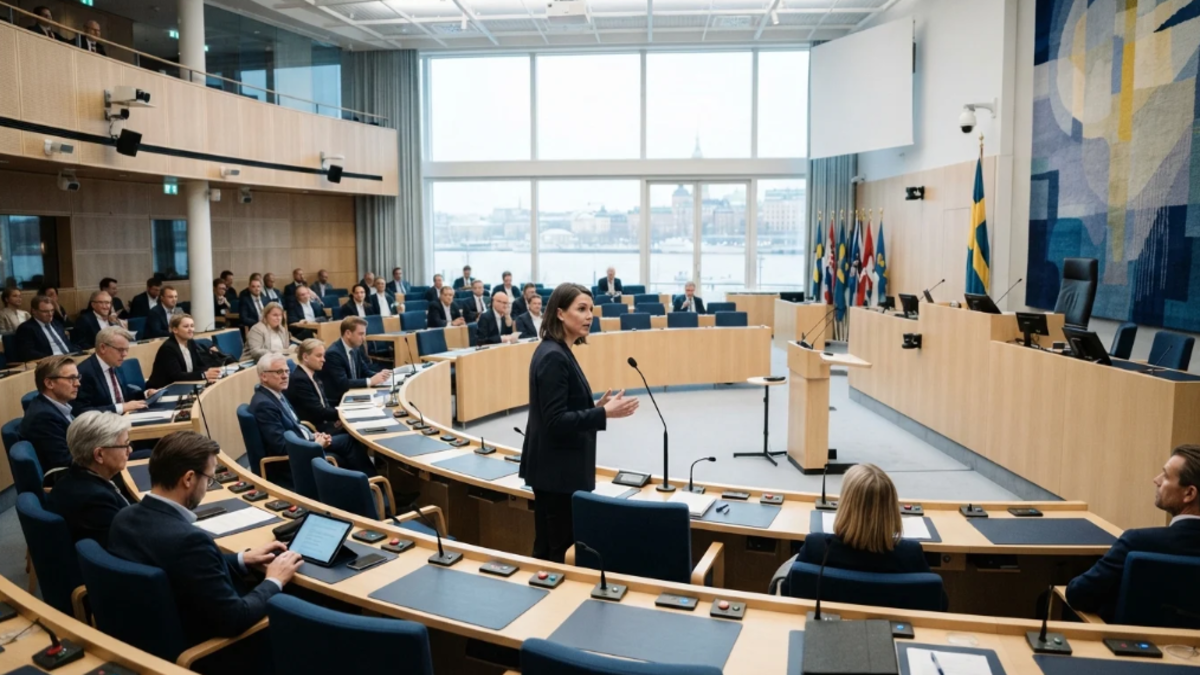
Despite the Centre Party’s internal decision, Kristersson has not yet been formally elected prime minister. The parliamentary vote is scheduled for Monday, 30 November, at 13:00.
That distinction is important. Support from a political party’s internal decision-making body is not the same as parliamentary approval. Until the vote takes place, the government-formation process remains unresolved.
Monday’s proceedings will therefore be the next decisive test. The Centre Party’s position has strengthened Kristersson’s prospects, but the parliamentary decision will determine whether he can formally take the next step towards leading the country.
For Sweden, the immediate question is no longer simply whether the Centre Party will support Kristersson. That decision has been made. The focus now shifts to the parliamentary process and whether the political support behind his candidacy will be sufficient.
Centre Party Faces Internal Political Divisions
The 36–23 result also reveals that the decision was not unanimous. The difference between the two sides points to significant disagreement within the Centre Party over its political direction and the consequences of supporting a Kristersson-led government.
Such divisions matter because a party’s influence depends not only on the position it adopts publicly but also on its ability to maintain internal cohesion. A leadership decision can create opportunities for political influence while also exposing disagreements among members and representatives.
The Centre Party leadership has presented its choice as a strategic assessment of where the party can have the greatest impact. However, the vote indicates that not everyone within the organisation shares the same assessment.
The challenge ahead will be to translate the decision into a coherent political position. If the party wants to influence a future government’s direction, it will need to establish how its priorities can be represented within the emerging political arrangement.
Magdalena Andersson criticises the decision
Social Democratic leader Magdalena Andersson criticised the Centre Party’s choice. She argued that supporting Kristersson would lead to a government contrary to what Swedish voters had chosen.
Her reaction illustrates the wider political disagreement surrounding the government-formation process. The Centre Party sees its decision as a route towards political influence, while the Social Democratic criticism frames it as a departure from the electoral outcome.
These competing interpretations reflect the political stakes of the coming parliamentary vote. The question is not only who will become prime minister, but also how the political choices made during government formation will be understood by parties and voters.
The criticism does not change the Centre Party’s internal decision, but it shows that the move is likely to remain a point of political debate.
Linn Svahn Wins in Ruka as Nordic Skiers Dominate
Sweden also had a major sporting success on Sunday. Linn Svahn won the women’s 20-kilometre freestyle mass-start race at the Cross-Country Skiing World Cup opening weekend in Ruka, Finland.
Her victory provided a strong result for Sweden at the start of the international season. It also came during a weekend dominated by Nordic competitors, with Norway and Sweden together claiming 17 of the 18 available podium places across the six races.
The scale of that dominance is notable. It demonstrates the continuing strength of the two countries in international cross-country skiing and reinforces their position among the leading nations in the sport.
The result was covered by Reuters in its report on the cross-country skiing season opener.
Sporting success and questions about international competition
Although the results represent an impressive achievement for Swedish and Norwegian athletes, the concentration of podium places has also renewed discussion about the international competitiveness and commercial appeal of cross-country skiing.
A sport benefits from having dominant athletes and established centres of excellence. However, a wider range of competitive nations can also make international events more unpredictable and attractive to audiences.
The Ruka results therefore present two sides of the same story. For Sweden and Norway, the weekend demonstrated exceptional sporting strength. For the wider sport, the concentration of success raises questions about how competitive balance and international interest can be sustained.
These concerns should not diminish Svahn’s achievement. Her victory was a significant individual result, achieved in a field where Nordic athletes were particularly strong. The broader debate concerns the development and appeal of the sport rather than the legitimacy of the results.
The World Cup is scheduled to continue in Trondheim, Norway, from 4 to 6 December. Those events will provide the next opportunity to assess whether the opening weekend’s pattern continues.
No Major Additional Developments Confirmed in Other Areas
The available coverage for Sunday, 29 November, did not identify additional major Sweden-specific announcements in security, NATO relations, the economy, employment, crime or public services that met the reporting and verification threshold.
This does not mean that no activity took place in those areas. It means that no significant new development in the specified coverage period could be reliably confirmed from the reports reviewed.
The distinction is important for a daily news assessment. Including older stories or unverified reports simply to fill subject categories would risk giving readers a misleading impression of what actually changed during the day.
The same applies to the evening of Saturday, 28 November. No significant new Swedish development published or announced specifically between 18:00 and 23:59 could be reliably confirmed in the available reporting. Earlier developments in the government-formation process have therefore not been presented as new evening news.
What Sunday’s Developments Mean for Sweden
The Centre Party’s decision was the most consequential political development in the reporting period. By backing Kristersson, the party has taken a clear position in the government-formation process and strengthened the possibility of a new centre-right government.
However, the parliamentary vote remains the decisive next step. Until it takes place, Kristersson’s position must be described accurately: he has secured the Centre Party’s internal support, but he has not yet been formally elected prime minister.
The internal division within the Centre Party and Andersson’s criticism also show that the decision carries political consequences beyond the immediate question of government leadership. How the party manages those divisions, and how the wider political landscape responds, will be important to the next stage.
In sport, Linn Svahn’s victory offered a more straightforward success story. Her win in Ruka, alongside the wider Nordic dominance, gave Sweden a strong start to the cross-country skiing season. The next World Cup events in Trondheim will offer another opportunity for Swedish athletes to build on that performance.
Frequently Asked Questions
1. Has Ulf Kristersson been elected Sweden’s next prime minister?
No. The Centre Party’s confidence council voted to support him, but the parliamentary vote is scheduled for Monday, 30 November, at 13:00. He has not yet been formally elected.
2. How did the Centre Party vote on supporting Kristersson?
The party’s confidence council voted 36–23 in favour of supporting the Moderate Party leader as Sweden’s next prime minister.
3. Why is the Centre Party’s decision politically significant?
It strengthens Kristersson’s position in the government-formation process and represents an important step towards a possible new centre-right government. It has also exposed divisions within the Centre Party and drawn criticism from Social Democratic leader Magdalena Andersson.
4. What was Sweden’s main sporting achievement on 29 November?
Linn Svahn won the women’s 20-kilometre freestyle mass-start race at the Cross-Country Skiing World Cup opening weekend in Ruka, Finland. Sweden and Norway together claimed 17 of the 18 podium places across the six races.
Conclusion: A Key Political Decision Ahead of Monday’s Vote
Sunday’s developments placed Sweden’s government-formation process firmly in the spotlight. The Centre Party’s decision to support Ulf Kristersson has strengthened his position, but the parliamentary vote on Monday will determine the next formal step. The internal disagreement within the Centre Party and criticism from the Social Democrats underline the political importance of the decision.
At the same time, Linn Svahn’s victory in Ruka provided a major sporting highlight and reinforced Sweden’s strong position in international cross-country skiing.
The coming parliamentary vote will be the immediate event to watch, while the World Cup continues in Trondheim in early December. Follow Swedist for daily coverage of Swedish politics, society, the economy, sport and the developments shaping the country.
Article Author
Alexander Lindberg
News Writer covering Swedish national and local developments.
Email: