
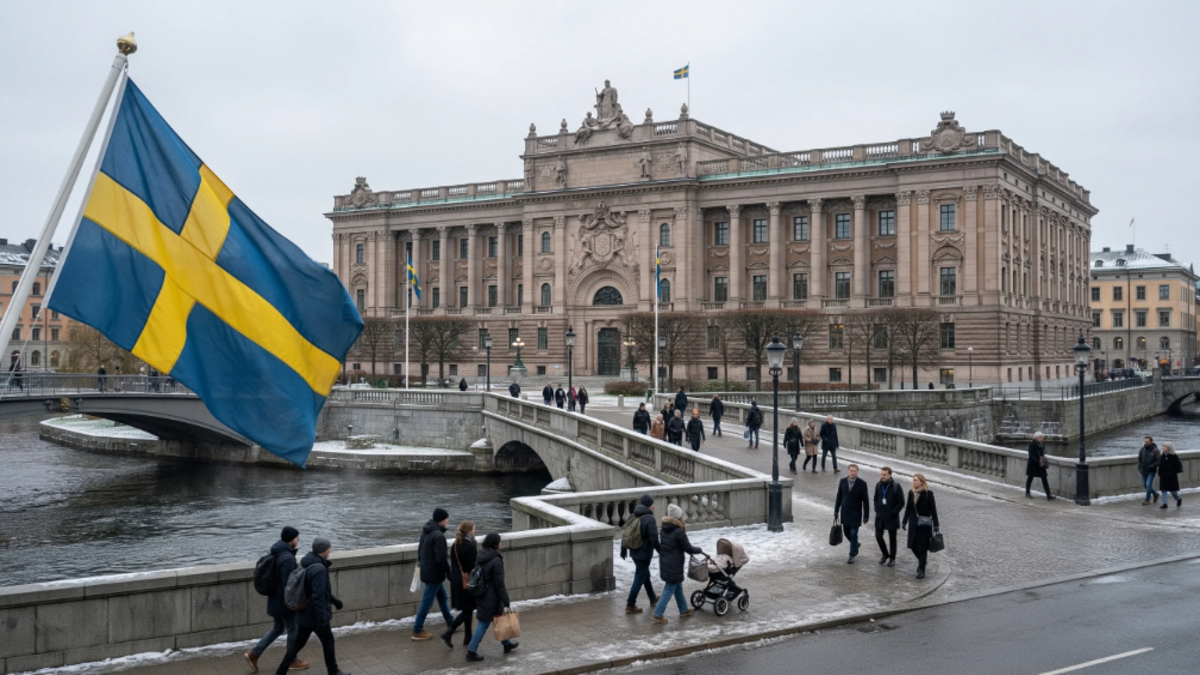
Stockholm, swedist: Sweden immigration policy and political developments

Sweden Faces Political Shift as Immigration Policy and National Security Take Centre Stage
Sweden is facing a potentially significant political realignment as the Centre Party considers supporting Moderate Party leader Ulf Kristersson’s bid to become prime minister, a move that could reshape the country’s immigration policies and parliamentary balance. At the same time, a temporary suspension of certain deportations affecting young adults remains the most important recent practical development for some migrants, while concerns over Russian hybrid threats and rising household costs add to the country’s challenges.
Developments reported on November 26 and 27, 2026, point to a period of political uncertainty. Although no major new immigration regulation was confirmed during the latest reporting period, the proposed government arrangement could have substantial consequences for asylum policy, residence permits, citizenship requirements and Sweden’s future approach to migration.

Beyond domestic politics, Sweden is also confronting disagreements over the European Union’s next long-term budget, renewed national security concerns and weakening household confidence despite positive economic growth.
Sweden’s political direction could change following the Centre Party’s decision
The most consequential political development is the Centre Party leadership’s recommendation that the party support Ulf Kristersson’s attempt to form a new government.
The recommendation, made by Centre Party leader Elisabeth Thand Ringqvist on November 26, represents a significant departure from the party’s previous political position, under which it had supported the prospect of a centre-left government led by Magdalena Andersson.
The proposed arrangement would bring together four parties:
The Moderate Party.
The Centre Party.
The Liberal Party.
The Christian Democrats.
However, the proposed government would depend on parliamentary support from the Sweden Democrats, even if that party did not receive ministerial positions.
Internal opposition creates uncertainty
The Centre Party leadership’s recommendation has generated internal disagreement. Several party representatives have questioned whether supporting an administration dependent on the Sweden Democrats is compatible with the Centre Party’s political principles.
This disagreement reflects a broader political dilemma: how far can a traditionally more liberal party cooperate with a parliamentary bloc whose positions on immigration and national identity differ substantially from its own?
The party’s Council of Trustees is expected to make its final decision on Sunday, November 29, followed by a scheduled parliamentary vote on Kristersson’s candidacy on Monday, November 30.
These steps remain pending. The recommendation should therefore not be interpreted as confirmation that a new government has already been formed.
What the political shift could mean for immigration
Immigration is likely to become one of the most closely watched policy areas if the proposed arrangement receives approval.
The Sweden Democrats have consistently advocated stricter asylum, immigration and citizenship policies. Their potential parliamentary influence could therefore affect government negotiations, legislative priorities and future migration reforms.
For migrants and foreign residents, the central question is whether the Centre Party would be able to influence the government’s immigration agenda sufficiently to moderate proposals supported by the Sweden Democrats.
The eventual outcome could affect discussions surrounding residence permits, family reunification, permanent residence and citizenship. However, no new immigration rules can be considered adopted solely because of the proposed political arrangement.
Reuters’ report on the Centre Party’s political shift provides further background on the leadership’s decision.
Sweden’s temporary deportation suspension remains crucial for young adults
While political negotiations are attracting attention, the most important recent immigration development for affected individuals remains the Swedish Migration Agency’s decision of November 25 to temporarily suspend enforcement of certain deportation orders involving young adults.
The measure concerns people who previously held residence permits in Sweden alongside their families when they were minors but subsequently received refusals of residence permit applications.
For qualifying individuals, the decision could provide additional protection against forced removal while Parliament considers a longer-term legislative solution.
Who may qualify for the temporary suspension?
According to the Migration Agency’s published conditions, the measure covers individuals who meet specific requirements, including:
Being at least 18 years old.
Having previously held residence permits in Sweden with their families as minors.
Having received a refusal of a residence permit application on or after July 20, 2021.
Maintaining the required family connections in Sweden.
Not having deliberately evaded the Migration Agency.
Certain exclusions apply, including specified security-related cases and individuals subject to deportation because of criminal convictions.
Importantly, eligibility depends on the complete circumstances of each case, not simply on having reached adulthood after living in Sweden with a residence permit.
A suspension of enforcement, not a general residence permit
The distinction between suspending deportation enforcement and granting a residence permit is essential.
The decision does not automatically give affected individuals permanent residence, citizenship or a new immigration status. Nor does it prevent the Migration Agency from issuing new deportation decisions.
Instead, it temporarily prevents the enforcement of qualifying existing decisions.
The measure is intended to remain in effect until November 30, 2027, subject to review. Its practical significance will depend on the final legislative outcome and how the authorities apply the eligibility conditions.
For young adults who have spent much of their lives in Sweden, the decision could provide temporary stability. Nevertheless, affected individuals should not assume that the suspension resolves their immigration cases.
The full eligibility conditions are available in the Swedish Migration Agency’s official announcement.
Citizenship rules and migration restrictions remain important developments
Although no major new citizenship or residence permit regulation was confirmed on November 27, several previously announced measures remain important for people planning to live permanently in Sweden.
Proposed citizenship revocation from January 2027
A constitutional amendment allowing Swedish citizenship to be revoked in certain circumstances has been approved by Parliament and is scheduled to take effect on January 1, 2027.
The proposed framework concerns certain dual nationals who obtained citizenship improperly or committed specified very serious crimes.
However, additional legislation is required before citizenship can actually be revoked under the framework.
The proposal also includes a safeguard against rendering individuals stateless.
This distinction matters because constitutional approval does not mean that all implementation details are already in force. Further legislative steps are necessary before the proposed revocation mechanism can operate.
Restrictions on Schengen visas for Russian athletes
Another recent development concerns Russian athletes seeking to compete in Sweden.
On November 20, the Swedish Migration Agency announced that it would not issue Schengen visas to Russian athletes in the relevant circumstances, citing European Union provisions relating to international relations and security.
The measure illustrates how Sweden’s immigration and visa administration can also be influenced by broader European foreign policy and security considerations.
Sweden raises concerns over Russian hybrid threats and foreign intelligence activity
National security has emerged as another major issue in Sweden, with Swedish Television (SVT) highlighting growing concerns about suspected hostile foreign operations and potential hybrid attacks.
The analysis published on November 27 points to suspicious incidents affecting critical infrastructure, including railway operations, and concerns about possible foreign-sponsored sabotage.
The Swedish Security Service (Säpo) has warned that Sweden can no longer be regarded as a low-priority target for Russian sabotage activities.
Critical infrastructure becomes a security priority
Hybrid threats can involve several methods of disruption, including cyber operations, intelligence gathering, sabotage and influence campaigns. Their purpose may be to weaken public confidence, disrupt essential services or create uncertainty without triggering conventional military confrontation.
For Sweden, the reported concerns have implications beyond national defence. Railway networks, energy infrastructure and other essential services are central to the functioning of society.
The developments could strengthen arguments for increased investment in civil preparedness, infrastructure protection and intelligence cooperation with NATO allies.
However, the reported incidents and security assessments should not be interpreted as evidence that Sweden is at war. They indicate heightened security concerns and the need for continued vigilance.
Sweden refuses to join EU budget negotiations over spending priorities
Sweden and six other European Union countries have refused to participate in smaller negotiating meetings concerning the bloc’s next long-term budget.
The group consists of:
Sweden.
Germany.
The Netherlands.
Austria.
Denmark.
Finland.
Belgium.
The countries are demanding a substantially smaller EU budget than the proposed compromise, reflecting concerns about the financial commitments facing member states.
One of the important disagreements concerns funding for Ukraine, alongside the wider allocation of European resources.
Potential consequences for Swedish public finances
According to calculations cited by the Swedish government, the proposed compromise could increase Sweden’s contribution to the EU budget by approximately 57%.
Such an increase would create additional pressure on the country’s public finances and could intensify domestic discussions about how Sweden’s financial commitments to the EU should be balanced against national spending priorities.
The negotiations also have broader implications for European security. Financial support for Ukraine remains a significant issue, particularly as European governments consider the long-term costs of defence, reconstruction and regional stability.
No final agreement was reached during the reported negotiations. Sweden’s position therefore remains part of an ongoing dispute rather than a completed change in EU budget policy.
Swedish economy expands, but households remain financially cautious
Sweden’s economy recorded growth in the third quarter of 2026, offering a positive signal amid continuing concerns about household finances.
Statistics Sweden (SCB) reported that GDP increased by 0.5% compared with the previous quarter. Annual growth reached 2.8%.
However, the improvement in economic output has not translated into stronger household confidence.
The National Institute of Economic Research reported that its household confidence indicator declined from 94.2 in October to 90.3 in November.
Economic growth does not necessarily mean financial relief
The difference between GDP growth and household confidence highlights an important feature of the current economic situation.
Economic expansion measures overall activity, but it does not necessarily indicate that individual households are experiencing immediate improvements in their disposable income or financial security.
The decline in confidence suggests that concerns about living costs and future economic conditions remain significant.
For policymakers, the challenge is to ensure that economic recovery translates into more stable household finances rather than remaining primarily visible in national economic indicators.
Electricity prices add pressure in southern Sweden
Electricity costs are another major concern, particularly for households in southern Sweden.
An average electrically heated detached house in electricity price zone SE4 is expected to face an electricity bill of approximately SEK 6,300 for November.
Several factors are contributing to the increase:
Higher European natural gas prices.
Low water levels in Nordic reservoirs.
Maintenance shutdowns at nuclear power stations.
Increased seasonal electricity demand.
An estimated high-cost protection subsidy of approximately SEK 1,900 is expected to be paid early next year.
For households dependent on electric heating, the combination of higher electricity prices and winter demand could create substantial financial pressure.
The issue also has political implications because energy affordability remains closely connected to Sweden’s wider debates about electricity production, energy security and the cost of living.
Measles exposure warning following Bangkok–Stockholm flight
Swedish health authorities are following up on a suspected measles exposure involving a passenger who travelled from Bangkok to Stockholm on November 19.
Other passengers on the flight may have been exposed, prompting the relevant regional health authority to investigate the potential contacts.
The Public Health Agency of Sweden has indicated that the country’s high vaccination coverage makes the risk of a major outbreak relatively low. Nevertheless, additional individual cases cannot be ruled out.
Why the exposure matters
Measles is highly contagious, and international travel can contribute to the spread of infectious diseases across national borders.
The incident highlights the importance of vaccination and public health monitoring, particularly when suspected exposure occurs during international travel.
Passengers who believe they may have been exposed should follow guidance from Swedish health authorities rather than relying on assumptions about their individual risk.
Swedish ice hockey: Important SHL results on November 26 and 27
The Swedish Hockey League (SHL) recorded several significant results during the two reporting periods.
The matches reflect the continuing competition for regular-season points and playoff positions.
Results reported for Friday, November 27
| Match | Result |
|---|---|
| Linköping – Brynäs | 2–1 |
| Skellefteå – Frölunda | 2–4 |
| Växjö – Timrå | 4–2 |
| Rögle – Djurgården | 4–2 |
| HV71 – Örebro | 1–5 |
| Färjestad – Malmö | 2–3 |
| Luleå – Leksand | 2–3 (SO) |
Results reported for Thursday, November 26
| Match | Result |
|---|---|
| Örebro – HV71 | 2–1 |
| Frölunda – Björklöven | 5–2 |
| Linköping – Brynäs | 1–4 |
| Skellefteå – Rögle | 1–4 |
| Timrå – Färjestad | 4–5 (SO) |
| Växjö – Djurgården | 4–1 |
The reported results include strong performances from Örebro, Frölunda and Rögle, alongside competitive encounters decided by narrow margins or a shootout.
Editorial verification note: Linköping–Brynäs appears in both supplied result lists with different scores. The match date and result should be checked against the official SHL record before publication. The two sets of results have therefore been kept separate rather than treated as a confirmed consecutive-day fixture.
Swedish parliamentary motions target Iranian intelligence activities
Sweden’s foreign and domestic security debate has also expanded to include concerns about Iranian government activities.
On November 26, Sweden Democrats lawmakers submitted a parliamentary motion calling for stronger measures against Iranian officials and suspected intelligence operations in Sweden.
The proposals include seeking EU and US sanctions against Iranian officials and their close relatives, considering asset freezes and entry restrictions, and identifying and expelling individuals involved in illegal intelligence activities.
The motion also calls for a review of Swedish-Iranian university cooperation and greater support for Iranian human rights and democracy activists.
Christian Democrat lawmakers submitted a separate motion advocating stronger EU sanctions and a review of diplomatic relations with Iran.
Parliamentary proposals are not yet government policy
The proposals could become part of a wider debate about foreign interference, diplomatic relations and the protection of individuals living in Sweden who may face pressure from foreign governments.
Sweden’s Iranian-Swedish community also gives the issue an important domestic dimension, particularly regarding the safety of dissidents and people critical of the Iranian authorities.
However, the distinction between political proposals and adopted policy is essential.
Neither set of proposals represents an enacted sanctions package or a confirmed government decision. The motions are to be considered by Parliament’s Foreign Affairs Committee.
What to watch next: Sweden’s immigration and political agenda
Several developments deserve particular attention in the coming days and weeks.
| Development | Next important milestone |
|---|---|
| Centre Party government decision | November 29 |
| Parliamentary vote on Kristersson | November 30 |
| Temporary deportation suspension | Review and longer-term legislative solution |
| Citizenship revocation framework | Scheduled constitutional commencement: January 1, 2027 |
| EU long-term budget | Further negotiations |
| Russian hybrid threats | Continued security monitoring |
The political decisions at the end of November could be particularly important for immigration policy.
If the proposed government arrangement advances, the balance between the Centre Party’s position and the Sweden Democrats’ parliamentary influence will be a central factor in determining the direction of future migration legislation.
For people already living in Sweden, however, the immediate priority remains understanding the rules currently in force rather than assuming that political negotiations have already changed their legal position.
Frequently asked questions about Sweden’s immigration and political developments
1. Has Sweden introduced new immigration rules on November 27, 2026?
No major new immigration regulation was confirmed during the reporting period. The most significant recent development remains the November 25 temporary suspension of enforcement of certain deportation decisions affecting qualifying young adults.
2. Who benefits from Sweden’s temporary deportation suspension?
Certain individuals aged 18 or older who previously held residence permits in Sweden with their families as minors may qualify. They must also meet specific conditions concerning previous residence permit refusals, family connections and other eligibility requirements.
The suspension does not automatically grant a new residence permit or permanent residence.
3. Could the Centre Party’s decision lead to stricter immigration policies?
Potentially. The proposed government arrangement would depend on parliamentary support from the Sweden Democrats, which advocate stricter immigration and citizenship policies. However, the final political agreement and its legislative consequences remain uncertain.
4. When could Sweden’s new citizenship revocation framework take effect?
The constitutional amendment is scheduled to take effect on January 1, 2027. However, additional legislation is required before citizenship can actually be revoked under the proposed framework.
Conclusion: Sweden enters a critical period for immigration and political policy
Sweden’s latest developments highlight the connection between political negotiations, immigration policy, national security and economic pressures.
The Centre Party’s proposed shift towards supporting Ulf Kristersson could influence the country’s next government and determine how much parliamentary influence the Sweden Democrats will have over future migration legislation. Meanwhile, the temporary suspension of certain young-adult deportations remains an important development for qualifying individuals and their families.
Beyond immigration, Sweden faces growing security concerns involving suspected Russian hybrid operations, disagreements over EU budget priorities and higher electricity costs. Although the economy expanded during the third quarter, declining household confidence suggests that many residents remain concerned about their financial situation.
For migrants, asylum seekers and foreign residents, the distinction between political proposals and legislation already in force remains particularly important. The coming days could clarify Sweden’s political direction, but no immediate change to immigration rules should be assumed without an official decision.
Follow swedist for the latest Swedish immigration news, residence permit updates, government decisions, political developments and important national news every day.
Image generation prompt:
Image Alt Text:
Image Title:
Image Caption:
Image Description:
Suggested Image URL:
https://swedist.com/wp-content/uploads/2026/11/sweden-immigration-policy-political-developments.jpg
The image URL is a suggested WordPress media filename and path, not a verified published URL.
Editorial publication assessment
Language: English.
Style: Analytical digital journalism.
SEO: Primary keyphrase, secondary keywords and search intent incorporated naturally.
Structure: H2/H3 headings, introduction, analysis, FAQ and conclusion.
Sources: Two original sources embedded in relevant passages.
WordPress: Ready for editorial review and formatting.
Important final verification: Before publication, verify the conflicting Linköping–Brynäs scores against the official SHL match record and confirm the parliamentary timetable and official immigration announcements. The supplied briefing is the basis of this report; these details have not been independently authenticated.