
Swedish Citizenship Could Be Revoked in Certain Circumstances: What the New Rules Mean
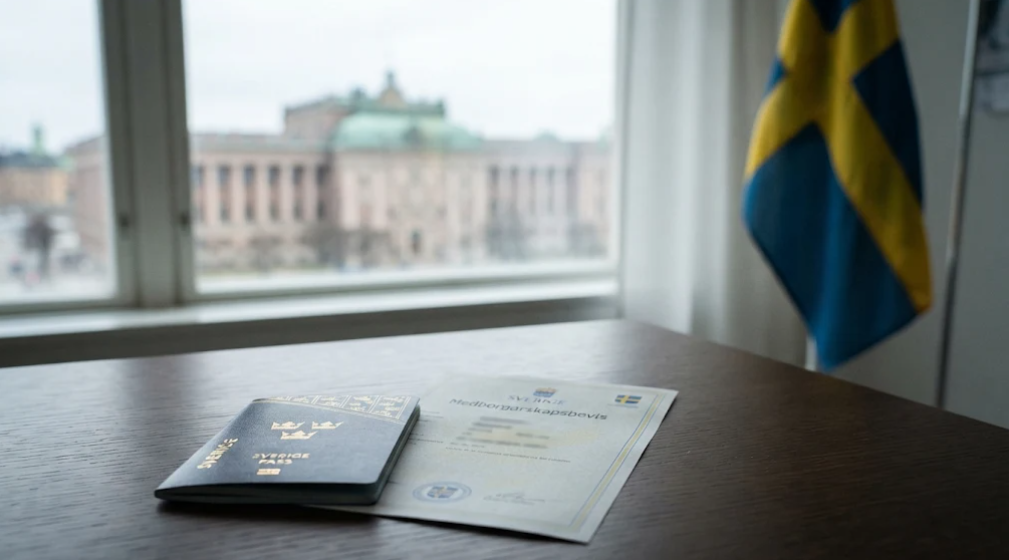
Sweden is preparing to introduce a major change to its citizenship rules, allowing Swedish citizenship to be revoked in certain circumstances. Parliament approved the necessary constitutional amendment on 11 November, but the detailed legislation needed to apply the new power has not yet been adopted.

The change would affect people who hold dual citizenship and either obtained Swedish citizenship through improper conduct or were convicted of certain serious offences that threaten Sweden’s vital interests. It would not allow authorities to make someone stateless.
The distinction between the constitutional amendment and the rules still being developed is important: the constitutional change is approved, but the full revocation procedure is not yet in force.

Parliament approves constitutional change
The Swedish Riksdag approved the constitutional amendment for a second time on 11 November. Under Sweden’s constitutional procedure, an amendment to the Instrument of Government must be approved by Parliament twice, with a general election taking place between the two votes.
The first approval took place on 20 May 2026. Following the election, Parliament gave its second approval in November. The constitutional amendment is scheduled to enter into force on 1 January 2027.
Sveriges riksdag+1
This approval creates the constitutional basis for legislation allowing citizenship to be withdrawn in specified cases. It does not, by itself, mean that the Swedish Migration Agency can immediately begin revoking citizenship under a complete new procedure.
Who could lose Swedish citizenship?
The framework approved by Parliament concerns people who have both Swedish citizenship and citizenship of another country.
The proposed rules identify two main circumstances in which revocation could be possible.
1. Citizenship obtained through false information or improper conduct
The first category concerns cases where Swedish citizenship was acquired on incorrect grounds.
Examples could include deliberately providing false or misleading information, or using other improper methods to secure citizenship. The aim is to make it possible to address cases in which a citizenship decision was obtained through deception or misconduct.
The constitutional amendment provides the basis for legislation covering this type of case.
Sveriges riksdag+1
2. Convictions for certain very serious crimes
The second category concerns people convicted of offences that seriously harm Sweden’s vital interests.
The government’s earlier description of the initiative referred to crimes that seriously threaten national security, as well as offences falling within the jurisdiction of the International Criminal Court. It also highlighted serious criminal activity that could represent a systemic threat to the state.
The final scope and legal conditions will depend on the ordinary legislation adopted to implement the constitutional change. It would therefore be inaccurate to suggest that any criminal conviction could automatically lead to the loss of citizenship.
Regeringskansliet+1
People who would become stateless are protected
A central limitation is that Swedish citizenship could not be revoked if doing so would leave the individual without any nationality.
This means the proposed system is directed at people who hold dual citizenship. A person whose only nationality is Swedish would not fall within the proposed revocation framework described by the Migration Agency.
The safeguard is significant because losing citizenship can have serious consequences for a person’s legal status, rights and ability to remain in a country.
When will the rules take effect?
The process has two distinct stages:
Constitutional amendment: approved twice by Parliament and scheduled to enter into force on 1 January 2027.
Detailed legislation: still required before citizenship can actually be revoked under the new framework.
The Swedish Migration Agency has referred to Government Inquiry report SOU 2026:21, which proposes amendments to ordinary legislation. The inquiry suggests that these implementing changes should enter into force on 1 January 2028. However, that date remains a proposal, not an adopted implementation deadline.
Swedish Migration Agency
| Stage | Status |
|---|---|
| First parliamentary approval | Approved on 20 May 2026 |
| Second parliamentary approval | Approved on 11 November 2026 |
| Constitutional amendment | Scheduled for 1 January 2027 |
| Detailed implementing legislation | Still under consideration |
| Proposed start for implementing rules | 1 January 2028 |
What does this mean for Swedish citizens and residents?
For people who already have Swedish citizenship, the change does not mean that citizenship can be withdrawn arbitrarily. The proposed power is limited to specific circumstances and concerns people with another nationality as well.
For residents who are applying for Swedish citizenship, the development is also relevant because it signals a broader shift in the way Sweden approaches the responsibilities and legal consequences attached to citizenship. However, the revocation proposal should not be confused with separate changes to the requirements for obtaining citizenship.
Anyone concerned about their individual circumstances should seek advice from a qualified legal professional. The final implementing legislation will determine the precise procedures, evidence requirements and opportunities to challenge a revocation decision.
What remains undecided?
Although Parliament has approved the constitutional amendment, several practical questions depend on the legislation still being prepared. These include how authorities will assess improper conduct, which convictions will qualify, how decisions will be reviewed and what procedural safeguards will apply.
The Swedish Migration Agency has said it is monitoring the proposal and will provide further information if the new rules are implemented.
Swedish Migration Agency
Our assessment
The change represents a significant development in Swedish citizenship law. It creates a route for citizenship to be withdrawn in narrowly defined cases involving dual nationals, including where citizenship was obtained improperly or where a person is convicted of offences seriously damaging Sweden’s vital interests.
At the same time, the distinction between constitutional approval and legislation entering into force must remain clear. The detailed rules will determine how the new power works in practice and what protections individuals have against incorrect or disproportionate decisions.
Official Sources
1. Swedish Migration Agency — Swedish citizenship may be revoked in certain cases
Read the official announcement2. Swedish Parliament — Approval of constitutional amendments concerning citizenship and other matters (11 November 2026)
Read the parliamentary decision3. Swedish Parliament — Decision on the constitutional amendment (11 November 2026)
View the official decision4. Government Offices of Sweden — Government commissions inquiry on revocation of citizenship
Contact: info@alswedalyom.com