
Sweden Extends Internal Border Controls for Six Months Until May 2027
Sweden has decided to maintain temporary internal border controls for another six months, from 12 November 2026 until 11 May 2027. The decision, announced by the Swedish Government on 5 November, is based on concerns about national security, cross-border criminal activity and threats linked to Russia’s war against Ukraine.

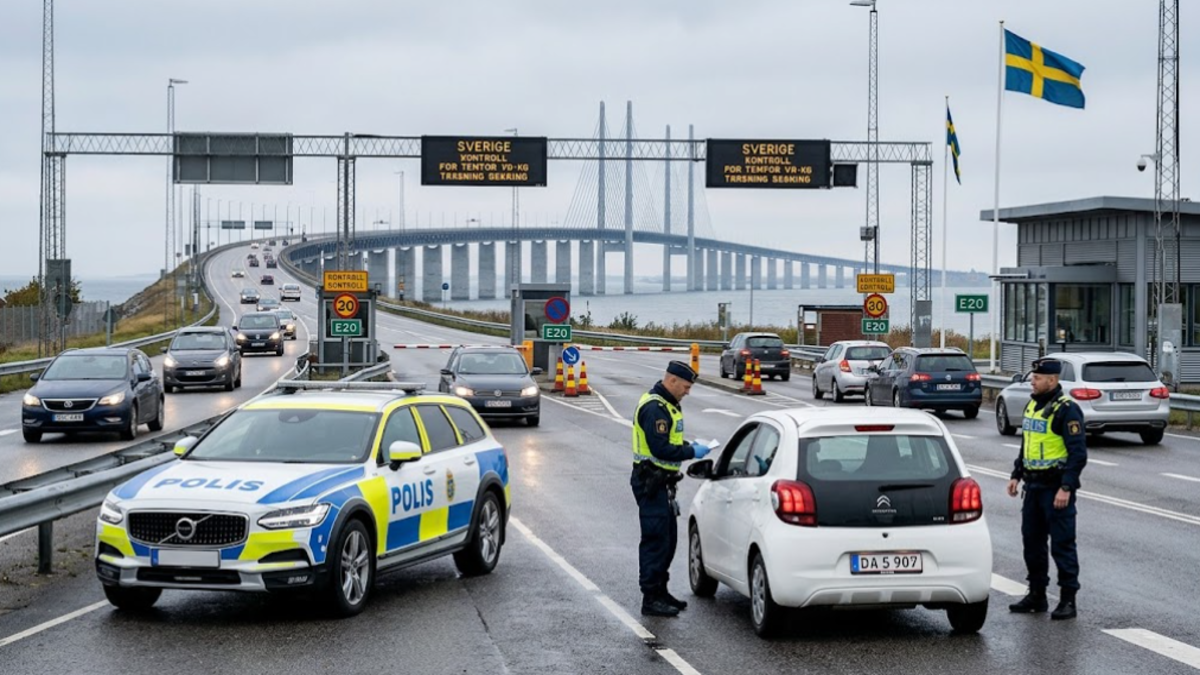
The measure applies to Sweden’s internal borders within the Schengen Area, including land, sea and air borders. It means travellers entering Sweden from other Schengen countries may be subject to police checks, even though routine border controls are normally absent between Schengen members.
The extension is particularly relevant for people travelling between Denmark and Sweden, as well as visitors arriving by ferry, train or plane from other Schengen countries. However, the reintroduction of controls does not mean that every traveller will automatically undergo an inspection.

Sweden Keeps Internal Border Controls Until May 2027
The Swedish Government confirmed the six-month extension in a decision announced by the Ministry of Justice on 5 November.
The new period begins on 12 November, immediately after the previous authorisation expires on 11 November. This is therefore a continuation of Sweden’s existing temporary border-control arrangements rather than the introduction of an entirely new border-control system.
According to the Government, the decision is justified by a serious threat to public order and internal security.
Swedish authorities point particularly to the security situation following Russia’s full-scale invasion of Ukraine, including hybrid threats and hostile actors operating across the Schengen Area.
The Government considers temporary border controls an additional instrument that allows authorities to identify people entering Sweden who may pose a threat to public order or national security.
The measure has been adopted under the common European rules governing the temporary reintroduction of controls at internal Schengen borders.
Which Borders and Travellers Are Affected?
The European Commission’s notification records specify that Sweden’s temporary controls cover all internal borders, including land, air and sea connections. The notification also identifies land borders with Denmark.
This is relevant for several types of journeys:
Denmark to Sweden: Travellers crossing the Öresund Bridge by car or train may encounter checks.
Norway to Sweden: People travelling across the land border may be subject to inspections.
Finland to Sweden: The land border is also within the scope of Sweden’s internal border-control arrangements.
Air travel: Passengers arriving from other Schengen countries may be checked at Swedish airports.
Ferries: Travellers arriving at Swedish ports from other Schengen countries may also face controls.
The Swedish Police Authority is responsible for deciding where and when checks take place. The Government has not announced that every border crossing, airport or port will operate permanent inspection points throughout the six-month period.
The practical arrangements will depend on police assessments and the security situation.
What Documents Should Travellers Carry?
Travellers should be prepared to demonstrate their identity and their right to enter and stay in Sweden.
According to the Swedish Police Authority, EU and EEA citizens travelling to Sweden from another EU/EEA country should carry a valid passport or national identity card that confirms their citizenship.
Nordic citizens generally have more flexible identification arrangements when travelling within the Nordic countries. A valid Nordic driving licence is usually sufficient, although carrying a passport or national identity card is the safer option.
For non-EU/EEA nationals, the applicable entry requirements depend on their nationality, residence status and travel circumstances. A passport, and where required a visa or residence permit, may be necessary.
| Traveller | Recommended travel documents |
|---|---|
| EU/EEA citizens | Valid passport or national identity card |
| Nordic citizens | Valid Nordic driving licence may be sufficient; passport or national ID recommended |
| Non-EU/EEA nationals | Valid passport and any required visa or residence documentation |
Having the correct documents does not necessarily mean that travellers will avoid inspection. Police officers may still carry out checks under the temporary arrangements.
Travellers should also remember that ordinary external border controls remain in place when entering Sweden from countries outside the relevant Schengen arrangements. The temporary measure concerns internal borders, not the abolition or replacement of external border procedures.
Why Is Sweden Extending the Controls?
The Swedish Government’s decision is primarily linked to the country’s assessment of the security situation in Europe.
One of the main concerns is the threat posed by hostile actors operating across national borders, particularly in connection with Russia’s full-scale invasion of Ukraine.
The Government refers to hybrid threats, which can involve activities intended to destabilise countries without taking the form of conventional military attacks. These may include sabotage, intelligence operations and other hostile activities.
Sweden also considers the wider security implications of organised crime and the activities of foreign actors operating through criminal networks.
The authorities argue that temporary border controls give police and other relevant agencies additional opportunities to identify people who may pose a threat to national security or public order.
The Government has also referred to concerns about the management of external borders, the instrumentalisation of migration, organised crime and its policy on issuing visas to Russian citizens. These issues appear in the notification published by the European Commission.
It is worth distinguishing the Government’s security assessment from an established finding that every person crossing Sweden’s borders represents a security risk. The controls are intended to help identify potential threats, not to treat all travellers as suspicious.
What Does This Mean for the Schengen Area?
The decision is significant because Sweden is part of the Schengen Area, where routine checks at internal borders have generally been abolished.
Schengen allows people to travel between participating countries without normally passing through systematic border inspections. However, this freedom is not unconditional.
The Schengen Borders Code allows member states to temporarily reintroduce internal border controls when they face a serious threat to public policy or internal security.
The European Commission describes this as a measure of last resort. It must be temporary, necessary and proportionate to the threat being addressed.
Sweden is not the only country using this possibility. The European Commission’s current notification list also includes Denmark, Norway, France, Germany, Austria and Poland, among other countries with temporary controls during overlapping periods.
The reasons and geographical scope differ from one country to another.
For Sweden, the latest notification covers the period from 12 November 2026 to 11 May 2027.
How Long Will the New Border Controls Last?
The Government’s decision establishes a six-month period.
| Key date | Development |
|---|---|
| 5 November 2026 | Swedish Government announces the extension |
| 11 November 2026 | Previous authorisation expires |
| 12 November 2026 | New six-month period begins |
| 11 May 2027 | Scheduled end of the new period |
The end date does not necessarily mean that Sweden will permanently abandon internal border controls afterwards.
Any further extension or new decision would have to follow the applicable Schengen rules and be supported by the relevant legal grounds.
The Swedish Police Authority will continue to determine how the checks are organised during the authorised period.
What Should Visitors Do Before Travelling to Sweden?
For most visitors, the main practical recommendation is straightforward: prepare for possible checks and make sure that travel documents are valid.
Before departure, travellers should:
Check that their passport or national identity card is valid.
Confirm whether their nationality requires a visa to enter Sweden.
Carry relevant residence documentation if they live in another European country.
Allow some additional flexibility in their travel schedule in case checks cause delays.
Follow information published by the Swedish Police and their transport operators.
People travelling regularly between Denmark and Sweden for work, education or family reasons should pay particular attention to official updates.
The controls do not automatically suspend the right of EU citizens to exercise free movement. However, the possibility of temporary inspections means that crossing an internal Schengen border may involve additional checks.
Editorial Assessment: Security Measures Must Remain Proportionate
Sweden’s decision reflects the growing importance of security concerns across Europe and the challenges governments face in responding to cross-border threats.
From Swedist’s perspective, allowing police to carry out temporary checks can be a legitimate security measure when there is a clearly identified threat. However, the exceptional nature of these controls should not be overlooked.
The Schengen Area depends on the freedom to travel without routine internal border inspections. Any restriction should therefore remain proportionate, properly justified and limited to what is necessary.
For travellers, the most sensible approach is to continue planning journeys as normal while carrying the appropriate identification and allowing for possible additional checks.
Frequently Asked Questions
1. When will Sweden’s internal border controls apply?
The extended controls will apply from 12 November 2026 until 11 May 2027, covering a six-month period.
2. Will everyone entering Sweden be checked?
No. The measure allows the Swedish Police to carry out checks, but it does not mean that every traveller will automatically be inspected. Police decide where and when controls are necessary.
3. Will travellers from Denmark need to carry identification?
Yes. Travellers should carry valid identification and appropriate travel documents. EU/EEA citizens should generally have a valid passport or national identity card.
4. Do the controls affect flights and ferries?
Yes. The European Commission’s notification includes Sweden’s internal land, air and sea borders. Passengers arriving by air or ferry from other Schengen countries may therefore be subject to checks.
5. Does Sweden’s decision mean that Schengen free movement has ended?
No. Sweden is temporarily reintroducing border checks under the Schengen Borders Code. The general framework of free movement remains in place, although additional inspections may take place during the authorised period.
Official Sources
1. Swedish Government (Ministry of Justice) — Reintroduced Border Controls at Internal Borders — 5 November 2026
Official government announcement (Swedish)
2. European Commission — Temporary Reintroduction of Border Control
European Commission: Current internal border controls and notifications
3. Swedish Police Authority — EU and EEA Citizens
Official travel and identification requirements for EU/EEA citizens
4. Krisinformation.se — Sweden Extends Internal Border Controls — 5 November 2026
Contact: info@alswedalyom.com