
STOCKHOLM – Swedist: Karlstad fatal assault leaves man dead as crime remains central to Sweden’s election debate.

A man in his 50s has died after a serious assault in central Karlstad, while two men in their 20s have been arrested and detained on suspicion of manslaughter, according to Swedish media reports. The case has drawn renewed attention to violent crime at a politically sensitive moment, with law and order, gang violence and public security among the issues dominating Sweden’s election campaign. But what is known so far about the fatal assault in Karlstad?
Karlstad fatal assault ends with man’s death
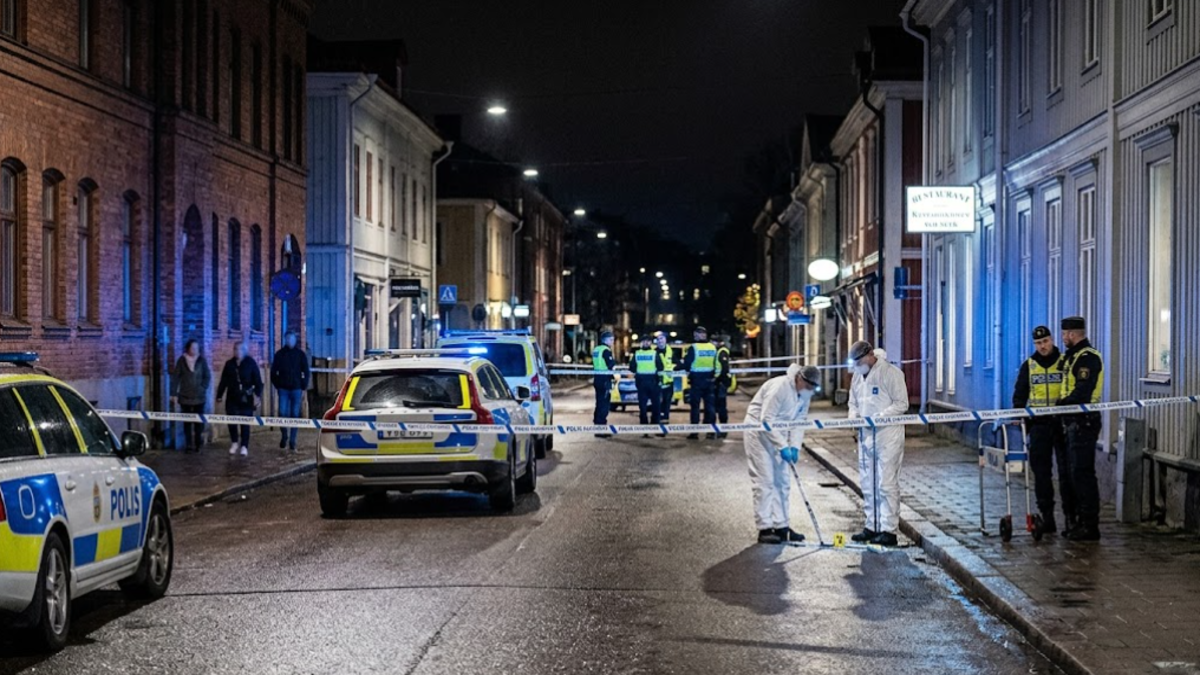
The incident happened during the early hours of Sunday in central Karlstad, where police were called after a disturbance outside a restaurant.

According to reports from SVT and other Swedish media, police received the alarm at about 1.25am. Officers went to an address on Östra Torggatan, where a serious assault had taken place.
A man in his 50s had suffered severe injuries. Police initially arrested two men in their 20s on suspicion of aggravated assault.
The injured man was taken to Örebro University Hospital for treatment. His condition was critical, and medical staff were unable to save his life. After his death, investigators changed the suspected offence from aggravated assault to manslaughter, according to the Swedish reports.
The two suspects remain in custody as the investigation continues. Swedish authorities have not publicly established all the circumstances surrounding the confrontation, and the suspects have not been convicted of any offence.
That distinction is important. An arrest or detention on suspicion of a crime does not establish guilt, and investigators must still determine exactly what happened before prosecutors decide how the case should proceed.
The available reporting also does not establish that the incident was connected to an organised criminal network or a gang conflict.
What happened before the Karlstad fatal assault?
Police were called after a disturbance broke out outside a restaurant in central Karlstad.
The incident developed during the night, and two men in their 20s were subsequently taken into custody. At that stage, investigators suspected them of aggravated assault against the older man.
The victim was transported to Örebro University Hospital because of the seriousness of his injuries. His death later changed the legal classification of the case.
Swedish media have reported the basic sequence of events, but many details remain under investigation. Authorities have not released a complete account of how the confrontation began or what led to the injuries that ultimately proved fatal.
That means claims circulating online about the circumstances should be treated carefully unless they are confirmed by police, prosecutors or established news organisations.
The Swedish Police Authority regularly notes that early information in crime investigations can change as investigators gather evidence and establish a clearer picture of events.
The investigation is therefore likely to focus on witness statements, forensic evidence and the sequence of events outside the restaurant.
For now, the confirmed elements are limited but serious: a man in his 50s was badly assaulted in central Karlstad, he later died in hospital, and two younger men have been detained on suspicion of manslaughter.
Police investigation continues after the death
The death has transformed what initially appeared to be a serious assault investigation into a fatal-crime case.
That change carries significant legal consequences. Investigators must now establish not only who was involved but also what happened during the confrontation, what actions caused the man’s injuries and what circumstances surrounded the incident.
The two suspects are men in their 20s, while the victim was in his 50s. Beyond those basic details, authorities have so far released limited information about the individuals involved.
The case is being handled as an investigation into manslaughter, rather than being presented as a confirmed murder. That wording matters because Swedish criminal law distinguishes between different forms of unlawful killing according to circumstances and intent.
At this stage, there is no basis to conclude that the two detained men will ultimately be convicted.
The investigation will also need to establish whether other people witnessed the incident or had information that could help investigators reconstruct what happened.
Because the assault occurred outside a restaurant, investigators may have access to witnesses who were in the area during the night. Any available surveillance footage could also become relevant if authorities are able to obtain it.
Police have not publicly disclosed the full evidentiary picture.
The death has nevertheless made the case one of the more serious recent crime stories to emerge from Karlstad and comes at a particularly charged political moment across Sweden.
Crime dominates Sweden’s election conversation
The Karlstad case comes as crime and security remain major themes in Sweden’s parliamentary election campaign.
With the vote approaching on September 13, the political contest has tightened considerably. A new TV4/Novus poll reported by Reuters shows the centre-left opposition bloc with 50.3 percent support, compared with 47.7 percent for the governing right-wing coalition and its allies.
The difference is only 2.6 percentage points, placing the two sides within the poll’s margin of error.
Crime is part of a broader political discussion that also includes the economy, welfare, immigration, energy and national security.
The issue has particular weight in Sweden because gang-related shootings, explosions and other forms of organised violence have occupied a prominent place in public debate for years.
Political parties have responded by proposing tougher measures against criminal networks, including stronger restrictions and expanded powers for authorities.
Recent reporting has highlighted proposals from both the governing side and the Social Democrats aimed at making it harder for people involved in criminal networks to operate.
Among the measures discussed are contact bans, restrictions on public grants, travel bans and limitations affecting businesses connected to gang crime.
The political argument is not simply about policing. It also involves questions about prevention, sentencing, integration, youth crime and the ability of the state to prevent young people from being drawn into criminal networks.
That makes every serious violent incident politically sensitive, even when there is no evidence that the individual case is connected to organised crime.
The Karlstad case should not be confused with gang violence
The timing of the assault has created an obvious link in the public conversation: Sweden is debating crime while another fatal violent incident has occurred.
However, the available information does not establish that the Karlstad assault was gang-related.
That distinction is essential for responsible reporting.
The facts currently available point to a confrontation outside a restaurant involving two men in their 20s and a man in his 50s. Police initially treated the matter as aggravated assault before changing the suspected offence after the victim died.
There is no confirmed information in the sources reviewed for this report showing that the suspects belonged to a criminal gang, that the victim had links to organised crime or that the incident was part of a wider gang conflict.
It would therefore be misleading to describe the death as a gang-related killing without evidence from investigators.
At the same time, the case illustrates why violent crime remains such a politically powerful subject. An ordinary night-time confrontation can become a fatal incident within hours, leaving investigators, prosecutors and the courts to determine responsibility.
For residents, the immediate concern is the death of a local man and the circumstances that led to it.
For politicians, the wider challenge is how to reduce serious violence without treating every violent offence as part of the same phenomenon.
Sweden’s crime debate reaches beyond shootings
Sweden’s debate over crime has often focused on shootings and explosions associated with criminal networks, but the political discussion is broader than gang warfare.
The government and opposition have spent years debating sentencing, policing resources, surveillance, youth offenders and the prevention of recruitment into criminal networks.
Parliament has also backed significant changes to criminal policy. In recent months, lawmakers voted to lower the age of criminal responsibility from 15 to 14, a move that was presented as part of a tougher response to serious youth crime.
The question of children and teenagers involved in serious offences has become particularly contentious because Swedish authorities have faced cases involving very young people recruited by criminal networks.
That debate has added another dimension to the election campaign.
Supporters of tougher policies argue that Sweden needs stronger tools to prevent repeat offending and deter people from joining criminal networks. Critics have raised questions about the long-term consequences of increasingly punitive policies, particularly when young people are involved.
The political dispute is therefore about both immediate security and the future direction of Swedish criminal justice.
The Karlstad investigation is separate from those policy questions, but its timing means the death is being reported against that national backdrop.
A closely watched election race
The latest polling suggests that the election remains highly competitive.
Reuters reported today that the centre-left bloc has narrowed the gap with the governing right-wing coalition. The poll puts the opposition ahead by 2.6 percentage points, a much smaller advantage than the 6.9-point gap recorded in the previous survey.
Prime Minister Ulf Kristersson faces a strong challenge from Social Democratic leader Magdalena Andersson.
The election will determine the composition of the Riksdag and the political direction of the country for the next parliamentary term.
Security and crime are among several issues competing for voters’ attention.
The political debate also includes the cost of living, welfare services, immigration and energy. Yet crime has retained a particularly prominent position because many voters have witnessed or followed years of reporting about organised violence.
The parties differ over how aggressively the state should respond and which measures should receive priority.
For the governing side, tougher criminal policy has been a central part of its political message. The opposition has also adopted stronger positions on crime than in previous election campaigns, reflecting the importance of the issue to voters.
The result is a political environment in which a serious assault can quickly become part of a much larger conversation about public safety.
But journalists and politicians alike face the responsibility of distinguishing between verified facts about individual crimes and broader claims about Sweden’s criminal landscape.
What investigators still need to establish
The most important unanswered questions in the Karlstad investigation concern the circumstances of the confrontation.
Investigators must determine what happened before police arrived, what role each suspect allegedly played and what caused the man’s fatal injuries.
They will also need to examine whether witnesses can provide a consistent account of the incident and whether physical or digital evidence supports those accounts.
The fact that the confrontation occurred outside a restaurant may mean that several people were present. However, the authorities have not publicly described the complete witness picture.
The legal process will now determine the next steps for the two detained suspects.
At present, they are suspected of manslaughter. That status is not equivalent to a conviction, and the investigation may change as evidence is reviewed.
The victim’s identity has not been broadly reported by the major sources used for this article, and further personal details should not be published unless they are officially confirmed and relevant to the public interest.
The police investigation therefore remains the most important source for future developments.
Readers following the case should be cautious about unverified claims on social media, particularly where motives, identities or alleged gang connections are presented as established facts.
Why the case matters beyond Karlstad
A fatal assault in a Swedish city is first and foremost a tragedy for the victim and those close to him.
The political significance comes from the timing rather than from any established connection between this particular case and organised crime.
Sweden is approaching a closely fought election in which security and crime remain major subjects. The country has spent years confronting serious gang-related violence, and voters are being asked to choose between competing approaches to policing, sentencing and prevention.
Against that backdrop, the death of a man following an assault in central Karlstad naturally raises concerns about public safety.
But the case also demonstrates why individual incidents need to be reported carefully.
There is a difference between a fatal assault and a gang-related killing. There is a difference between an allegation and a conviction. And there is a difference between a political argument about crime and the evidence established in a particular criminal investigation.
The confirmed facts are stark enough without adding speculation.
A man in his 50s was seriously assaulted in central Karlstad after a disturbance outside a restaurant. He was taken to Örebro University Hospital but died from his injuries. Two men in their 20s were arrested and later detained on suspicion of manslaughter. The investigation remains active.
Meanwhile, Sweden’s election campaign continues, with crime, security and gang violence remaining important issues for voters and political parties.
As investigators work to establish exactly what happened in Karlstad, the case will remain closely watched both locally and nationally.
FAQ
What happened in Karlstad?
A man in his 50s was seriously assaulted in central Karlstad after a disturbance outside a restaurant. He later died from his injuries.
How many people have been arrested?
Two men in their 20s were arrested and detained on suspicion of manslaughter.
Was the Karlstad assault gang-related?
There is currently no confirmed evidence in the sources reviewed that the incident was connected to a criminal gang.
Why is the case politically significant?
The death comes during a closely fought Swedish election campaign in which crime, security and gang violence are major political issues.
Contact: info@alswedalyom.com