
Stockholm – Swedist: AI and the future of Swedish jobs is becoming one of the central questions for Sweden’s labour market as artificial intelligence changes how companies and employees work. New reports indicate that AI is not only affecting technology roles but also transforming tasks across many professions. How will Swedish workers adapt to this new workplace reality?

Artificial intelligence is increasingly being introduced into Swedish businesses, public services and research environments. The Swedish government has presented a national AI strategy focused on strengthening innovation, improving public-sector efficiency and creating better conditions for research and business development.
The debate around AI and employment has shifted from whether technology will simply replace jobs to how it will change the skills required in existing roles. According to AI Sweden, the main impact on the Swedish labour market is expected to involve changing tasks and increasing demand for new skills rather than the disappearance of all jobs.

AI and the future of Swedish jobs depends on new skills
The expansion of artificial intelligence is creating demand for workers who can combine professional knowledge with digital skills. A report on Sweden’s AI-related employment trends found strong growth in roles connected to AI use and development.
The report showed that AI user roles increased by 71.4% while AI developer roles grew by 34.5% during the measured period. AI user roles represent the larger share of AI-related employment growth, showing that companies increasingly need employees who can apply AI tools in their daily work.
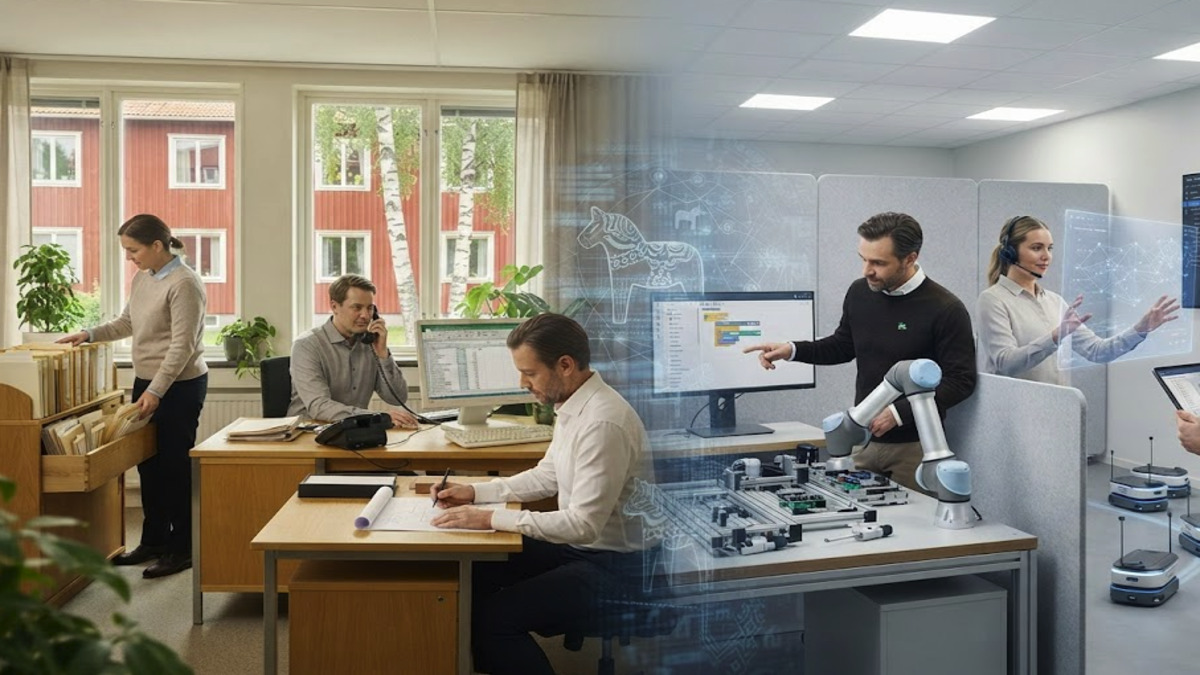
This shift means many traditional jobs may change rather than disappear. Employees in areas such as administration, analysis, communication and business services may increasingly work alongside AI systems that support decision-making and automate repetitive tasks.
Swedish organisations are therefore focusing more on education and professional training. AI Sweden has highlighted the importance of developing skills early and systematically as companies integrate artificial intelligence into their operations.
AI and the future of Swedish jobs reshapes companies and workplaces
Sweden’s technology sector has been active in developing AI solutions and supporting digital transformation. The country’s AI strategy aims to strengthen Sweden’s position internationally while encouraging responsible AI development.
The government’s approach includes supporting research, innovation and access to skills needed for an AI-driven economy. The strategy also focuses on managing risks connected with artificial intelligence while ensuring that businesses and public institutions can benefit from new technology.
For employers, AI adoption creates opportunities to improve productivity and develop new services. At the same time, companies must consider how workers can receive the training needed to use these tools effectively.
The impact will likely vary between industries. Jobs involving large amounts of information processing may experience faster changes, while roles requiring physical skills, personal interaction or complex human judgement may evolve differently.
Sweden’s workforce faces a transition rather than a complete replacement
The discussion about artificial intelligence and jobs has created concerns among workers who fear automation could reduce employment opportunities. However, current Swedish analysis points more strongly toward workplace transformation through new responsibilities and skill requirements.
The challenge for Sweden will be ensuring that workers have access to education and training opportunities as technology develops. Businesses, government institutions and educational organisations will play important roles in preparing employees for changing job demands.
As artificial intelligence becomes more common in Swedish workplaces, the future of employment will depend on how effectively people and technology can work together.
FAQ
Will AI replace Swedish jobs?
Current Swedish analysis suggests AI will mainly change job tasks and skill requirements rather than eliminate all jobs.
Which jobs are affected most by AI?
Roles involving digital information, analysis and repetitive tasks are among those likely to experience significant changes.
Is Sweden investing in AI development?
Yes. Sweden has introduced a national AI strategy focused on innovation, research and responsible AI development.
What skills will workers need in the AI era?
Digital skills, AI understanding and the ability to adapt to new working methods are becoming increasingly important.
Conclusion
AI is changing the Swedish labour market by transforming how people work and what skills employers need. The future of Swedish jobs will depend on adaptation, education and cooperation between workers, companies and institutions.
Contact: info@alswedalyom.com