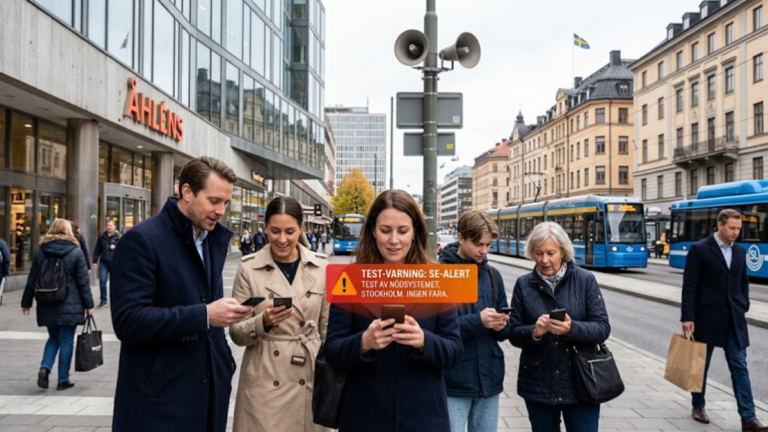

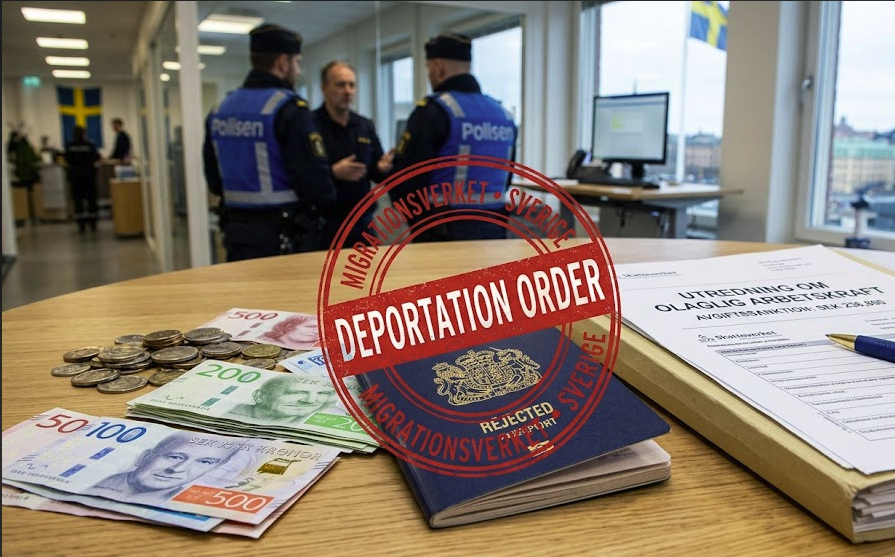
Stockholm – Swedist: The regulations surrounding fines for illegal work in Sweden have drastically intensified as the government rolls out aggressive reforms to combat labor market crime. Navigating the Swedish labor framework now demands absolute compliance from both local businesses and foreign nationals. With the Swedish Migration Agency (Migrationsverket) and police scaling up workplace inspections, unauthorized employment carries unprecedented financial and legal liabilities. What exactly are the consequences of non-compliance under the current legal framework, and how much can a violation cost?

The Swedish government treats unauthorized employment as a severe threat to the integrity of its welfare state and fair market competition. Recent legislative updates have intentionally amplified the financial burdens on non-compliant businesses while streamlining the deportation mechanism for undocumented workers. According to an operational review by the investigative team at Swedist, the penalties span from massive administrative sanction fees to mandatory jail time for serious exploitation.
Understanding unauthorized employment in Sweden
Before looking into the financial penalties, it is crucial to establish what Swedish law defines as illegal or unauthorized labor. The framework categorizes illegal work as any professional activity performed by a non-EU/EEA national who does not possess a valid work permit or specific residence status that grants them the explicit right to work in Sweden.

This legal boundary applies equally to full-time jobs, casual shifting, or trial periods. Even cash-in-hand seasonal jobs or barter arrangements (working in exchange for food or housing) are legally classified as employment and require formal authorization.
Common labor violations
The most frequent infractions monitored by Swedish authorities include:
Visa abuse: Entering the Schengen zone on a regular tourist visa or visa-free status and secretly taking up employment.
Student permit violations: International students working beyond the authorized parameters or continuing to work full-time after their studies without obtaining a post-graduation bridge permit.
Unregistered occupation changes: Foreign workers switching employers or occupations entirely without notifying Migrationsverket or obtaining a revised permit, which automatically voids their legal status.
Fines for illegal work in Sweden and employer compliance systems
To deter companies from exploiting vulnerable labor, Sweden employs a strict special charge system (särskild avgift) paired with corporate criminal liabilities. Under the updated regulations, the financial penalty for hiring a worker without a proper permit is directly tied to the national Price Base Amount (prisbasbelopp), which stands at SEK 59,200.
Employers bear a strict legal obligation to personally verify the physical documents of any non-EU applicant before onboarding them, keeping secure copies for the entire duration of the employment and for at least twelve months afterward.
Doubled financial penalties for businesses
The financial consequences for non-compliant employers have recently doubled to serve as a harsh deterrent. A business caught employing an unauthorized worker faces immediate administrative fees based on the duration of the infraction.
+-------------------------------------------------------------------------+
|                  EMPLOYER PENALTY MATRIX (BASED ON 2026 PBA)            |
+------------------------------------+------------------------------------+
| Duration of Illegal Employment     | Penalty Fee Calculation            |
+------------------------------------+------------------------------------+
| Short-term (Under 3 months)        | 2 Price Base Amounts = SEK 118,400 |
| Long-term (Over 3 months)          | 4 Price Base Amounts = SEK 236,800 |
+------------------------------------+------------------------------------+
Note: These fines apply per unauthorized worker, meaning a business hiring multiple undocumented individuals faces compounding charges that can instantly cause bankruptcy.
Criminal prosecution and prison sentences
When a business deliberately engages in systematic labor violations, the case transitions from administrative fees into the criminal court system. Swedish prosecutors are empowered to pursue severe criminal charges under the newly introduced provisions for the “exploitation of foreign labor” and “trading in work permits.”
An intentional infringement or severe negligence can lead to corporate fines scaling into millions of kronor. For the individuals managing the business, standard offenses carry jail sentences of up to two years, which can escalate to four years if the court deems the offense to be a case of serious corporate exploitation or human trafficking.
Consequences for foreign workers and legal remedies
While employers face severe economic ruin, unauthorized foreign workers face life-altering immigration penalties that shatter any prospects of building a legal life in Scandinavia.
The Swedish Migration Agency maintains a zero-tolerance policy for permit breaches. An individual caught working illegally cannot pay a fine to retroactively validate their status; instead, they enter a rapid enforcement pipeline executed by the police and border services.
Deportation and Schengen-wide bans
The immediate consequence for an unauthorized worker is the issuance of a deportation order. This measure does not just banish the individual from Sweden; it typically includes a formal re-entry ban to the entire Schengen area lasting between one to five years.
              ┌────────────────────────────────────────┐
              │    Discovery of Unauthorized Labor     │
              └───────────────────┬────────────────────┘
                                  │
                                  ▼
              ┌────────────────────────────────────────┐
              │ Revocation of Current Status / Visa    │
              └───────────────────┬────────────────────┘
                                  │
                                  ▼
              ┌────────────────────────────────────────┐
              │  Deportation Order & Detention Risk    │
              └───────────────────┬────────────────────┘
                                  │
                                  ▼
              ┌────────────────────────────────────────┐
              │ Multi-Year Ban from Entire Schengen Area│
              └────────────────────────────────────────┘
Furthermore, having a record of unauthorized work in Sweden creates a permanent digital flag in the Schengen Information System (SIS). This makes it profoundly difficult to secure any European visa, study permit, or residency approval in the future.
Mandatory verification protocols for Swedish businesses
To avoid catastrophic compliance fines, human resource departments across Sweden must execute bulletproof background checks. Relying on verbal assurances or superficial checking is no longer legally defensible.
Direct passport & permit inspection: Physically examining and verifying the security features of the biometric residence permit card (uppehållstillståndskort).
Verifying Migrationsverket status: Cross-checking directly with the Migration Agency to ensure the permit is active, genuine, and has not been revoked.
Compulsory notification: Filing a formal notification (Anmälan om anställning) to the Swedish Tax Agency (Skatteverket) whenever a non-EU citizen is hired, as mandated by national law.
Conclusion
The aggressive enforcement of fines for illegal work in Sweden serves a clear purpose: ensuring the local labor market remains orderly, fair, and safe. The financial penalties can dismantle an established company within days, while the immigration consequences permanently derail an individual’s career path. Prioritizing absolute transparency, utilizing official work permit channels, and keeping meticulous HR records are the only viable strategies to operate successfully in the Swedish economic landscape.
fines for illegal work in Sweden, illegal work Sweden, Sweden immigration penalties, employer compliance Sweden, Migrationsverket rules, deportation Sweden, Skatteverket notification, unauthorized employment, price base amount Sweden, labor migration reforms, Swedish labor laws, employment sanction fees, corporate fines Sweden, Schengen re-entry ban, Swedist
Frequently Asked Questions
What happens if a worker has an application pending with Migrationsverket?
If a worker has submitted an extension application for a work permit before their previous permit expired, they are generally allowed to continue working while awaiting a decision. However, if the application is a first-time request or filed late, working during the processing period is strictly illegal.
Can an employer be exempt from the penalty fee if they were tricked?
An employer is only exempt from the special penalty fee if they can prove they exercised maximum due diligence. This requires showing they demanded to see valid permits, kept copies on file, and properly notified the Swedish Tax Agency upon hiring.
How do Swedish authorities find out about illegal work?
Authorities discover unauthorized labor through coordinated inter-agency inspections involving the Police, the Tax Agency, and the Work Environment Authority. They also act heavily on public tips, union reports, and inconsistencies found during corporate tax audits.
Does a foreign worker receive their unpaid wages if caught working illegally?
Yes, under European Union directives integrated into Swedish law, even if an employment arrangement is deemed illegal, the employer is legally obligated to pay any outstanding wages and social security contributions for the work actually performed…More
Contact: info@alswedalyom.com