
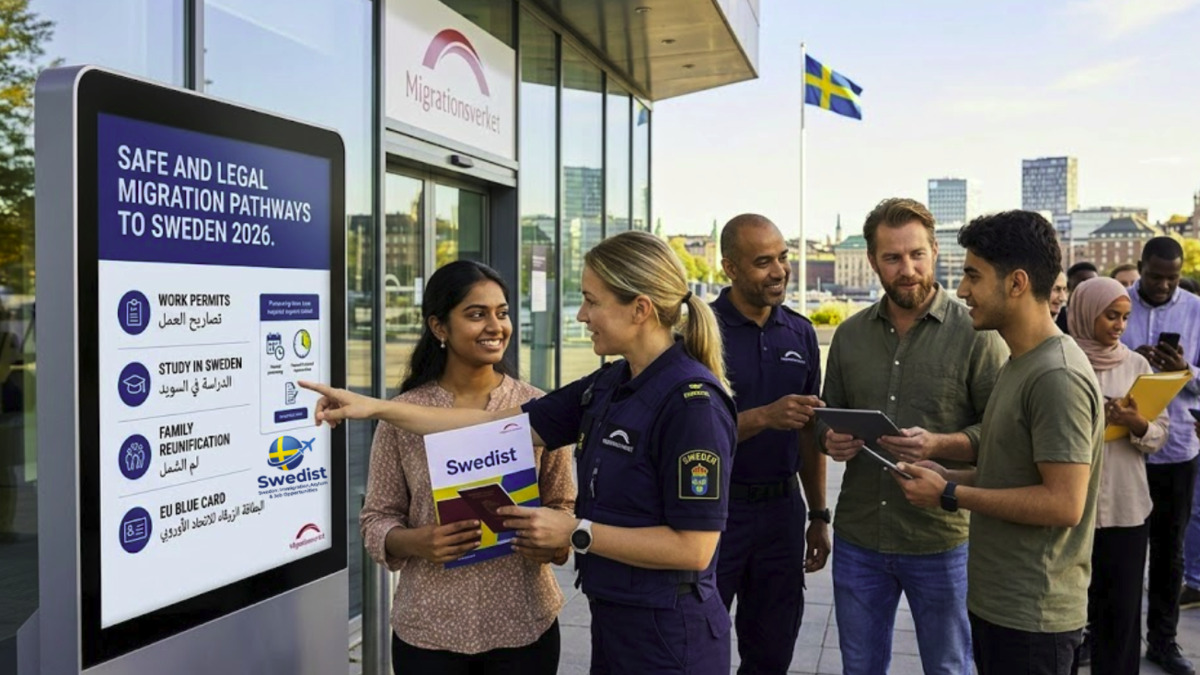
Stockholm. Swedist: The Nordic winds are shifting, and with them, the requirements for entering the land of the midnight sun have reached a turning point. As 2026 unfolds, the map for those seeking a new life in Scandinavia is being redrawn with sharper lines and higher bars. Do you have the right keys to unlock the current safe and legal migration pathways to Sweden?

The New Architecture of Swedish Work Permits
Employment remains the most robust bridge for those looking to settle in Sweden legally and safely. However, the days of low-threshold entry for any job have largely vanished under the latest legislative updates. The government has prioritized high-competence labor, ensuring that those who arrive can truly support themselves in a shifting economy.
The most critical factor for 2026 is the updated salary threshold, which now demands a monthly income of at least 34,200 SEK for most applicants. This move was designed to prevent labor exploitation and ensure that safe and legal migration pathways to Sweden lead to a high quality of life. It’s a filter that favors specialists and tech-driven talent.

Securing a job offer from a certified Swedish employer is the first essential step in this long journey. This certification allows for faster processing times through the Swedish Migration Agency (Migrationsverket). Without this corporate endorsement, applicants may face bureaucratic delays that stretch into several months of uncertainty.
The EU Blue Card and the “Talent Visa”
For those with exceptional academic backgrounds or high-level professional experience, the EU Blue Card serves as a premium entry ticket. This specific permit is tailored for highly qualified workers who have a salary at least 1.5 times the average Swedish wage. It offers a faster track to permanent residency compared to standard work permits.
Additionally, the “Job Seeker Visa” for highly qualified graduates continues to be a popular option for those who want to search for work locally. This permit allows individuals with advanced degrees to stay in Sweden for up to nine months to find employment. It is a calculated risk that pays off for those with in-demand skills in engineering or green energy.
Navigating these options requires a deep understanding of how Swedist provides clarity on the changing legal landscape. Many applicants fail simply because they do not realize their specific degree doesn’t match the current national labor shortage list. Checking the “List of Shortage Occupations” is mandatory before even beginning the application.
Educational Routes: The Bridge from Study to Work
Studying at a Swedish university remains one of the most reliable and socially integrative ways to enter the country legally. International students at the Master’s or PhD level often find it easier to transition into the workforce after graduation. Sweden’s commitment to innovation means that university labs are frequently the starting point for future residents.
Once a student completes two semesters of study, they can often apply for a residence permit to look for work after their studies. This extension lasts for 12 months, giving graduates ample time to secure a contract that meets the legal salary requirements. It is a strategic path that allows for cultural immersion before full-time professional commitment.
We at Swedist have observed that students who engage in internships during their final year have a 70% higher success rate in securing permanent roles. This practical experience proves to employers that the candidate can handle the unique Swedish corporate culture. It turns a temporary permit into a long-term future.
Family Reunification in a Stricter Climate
The definition of “family” in the context of Swedish immigration has become more focused on the immediate core unit. Spouses, cohabiting partners, and children under 18 remain eligible for reunification under the umbrella of safe and legal migration pathways to Sweden. However, the “maintenance requirement” is now more demanding than ever.
The sponsor living in Sweden must prove they have a home of sufficient size and an income that can support everyone after paying rent. This rule is strictly enforced to ensure that families do not fall into the social safety net immediately upon arrival. Documentation of housing contracts and permanent work contracts is the bedrock of these applications.
Wait times for family permits can still be significant, often ranging from 12 to 18 months in complex cases. Digital filing is now the only way to ensure your case isn’t buried under physical paperwork. Patience is a requirement just as much as financial stability in the current Swedish system.
Background: The Tidö Era and Migration Reform
To understand why these rules are tightening, one must look back at the 2022 Tidö Agreement, which signaled a massive shift in Nordic policy. Sweden moved from being one of Europe’s most open countries to adopting the EU’s minimum standards for migration. This shift was fueled by a desire to improve integration and reduce the pressure on public services.
Today, the focus is squarely on “quality over quantity,” where the state actively seeks individuals who can contribute to the green transition. Whether you are a software architect from Bangalore or a surgeon from Cairo, the path is clear, but the documentation must be flawless. Sweden is still open, but it is now a country that invites you based on what you bring to the table.
FAQ
What is the minimum salary for a Swedish work permit in 2026?
The threshold is currently set at approximately 34,200 SEK per month, though this is subject to annual adjustments based on the median wage.
Can I bring my parents to Sweden under the family reunification scheme? Generally, no. Swedish law currently prioritizes immediate nuclear family, meaning spouses and minor children, with very few exceptions for dependent elderly parents.
How long does it take to get a decision on a student visa?
Most student visa applications are processed within 2 to 4 months, provided all university enrollment and financial documents are correctly submitted.
Does a job offer automatically guarantee a work permit?
No, the job offer must meet specific insurance requirements and salary thresholds, and the position must have been advertised in Sweden and the EU for at least 10 days.
The journey toward Swedish residency is no longer a sprint; it is a marathon of precision and legal compliance. By following the official channels and staying updated on the latest policy shifts, you can turn a complex process into a successful new beginning in the heart of the North.
Contact: info@alswedalyom.com